See also
- John DUKE OF LANCASTER's parents: Edward III KING OF ENGLAND (1312-1377) and Philippa de Hainault (1311-1369)
- John DUKE OF LANCASTER's siblings: Edward, the Black Prince (1330-1376) and Lionel of Antwerp DUKE OF CLARENCE (1338-1368)
John DUKE OF LANCASTER (1340-1399)
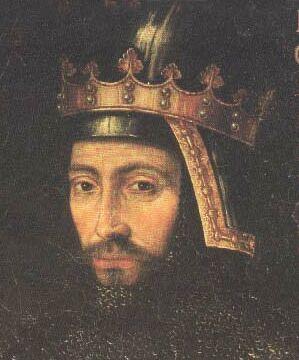
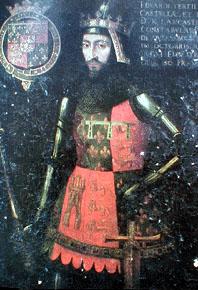
1. John of Gaunt DUKE OF LANCASTER, son of Edward III KING OF ENGLAND (1312-1377) and Philippa de Hainault (1311-1369), was born in March 1340. He had the title 'Duke of Lancaster'. He married Katherine ROET in 1396. He died on [Julian] 3 February 1399. He married Blanche of Lancaster. He married Constance QUEEN OF CASTILE AND LEON.
This prince, the fourth son of King Edward III and Queen Philippa, was born at Ghent (or Gaunt) in Flanders, in 1340. In his infancy, he was created Earl of Richmond and, by that title, admitted into the Order of the Garter upon the death of Thomas Holland, Earl of Kent, one of the original knights. In 1359, at Reading Abbey (Berks), he married Blanche, the younger of the two daughters and co-heirs of Henry, Duke of Lancaster, and upon the death of his father-in-law, in 1361, he was advanced to that Dukedom. He held also, in right of his wife, the Earldoms of Derby, Lincoln and Leicester, and the high office of Steward of England.
John of Gaunt, Duke of Lancaster (March 6, 1340 ?February 3, 1399) was the third surviving son of King Edward III of England and Philippa of Hainault. He gained his name "John of Gaunt" because he was born at Ghent in 1340. The fabulously wealthy Gaunt exercised tremendous influence over the throne during the minority reign of his nephew, Richard II, and during the ensuing periods of political strife, but took care not to be openly associated with opponents of the King.
Constance QUEEN OF CASTILE AND LEON was born in 1354. She died in 1394.
Katherine ROET, daughter of Sir Pain DE ROET ( - ), was born circa 1350. She died on [Julian] 10 May 1403. She and John of Gaunt DUKE OF LANCASTER had the following children:
| +2 |
Second Generation
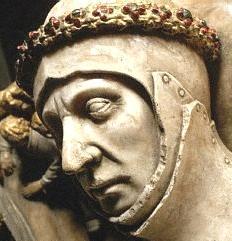
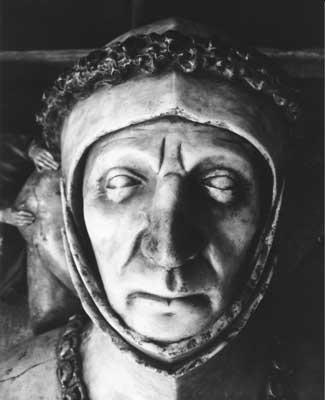
2. John de Beaufort EARL OF SOMERSET, son of John of Gaunt DUKE OF LANCASTER and Katherine ROET, was born between 1371 and 1373. He had the title '1st Earl of Somerset'. He married Margaret de Holand on 23 April 1399. He died on 16 March 1410 in Hospital of St. Katherine-by-the-Tower, London.
He was created Earl of Somerset on February 10, 1397 and Marquess of Somerset on September 9, 1397. He was created Marquess of Dorset on September 29, 1397 but was deprived of the title on November 3, 1399.
Margaret de Holand, daughter of Thomas HOLLAND ( - ) and Alice FITZALAN ( - ), was born between 1381 and 1385. She died on [Julian] 31 December 1439 in Bermondsey, London. She was buried in Catnterbury Cathedral. She and John de Beaufort EARL OF SOMERSET had the following children:
| +3 | |
| +4 | |
| +5 |
Third Generation
3. Henry Beaufort EARL OF SOMERSET, son of John de Beaufort EARL OF SOMERSET and Margaret de Holand, was born in 1401. He died on 25 November 1418.
4. John Beaufort DUKE OF SOMERSET, son of John de Beaufort EARL OF SOMERSET and Margaret de Holand, was born in 1404. He married Margaret BEAUCHAMP circa 1440. He died on 27 May 1444.
He was born around April of 1404. He died on May 27, 1444, possibly but
highly unlikely, having comitted suicide. He was buried in Wimborne Minster, Dorset. He was elevated to the dukedom of Somerset on August 28, 1443 and was also created Earl of Kendal that same day.. He was made a Knight of the Garter in 1440.
Margaret BEAUCHAMP died on 8 August 1482. She and John Beaufort DUKE OF SOMERSET had the following children:
| 6 |
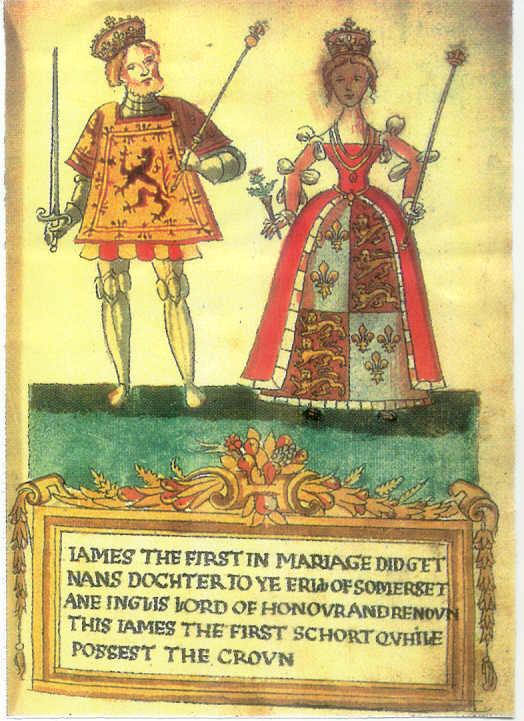
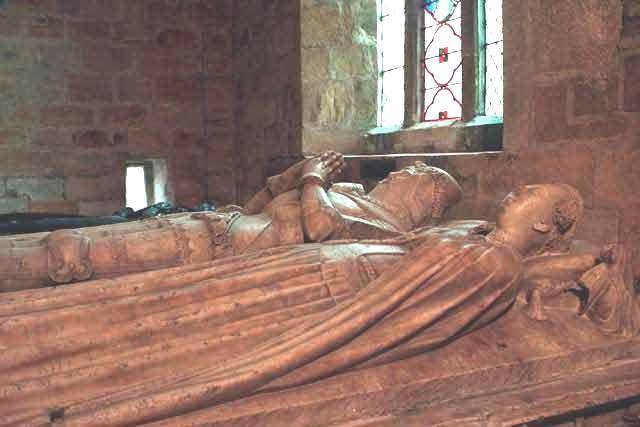
5. Joan BEAUFORT, daughter of John de Beaufort EARL OF SOMERSET and Margaret de Holand, was born before 1407. She married James I KING OF SCOTLAND on 2 February 1424 in St. Mary Overy, Southwark. She married James STEWART on 21 September 1439. She died on [Julian] 15 July 1445 in Dunbar Castle.
James I KING OF SCOTLAND, son of Murdac, Duke of Albany ( - ), was born in December 1394 in Dunfermline Abbey. He died on 21 February 1437. He died in 1437. He and Joan BEAUFORT had the following children:
| 7 | James II KING OF SCOTLAND (1430-1460). James was born on 16 October 1430 in Holyrood. He died on 3 August 1460 in Roxburgh. |
Sir James STEWART, son of John STEWART (c. 1350-1421) and Isabel MacDougall de Erqadia (c. 1362-1439), was born in 1383 in Innermeath, Argyllshire. He died in 1451. He and Joan BEAUFORT had the following children:
| 8 | John STEWART (c. 1440-1512). John was born circa 1440. He had the title '1st Earl of Athol'. He married Eleanor SINCLAIR on 19 April 1475 in Dunkeld Cathedral. He died on 15 September 1512 in Laighwood, Perth. He was buried in Dunkeld Cathedral. |
| 9 | James STEWART (1442-1499). James was born in 1442. He had the title '1st Earl of Buchan (of the third creation)'. He died in 1499. |