See also
- Gervase CLIFTON's parents: Robert CLIFTON ( -1518) and Anne CLIFFORD ( - )
Sir Gervase CLIFTON of Clifton and Hodsock (1515-1588)
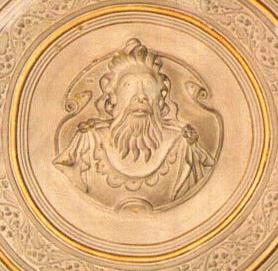
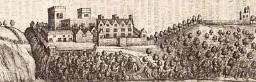
1. Sir Gervase (The Gentle) CLIFTON of Clifton and Hodsock, son of Robert CLIFTON of Clifton and Hodsock ( -1518) and Anne CLIFFORD ( - ), was born on 26 March 1515. He married Mary (Maria) NEVILE on 17 January 1530. He died on 20 January 1588. He married Winifred THWAITES.
Sir Gervase The Gentle
One of the first Clifton's of note is Sir Gervase Clifton. He has shared his unusual Christian name with eleven other prominent members of the Clifton family. He was very popular in the court of Queen Elizabeth who referred to him as 'Gervase The Gentle'. Gervase Clifton had also been a favourite at the courts of Henry VII and Edward VI. He had a reputation as an impeccably courteous man 'of great authority in peace and war'. In 1544 he fought in France at the siege of Boulogne and in 1569 he defended Doncaster from a group of noblemen rebelling against Queen Elizabeth. He lies in a large tomb in the church that stands next to Clifton Hall, St.Marys. His only son, George died at the age of 20, a year before Gervase. George's son, another Gervase, was born after George had died but four months before Gervase died. Since Gervase The Gentle had no other heirs, the child became the holder of Clifton estates.
The Cliftons held the manors of Clifton and Wilford for nearly 700 years and are descended from one of William The Conquerors Knights, Alvared. Many of the Cliftons were destined to rub shoulders with royalty. The family assumed the name of 'Clifton' from the village when they purchased the lands in 1272 from the de Rhodes family. One branch of the family likewise assumed the name 'Wilford'. The family home became Clifton Hall on the summit of the Clifton heights overlooking the a large bend in the River Trent.
A gentleman of considerable authority, both in peace and war, in four successive reigns, Sir Gervase Clifton is mentioned in a distich penned by Elizabeth,
"Gervase the gentle, Stanhope the stout,
Markham the lion, and Sutton the lout."
Sir Thomas Nevil Kt.
Blazon: Gules a saltire argent charged with a martlet sable [impaling Furnival]
Arms found on a monument to Lady Joan Nevil [nee Furnival] at Barlborough Church. She married Sir Thomas De Nevile [d.1406] Lord of Sheffield and Hallamshire.
John Nevil was sheriff of Yorkshire 1518, 1523 1527. He resided at Chevet Hall near Crigglestone. John was implicated in the Rising of the North in 1541against Henry VIII because he did not notify his superiors of the impending rebellion. His daughter Mary Nevile married Sir Gervase Clifton, Sheriff of Nottingham who held the Wakefield Manor.
Biography of Sir Gervase Clifton (d.1588)
Gervase was the eldest son of Sir Robert Clifton, of Clifton and Hodsock, and his second wife Anne Clifford. He succeeded his father in 1518, at the age of around two.
Gervase was a favourite of successive Tudor monarchs and was dubbed 'Gervase the Gentle' by Queen Elizabeth I, in a rhyme referring to four Nottinghamshire gentlemen.
He was knighted in 1538, and went with King Henry VIII to France in 1544, participating in the seige of Boulogne. He was also at the Battle of Pinkie in 1547. He was a Justice of the Peace and Sheriff of Nottinghamshire at various times. He was succeeded by his four-month old grandson Gervase Clifton, later 1st Baronet, in 1588.
One of the first Clifton's of note is Sir Gervase Clifton. He has shared his unusual Christian name with eleven other prominent members of the Clifton family. He was very popular in the court of Queen Elizabeth who referred to him as 'Gervase The Gentle'. Gervase Clifton had also been a favourite at the courts of Henry VII and Edward VI. He had a reputation as an impeccably courteous man 'of great authority in peace and war'. In 1544 he fought in France at the siege of Boulogne and in 1569 he defended Doncaster from a group of noblemen rebelling against Queen Elizabeth. He lies in a large tomb in the church that stands next to Clifton Hall, St.Marys. His only son, George died at the age of 20, a year before Gervase. George's son, another Gervase, was born after George had died but four months before Gervase died. Since Gervase The Gentle had no other heirs, the child became the holder of Clifton estates.
The Cliftons held the manors of Clifton and Wilford for nearly 700 years and are descended from one of William The Conquerors Knights, Alvared. Many of the Cliftons were destined to rub shoulders with royalty. The family assumed the name of 'Clifton' from the village when they purchased the lands in 1272 from the de Rhodes family. One branch of the family likewise assumed the name 'Wilford'. The family home became Clifton Hall on the summit of the Clifton heights overlooking the a large bend in the River Trent.
A gentleman of considerable authority, both in peace and war, in four successive reigns, Sir Gervase Clifton is mentioned in a distich penned by Elizabeth,
"Gervase the gentle, Stanhope the stout,
Markham the lion, and Sutton the lout."
Mary (Maria) NEVILE, daughter of Sir John NEVILE of Chevet, near Criggleestone (c. 1471-bef1546) and Elizabeth BOSVILLE ( - ), was born circa 1522 in Sheet, Kent. She died on 10 April 1564. She was buried in Clifton, Notts.. She and Gervase (The Gentle) CLIFTON had the following children:
| +2 | |
| +3 |
Second Generation
2. Elizabeth CLIFTON, daughter of Sir Gervase (The Gentle) CLIFTON of Clifton and Hodsock and Mary (Maria) NEVILE, married Peter FRECHVILLE.
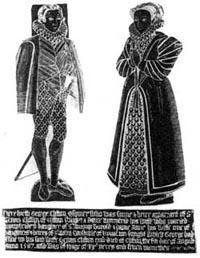
3. George CLIFTON, son of Sir Gervase (The Gentle) CLIFTON of Clifton and Hodsock and Mary (Maria) NEVILE, was born circa June 1567. He died on 20 January 1588. He married Wynyfride THOROLD.
George died in 1587 at the age of 20, but six years before, at the age of fourteen, he had married Wynyfride, daughter of Sir Anthony and Lady Anne Thorold, and three months after his death she bore to him another Gervase, who was destined to be very celebrated.
Wynyfride THOROLD was the daughter of Sir Anthony THOROLD of Marston ( - ) and Anne CONSTABLE ( - ). She and George CLIFTON had the following children:
| +4 |
Third Generation
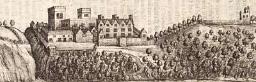
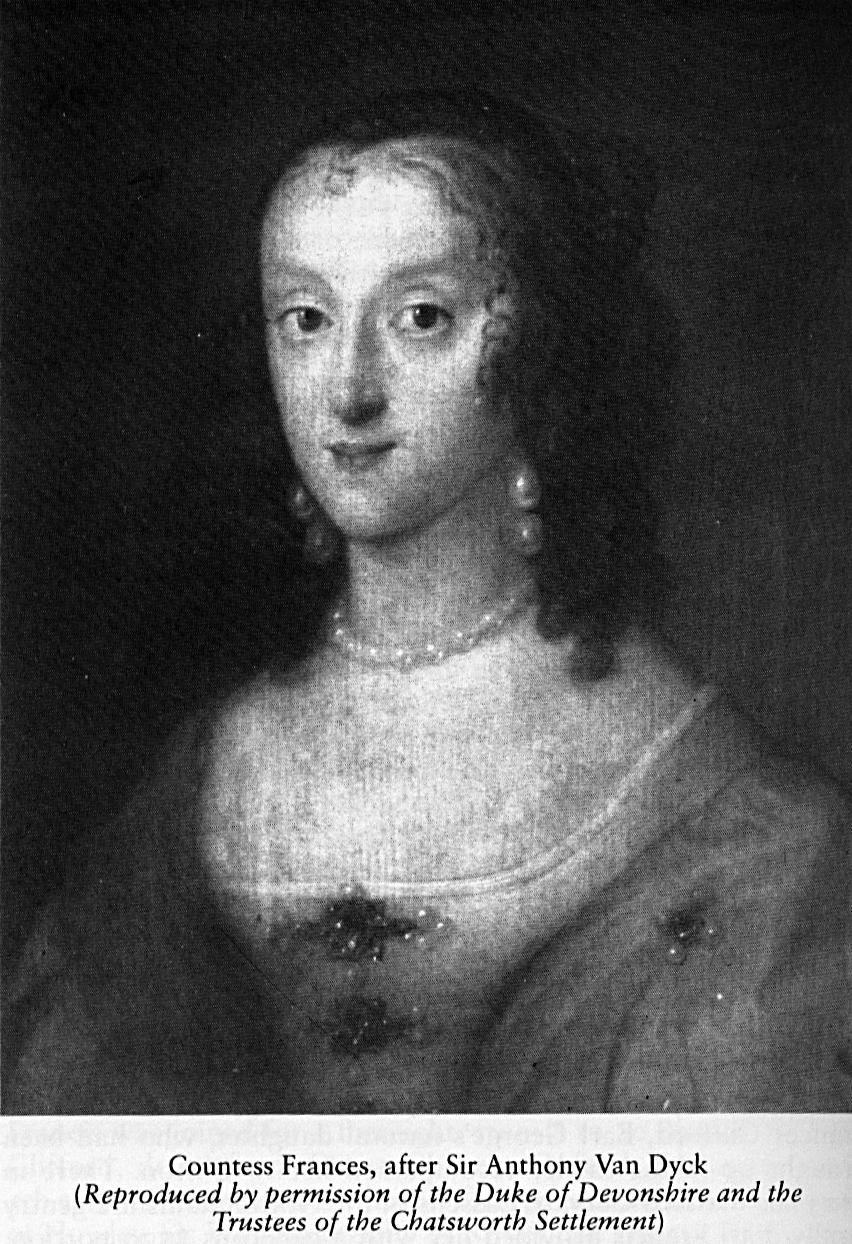
4. Sir Gervase CLIFTON Baronet, son of George CLIFTON and Wynyfride THOROLD, was born circa March 1588. He married Frances CLIFFORD on 7 September 1613. He died in 1666. He married Penelope RICH. He married Maria EGIOKE. He married Isabella HODGES. He married Anna SOUTH. He married Jane EYRE. He married Alice UNK. He married unk UNK.
The young Gervase was looked after by his grandmother, Lady Anne Thorold and grew into a much loved eccentric ( he often worked on his accounts in his pew during Church services ). He was universally popular for his generosity, hospitality and charity. He avidly enjoyed bowling and built a bowling green on one of the four grass terraces that still exist today behind Clifton Hall. During his visit, King Charles I played bowls with the Baronet and according to a royal communique sent to Sir Gervase 'the greatest pleasure the King took in his entertainment' was a boating trip on the River Trent. Sir Gervase served as a member of Parliament eight times. He was knighted at just 16 years of age and was the first Clifton to achieve true aristocratic status with a title of Baronet. A baronet is the lowest rank in the English aristocracy, it is hereditary title of honour that does not in itself hold any more power than a knighthood. The title was purchased by Gervase from James I for ?,000. James I set up the baronet titles to raise money for his army.
Sir Gervase supported the Royalist Cavaliers during the English Civil War ( 1642 - 1651 ) and supplied them with pistols, saddles, pikes and muskets. After Cromwell's Roundheads had defeated the Cavaliers, Gervase was for a while imprisoned in the Tower Of London. He was eventually released and fined an astronomical sum by Cromwell's parliament. He lived to see the collapse of Cromwell's government and the Charles II crowned king. The Baronet married several times, outliving all but one of his wives. Local historians believe this could be due to Gervase deliberatly marrying older, wealthy women to help pay off his debt to Parliament. Gervase died in the same year as the great fire of London in 1666. Memorials to Gervase the Great and his 7 wives ( including a bust of Sir Gervase ) are still to be found in St.Mary's Church. Frances was his second wife.
Thoroton says: "This Sir Gervase was certainly more gentle than his grandfather being generally the most noted person of his time for courtesy, he was very prosperous and beloved of all. He generously, hospitably and charitably entertained all from King Charles himself (of whom he was an active supporter) to the poorest beggar. He served eight times in several Parliaments. He was an extraordinary kind landlord, and good master.
His hospitality exceeded very many of the Nobility, and his continuance in it, most men; being almost fourscore years Lord of this place, of a sound body, and a cheerful facetious spirit."
HIS DEATH.
"His last part was miracle enough to convert an Atheist, to see his Christianity so far prevail over his nature that without the least shadow of fear, he left the choicest things of this world with as great pleasure as others enjoy them.
He received from me the certain notice of his approaching death as he was wont to do an invitation of his good friends to his own Bowling Green (one of the most pleasant imaginable) and thereupon immediately called for his old chaplain, Mr. Robert Thirlby, to do the office of his confessor, and when he had done with him, for his children, whom Patriarch-like he particularly blessed and admonished, with the smartness and ingenuity of a practised and well-studied orator. The day following he received visits from divers friends, in the old dining-room near his bed-chamber (in which room his portrait hangs to this day), who were not so sensible of his danger, because he entertained them after his usual manner, yet that night (as I easily foretold him) his sleepiness began which could never be taken away."—So wrote Dr. Thoroton.
This Sir Gervase was made a K.B. at the coronation of James I., and a Baronet in 1611, his name being third in the first list of creations to the new Order.
Born in Queen Elizabeth's reign before the collapse of the Spanish Armada and before the publication of Shakespeare's Plays, and Bacon's Essays, Sir Gervase lived to see Charles II. restored after the collapse of Cromwell's Long Parliament, and to hear of the publication of Newton's theory, and the establishment of the Royal Society; and throughout he was in vital touch with the affairs of his time.
Among the miscellaneous papers recently discovered is a very neatly made little book, in which is a beautifully written catalogue of "My Mr.'s books remaining in the study at Clifton, taken in order as they stand, July 23rd. 1650." It runs to 18 pages of entries, about 20 to 25 on a page. There is a good collection of ancient classics, the writings of Calvin and other theological writers, and a list of other books, which is of great interest to antiquarian book lovers.
There is a series of letters of the greatest interest to Sir Gervase Clifton (1st Bart.) from Thos. Wentworth, Earl of Strafford, before and during the time he was Lord Lieutenant of Ireland, when he practised the policy of "Thorough" for which he was impeached, and finally with King Charles' consent (the darkest act and the most bitterly repented in all his kingship) beheaded. These letters begin "My dear brother," for Sir Gervase to whom they are addressed and Strafford married sisters, and are of a most frank and intimate nature.
Here is a fragment from one of Stafford's letters written from Westminster in 1631, in reply to a letter from Sir Gervase, suggesting resignation from King Charles' service:—
"To counsel his Maty to remove yourself, whose abilities and affections are soe well knowen unto me, I may not doe itt with faithe to my maister when soe doing my owne understanding tells me I should doe him a great disservice in laying aside soe able a Minister. Nay when you thinke better of itt, lesse inwards vpon your owne ease, more outwarde vpon the duties we oughe the publicke. I asseure myself you will not desire itt. I desire my service may be remembered to my Lady, with my wifes respects to you both."
Here is the conclusion of another written from Ireland in 1638, when Strafford was Lord Lieutenant:—
. . . Here am I in my hermitadge, a place of retirement wher my greatest conuersation woodes and deare. and I should thinke me self happy if I could longer hide myself from the importunity of my imployment, but for the present that must not be. but to laboure and trauell I must soe againe, being the portion only I looke for in this life. I thanke god his Maty is graciously pleased with my poore indeauoures, wch sustaines me all along, els had I fainted long agon in the blacke streams of mallice and enuy, in wch I have soe long waided vp to the chinn. This is my comfortt alsoe that all my ennimies are not able to deade me in my affection to my friends, but that I can serve them wth chearfull and quicke spiritts, and amongst thos your self in the immutable qualety of
Yor euer most faithful brother
And humble seruant
WENTWORTH.
Sir Thomas Wentworth. Bart., K.G.. Baron Raby and Earl of Strafford was mo.it ignobly delivered up, and executed in May, 1641, at the age of 47. "The Strafford Club" at Oxford, which claims early, if not contemporary origin, perpetuates his memory, and endeavours to foster among future legislators the same unswerving devotion to loyalty and sound principles : the present writer cherishes with tender satisfaction the memory of having been president of this club in 1895.
Here is a letter from King Charles I. written from Nottingham in 1642 and addressed "To our trusty and well-beloved Sir Gervase Clifton, Knt."
CHARLES R.
Trusty and well beloved. Wee greet you well. Much it concerns vs now to provide for our owne personall and ye publique safety. Our Enemies have of late so Traitrously declared themselves and declined all Accomodacon that Wee are assured that Our loyall and well affected Subjects wil bee as ready to give vs as Wee to crave all timely assistance. And because by ye seizing of our Magazine our great want is of Armes Wee have thought fit to pray you (of whose good affecion Wee are very well assured) out of your Store to spare Vs as many as conveniently you can leaving onely a competent number for defence of yr house from some small party. All our loving Subjects security being now more involved in ye defence our Army can give them than any particular resistance they can make. What you furnish us with Wee intend for ye guard of Our person and to procure ye peace of this Our King-dome, and shall cause to bee carefully restored or a valuable satisfaction to be given for them at ye end of ye Service. Given at our Court at Nottingham ye last day of August 1642.
All ye armes you shall thinke fit to send Vs Wee desire may bee sent to Nottingham Castle, to bee delivered to our Storekeeper there.
The response made to His Majesty's appeal is acknowledged in the following terms:—
"September the 3, 1642
For the daie and yeare abovesaid inte his Mates Magazine at Nott Castle for his Mates use, of Sr Gervase Clifton Kt and Baronett eight great saddles with bittes, bridles and other accoutremts belonging to them and eight compleate currissiers wth six cases of pistolls and 2 cases of petronells wth Holsters, 6 Musketts wth rests 20 compleate corsletts and 20 spikes. I saie Recd as aforesaid these by me
THO. HOLWELLS.
When Oliver Cromwell's Parliament overcame the Royalists Sir Gervase Clifton was fined £4,000 (a very large sum then) for his devotion to the Royal Cause. This was paid in four instalments during the years 1649 and 1650, and there are among the papers the receipts signed by Cromwell's Treasurers for the money paid by Sir Gervase "as a fine for his delinquency to the Parliament."
KING CHARLES AS MATCH-MAKER.
There is an interesting letter to Sir Gervase from King Charles I. dated October 16th, 1634, in which he approves of a proposed marriage between Sir John Suckling, the poet, and Anne, daughter of Sir Henry Willoughby, and a great heiress, but complains that Sir Henry does not allow Sir John to pay his addresses to his daughter, and bids Sir Gervase and Sir Thomas Hutchinson intervene to further the King's wishes, and particularly to ascertain the disposition oi the gentlewoman herself. The delicacy of this mission will be understood from a contemporary description of Suckling provided by his friend Davenant. "He was the greatest gallant of his time, the greatest gamester both for bowling and cards so that no shopkeeper would trust him for sixpence, as to-day for instance, he might by winning be worth £200, and the next day he might not be worth half so much, or perhaps he sometimes minus nihilo. He was of middle stature and slight strength, brisk, round eye, reddish faced and red-nosed (ill-liver) his head not very big, his hair a kind of sand colour."
The Lady Anne was determined to thwart the scheme, and appealed to another suitor, Sir John Digby, a powerful man and an expert swordsman, to help her to obtain Suckling's written renunciation of all claim to her hand. The rivals met in London on the road, argued, quarrelled and proceeded to blows and the unhappy Suckling was "cudgelled into a handful." Suckling died in 1642 unmarried, and a "man of broken fortunes.".
Sir John was born in 1583, and his chief work "Bosworth Field" was published two years after his death which happened in 1627, the year after Charles I. made him a baronet. He deals at length with the old traditional understanding between the Cliftons and the Byrons of Newstead, who, though warmly attached to each other in affection, were on opposite sides in the Wars of the Roses. Beaumont says that Sir Gervase Clifton was slain at Bosworth Field, fighting on Richard's side against the Duke of Richmond (King Henry VII.) and that Byron, though on the other side, procured the restoration of his lands to his son.
Here are some of the lines written nearly 300 years ago:—
"Recount, thy muse, how Byron's faithful love.
To dying Clifton did itself approve
For Clifton lighting bravely in the troop.
Receives a wound and now begins to droop.
Which Byron seeing though in arms his foe
In heart his friend and hoping that the blow,
Had not been mortal guards him with his shield
From second hurts and cries ‘Dear Clifton yield.
Take this my counsel.' 'Clifton' thus replied.
It is too late for I must now provide.
To seek another life, live thou. sweet friend
And when thy side obtains a happy end,
Upon the fortunes of my children look.
Remember, what a solemn vow we took,
That he whose part should prove the best in fight
Would with the conqueror try his utmost might
To save the other's lands from rav'nous paws.
Which seize on fragments of a luckless cause.'
Testimony is not wanting that the solemn undertaking between the two families was something more than subject for Sir John's muse.
Penelope RICH, daughter of Robert RICH ( - ) and Countess of Warwick ( - ), died in 1613. She was born in 1690. She and Gervase CLIFTON had the following children:
| 5 | Gervase CLIFTON ( -1676). Gervase died on 14 January 1676. |
Lady Frances CLIFFORD, daughter of Francis CLIFFORD 14th Lord Clifford, 4th Earl of Cumberland (1559-1641) and Grizel HUGHES ( -1613), was born in 1594. She died in 1627. She and Gervase CLIFTON had the following children:
| 6 | Margaret CLIFTON (c. 1628-c. 1697). Margaret was born circa 1628. She died circa [Julian] 10 February 1697 in Westminster. |
| 7 | Clifford CLIFTON ( -1673). Clifford died in 1673. |
Isabella HODGES, daughter of John HODGES ( - ), died in 1637.
Anna SOUTH, daughter of Sir Francis SOUTH ( - ), died in 1639.
Jane EYRE, daughter of Anthony EYRE of Rampton ( - ), died in 1655. She and Gervase CLIFTON had the following children:
| 8 | Robert CLIFTON ( - ). Robert had the title '4th Baronet'. |
Alice UNK, daughter of Earl of Huntington ( - ) and Countess of Huntington ( - ), died in 1666.