See also
- Hopkins BADNALL's parents: Richard Jnr. BADNALL (1797-1839) and Sarah HAND (1799-1886)
- Hopkins BADNALL's siblings: Richard BADNALL (1820- ), William Beaumont BADNALL (1823-1901), Harriet Hopkins BADNALL (1825-aft1881), Edward Wykeham BADNALL (1831-1863) and Charles Henry Fiennes BADNALL (1833-bef1886)
The Venerable Hopkins BADNALL (1821-1892)
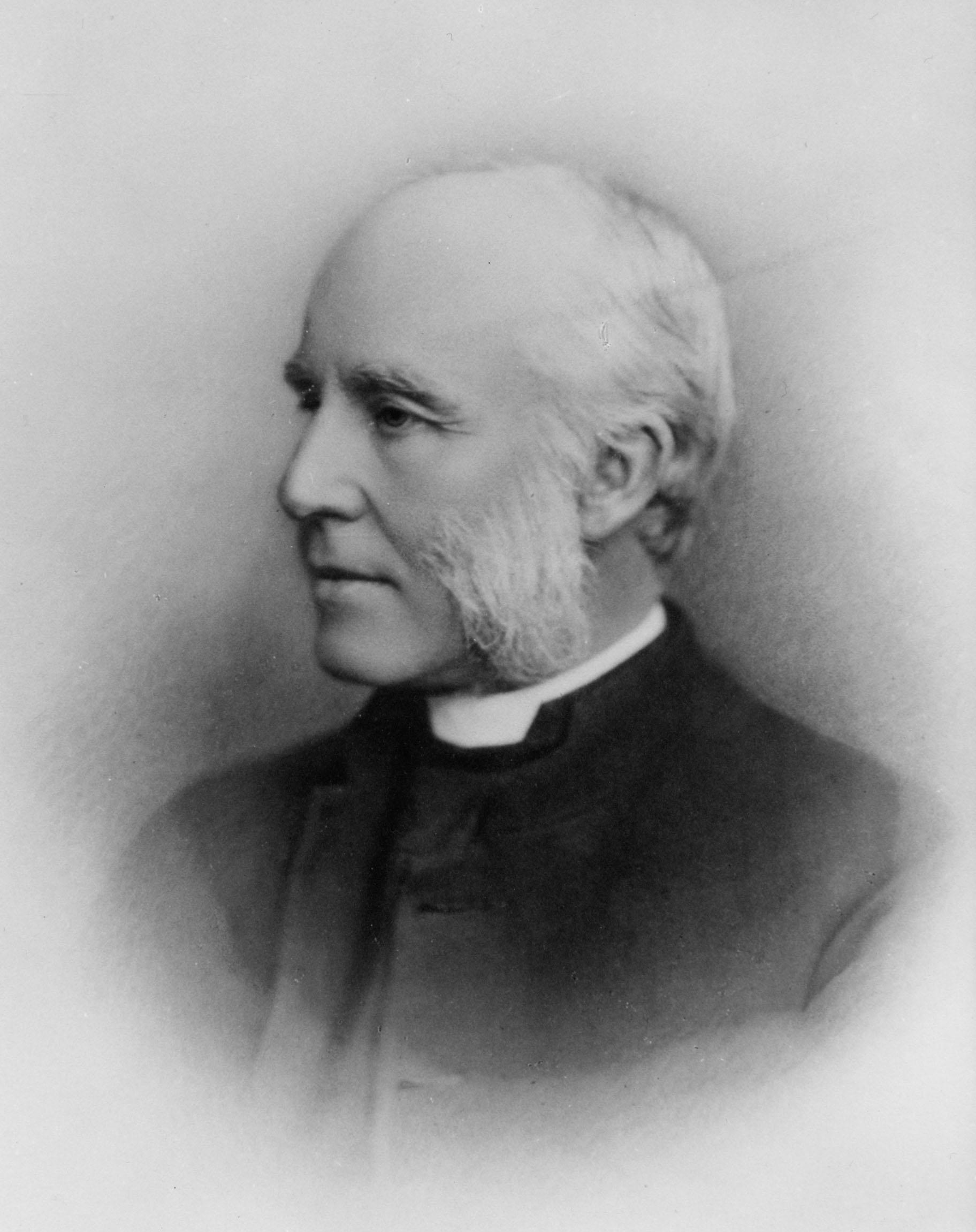
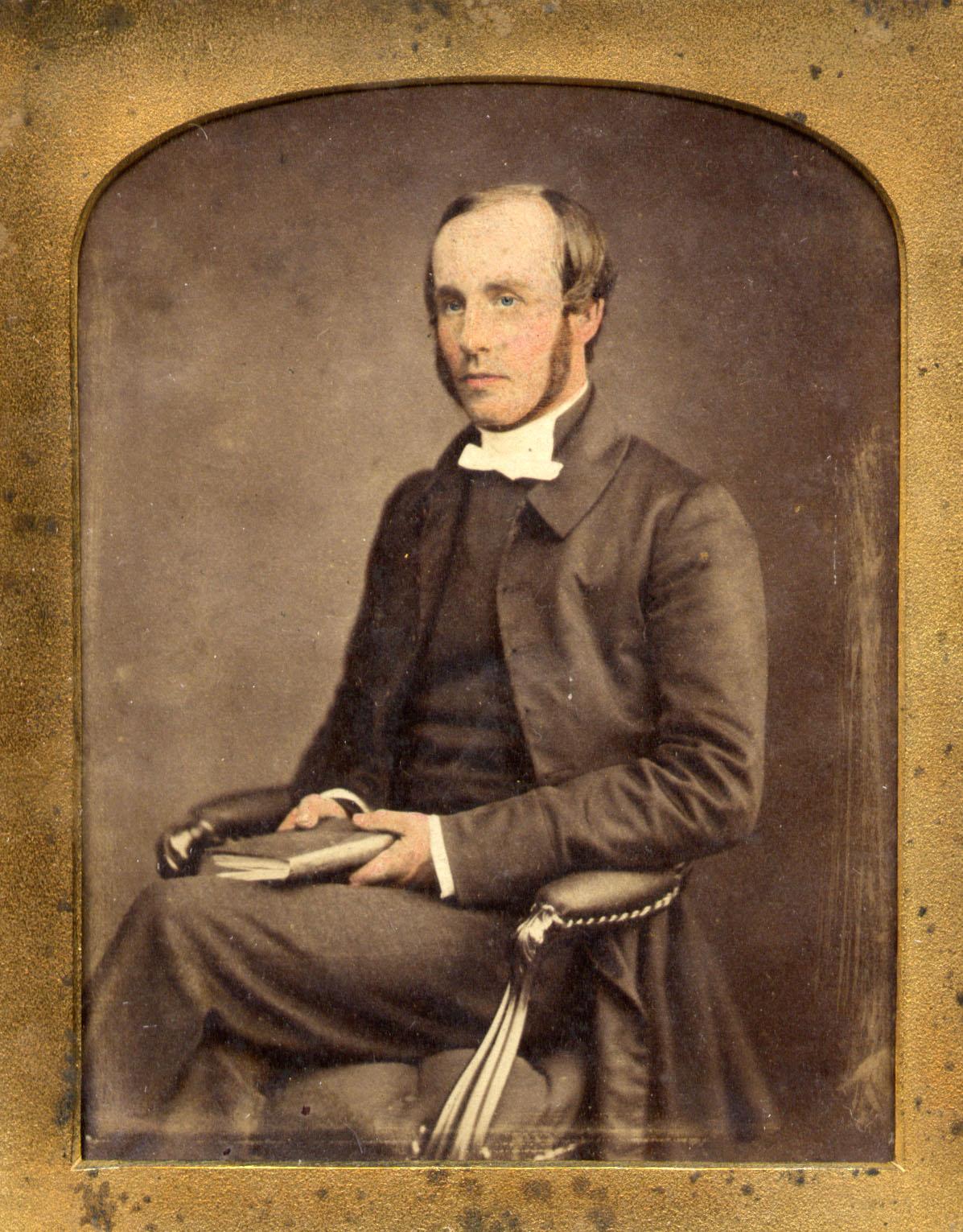
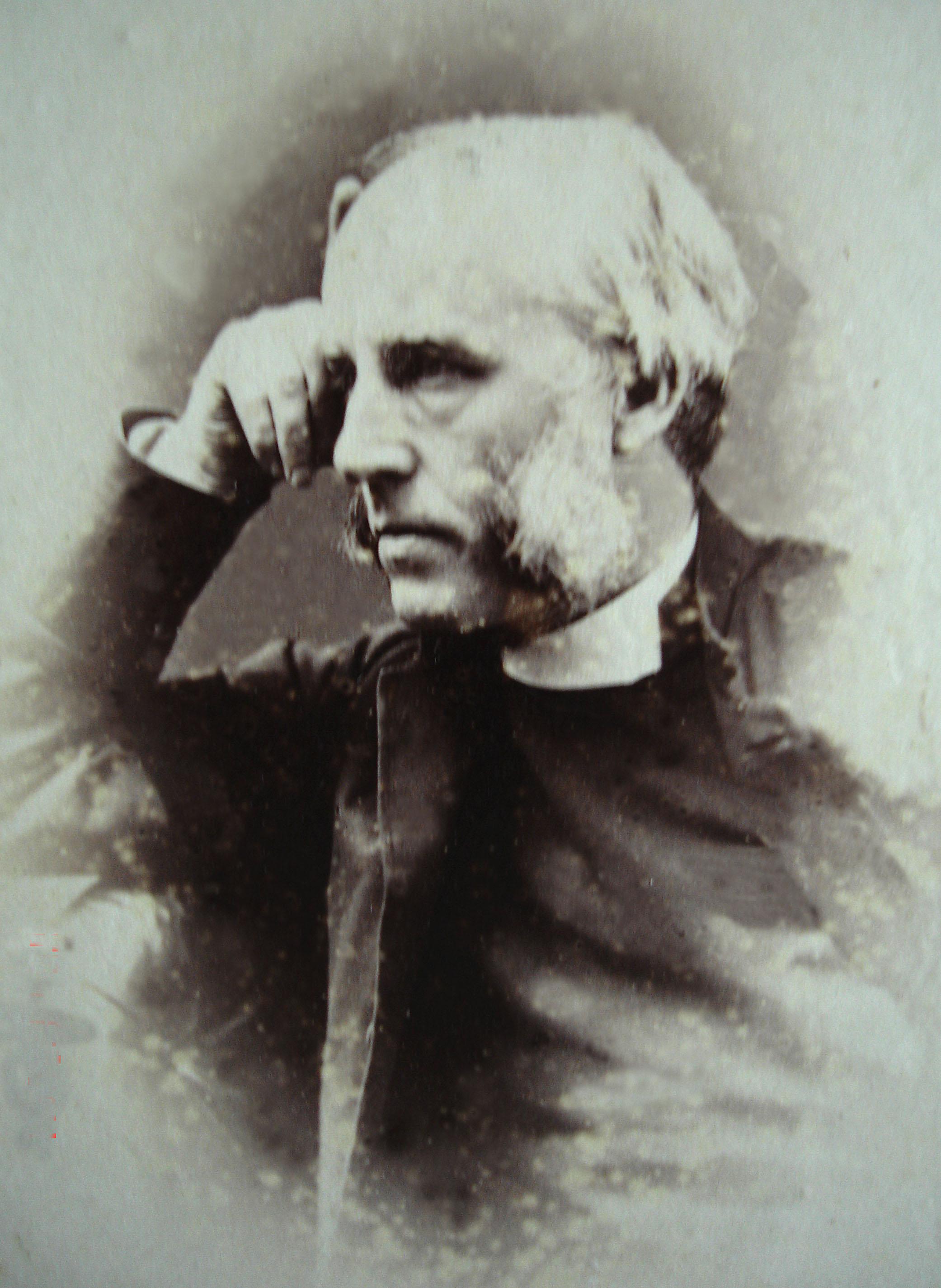
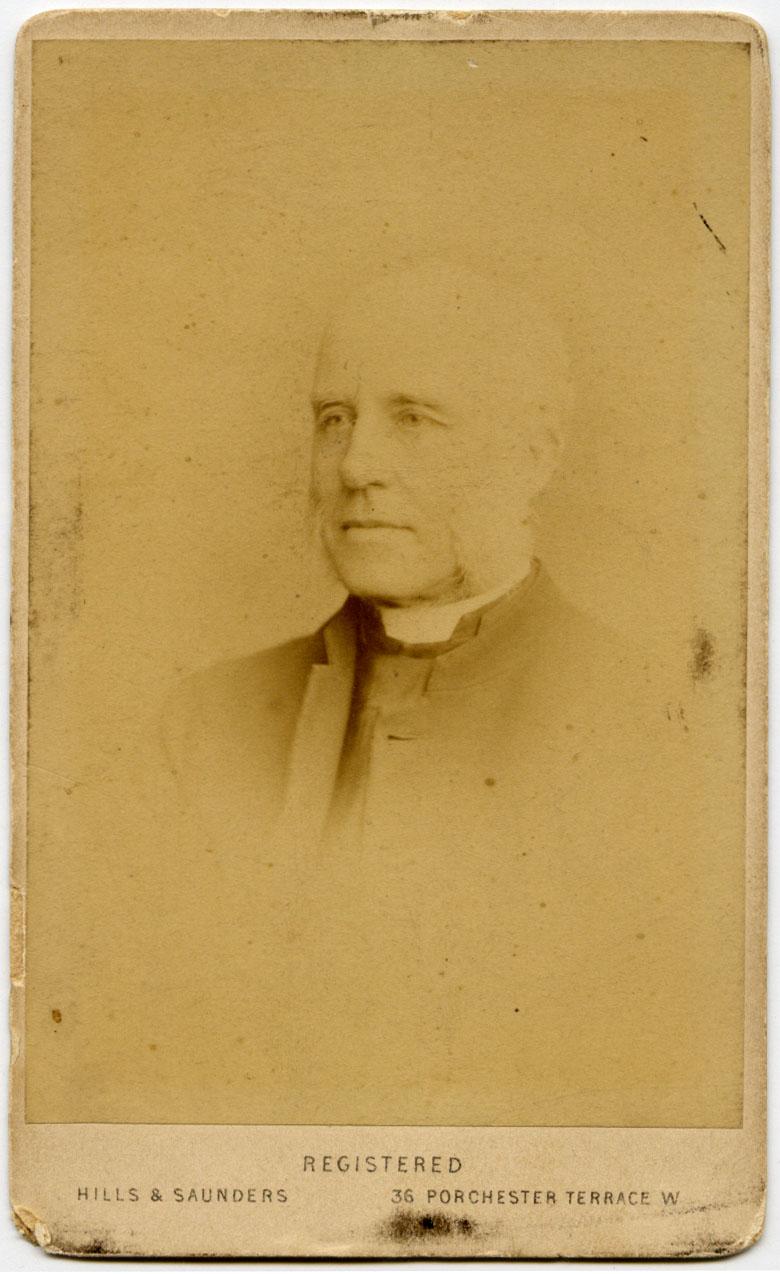
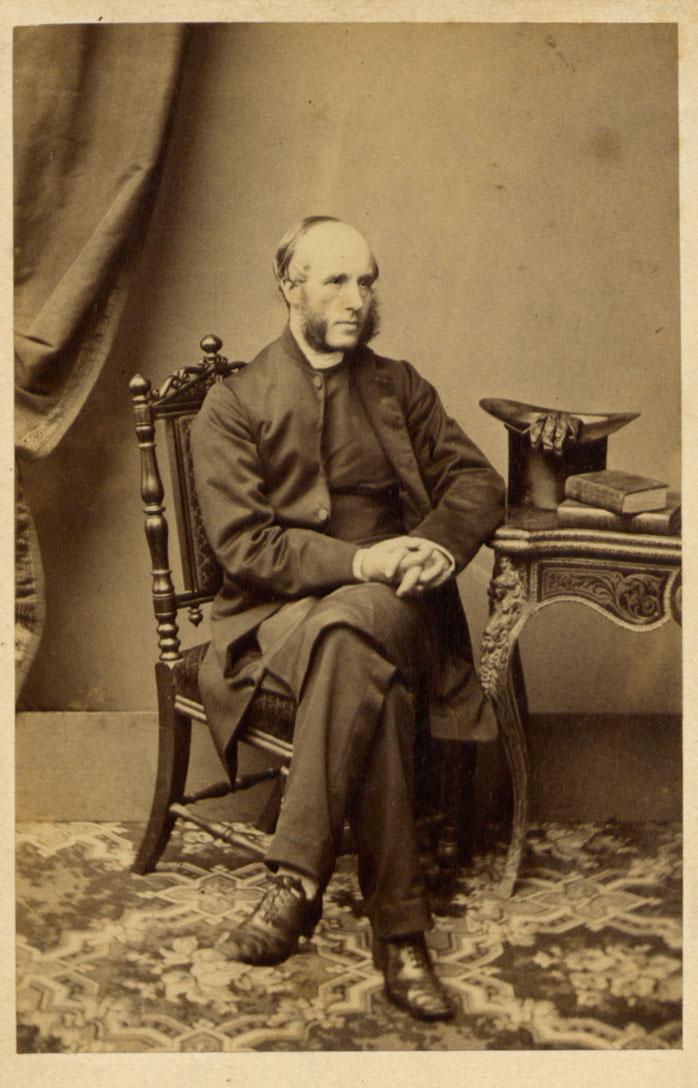
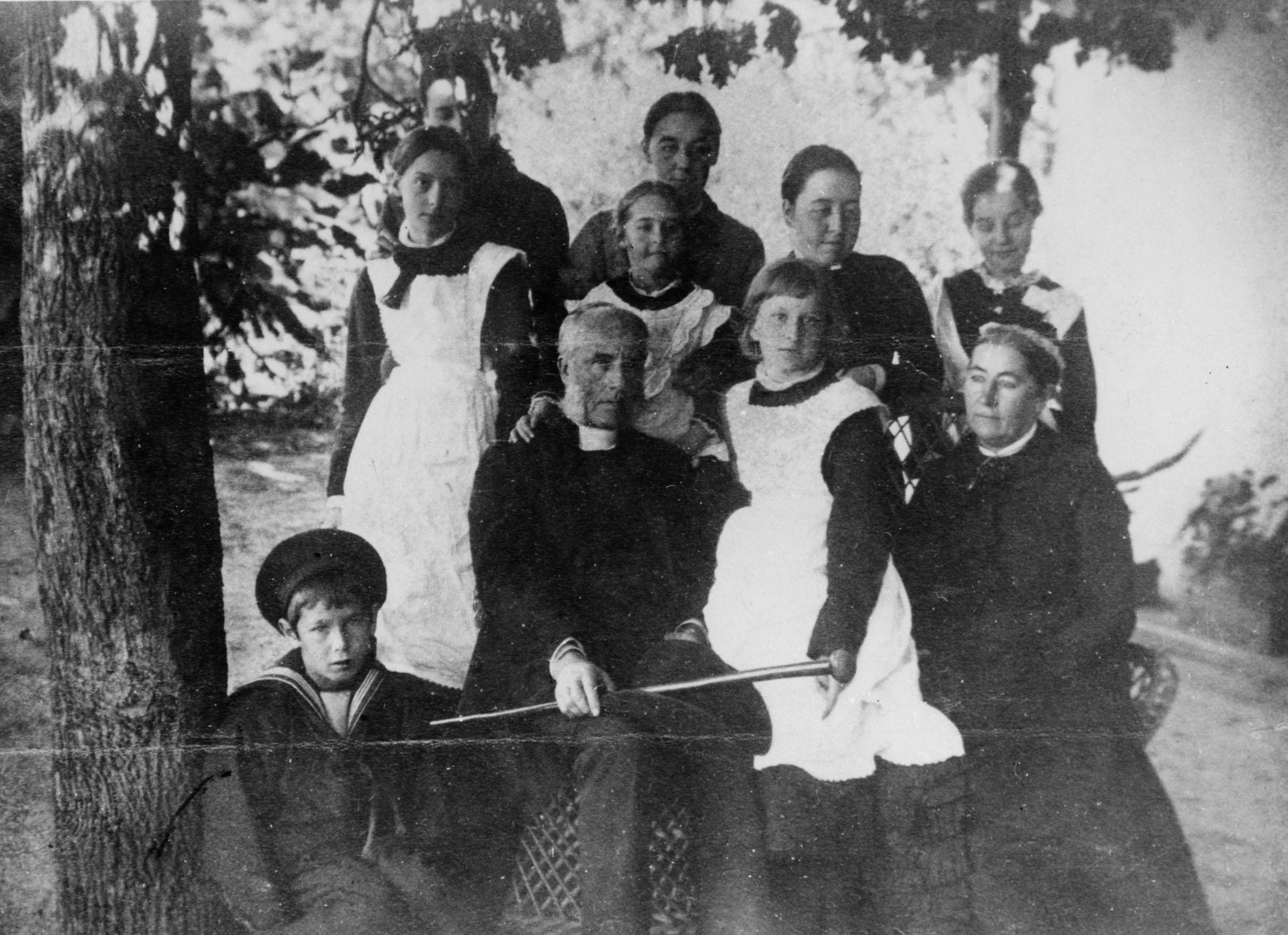
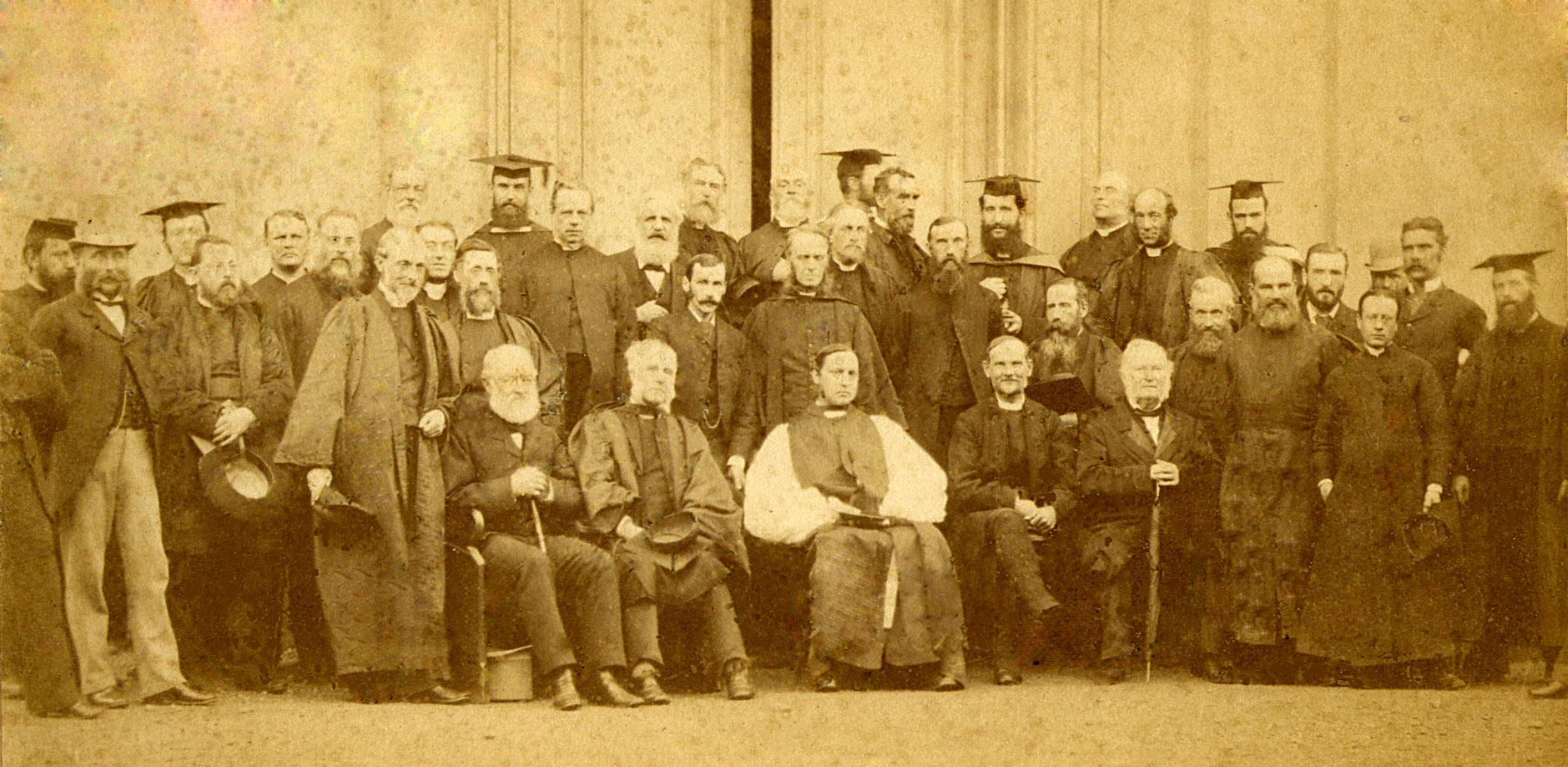
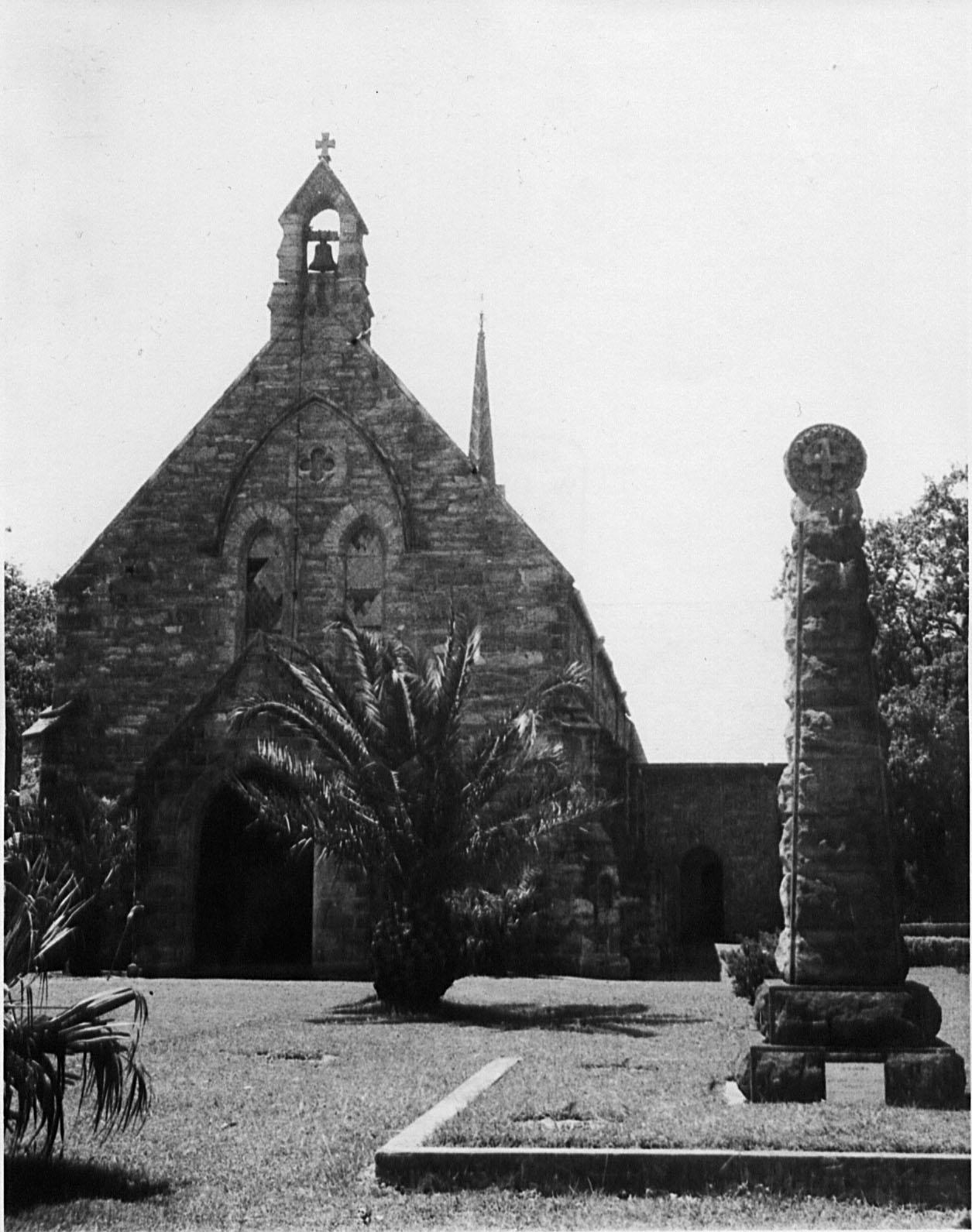
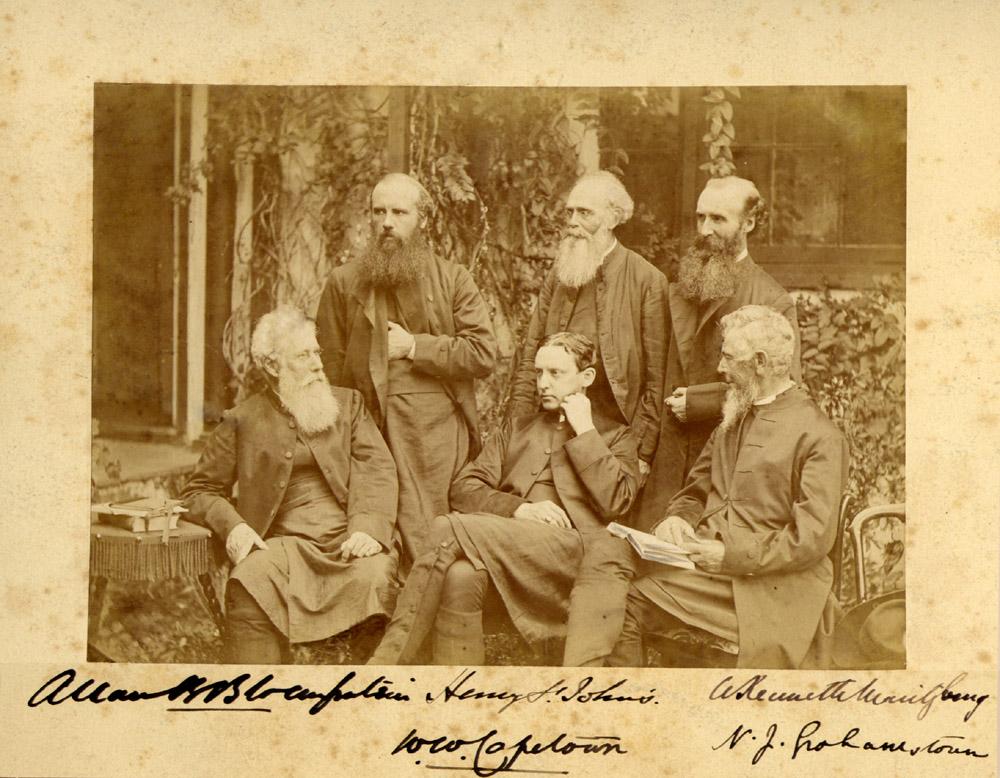
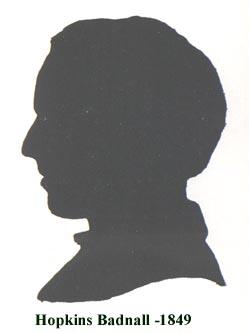
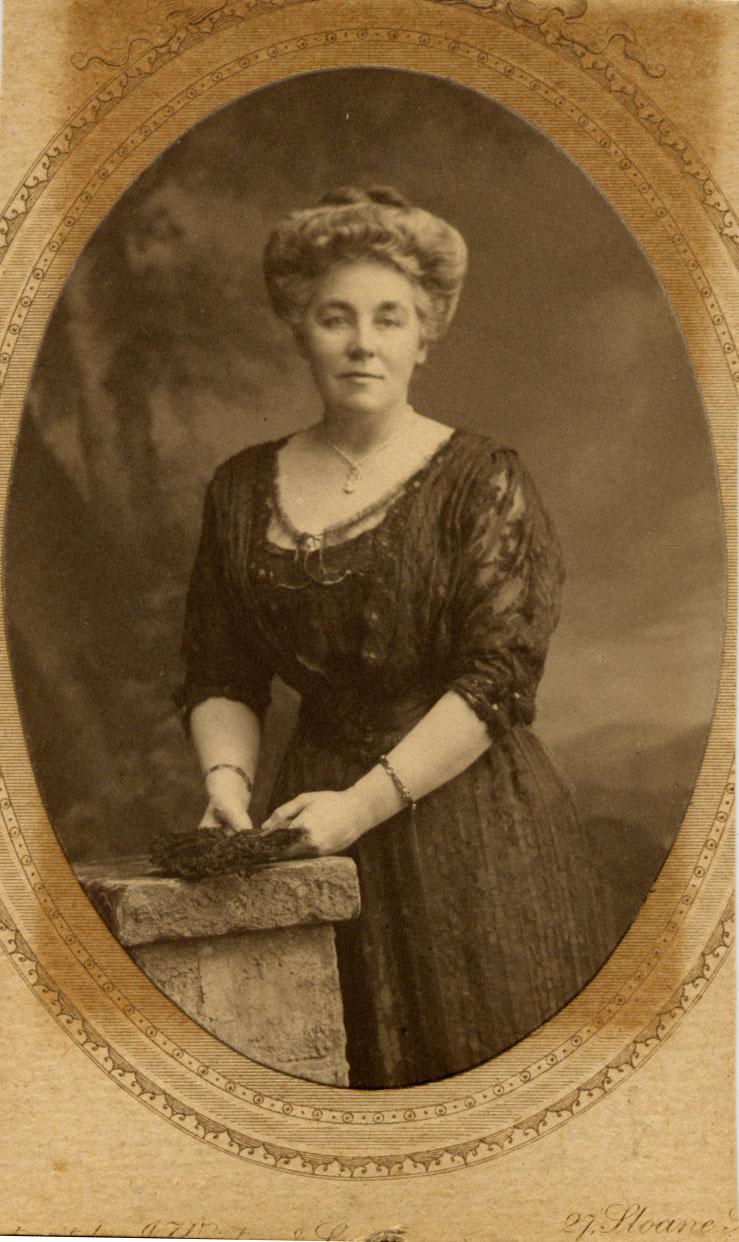
1. The Venerable Hopkins BADNALL, son of Richard Jnr. BADNALL (1797-1839) and Sarah HAND (1799-1886), was born on 12 September 1821 in Leek, Staffordshire. He was christened on 24 September 1822 in St. Edwards Leek, Staffs.. He was an Archdeacon of Cape Town, Vicar General of Capetown. He also founded Bishop's Diocesan School and was vice-chancellor of the University of the Cape of Good Hope. He appeared in the census. He was educated at Durham University, BA, MA1851, DD1870, He was Curate in Stockton-on-Tees in 1845. He accompanied Bishop Gray in 1847 in South Africa. He married Sarah Elizabeth OWEN-SMITH on 27 February 1854 in St. Mary's Cathedral, Port Elizabeth. He became Rector of Goldsborough in 1855. He became Rector of Cawthorne in 1857. He became Vicar of Fishlake in 1886. He died on 27 September 1892 in 19 Randolf Rd., Maida Vale, London. He was buried on 1 October 1892 in Family Vault, Leek, Staffs..
A MAN AND HIS WORK: THE UNIVERSITY'S THIRD VICE-CHANCELLOR
M. Boucher
This is our centenary year and although the University of South Africa cannot rival some of Europe's famous universities in antiquity, it has at least reached a respectable old age. It has achieved this against heavy odds. Threatened with extinction on several occasions, it has changed its name once and its function twice. It has migrated from one city to another far distant and has fixed its plate to the doors of many properties, sometimes with the pride of ownership, but more often as a lodger. It bears so little resemblance now to the university of an earlier day that those who knew it when it was young would be surprised indeed to see the fine new building on Muckleneuk Ridge in Pretoria and to inspect the work carried on within its walls. Yet the continuity is there, for when the University of South Africa opened its administrative offices in Somerset House, Vermeulen Street for the first time on April 2, 1918, it did so as heir to the traditions, the assets, the charter and the arms of the University of the Cape of Good Hope which had preceded it.
Our ancestor in Cape Town was British in concept and in constitution, English in language and very much a child of its times. It was modelled upon the early University of London, whose influence came to be felt in the Victorian era from Ireland to India and from Canada to New Zealand. From today's standpoint, it was therefore only half a university. Its hired inquisitors asked many questions, but it paid no instructors to provide the candidates for its examinations with the knowledge necessary to answer them. It was, in short, an examining, but not a teaching university.
Nevertheless, the University of the Cape of Good Hope was a notable step forward in the history of South African higher education and in the forty-five years of its existence, gave many thousands of men and women the chance to obtain graduate qualifications in their homeland. This is a fitting moment to look back to our first beginnings and to call to mind the lives and labours of those who guided the fortunes of the university in its infancy.
Three Chancellors, three Vice-Chancellors and the Registrar, James Cameron, were appointed in the first twelve years of our history. All were active in other fields and only of Cameron can it be said that his work for the university is his chief claim to fame. The son of a Scottish missionary, he was born on the island of Madagascar and came to South Africa as a child. A minister in the Congregational Church and professor at the South African College, he held the post of Registrar of the University of the Cape of Good Hope from 1873 until his retirement in 1895. He was also Secretary of Convocation between 1873 and 1876.
The Chancellors were all then living in the United Kingdom. The first of them, William Porter, was an Irishman from Ulster. Titular head of the university from 1876 until 1880, he had played an important part in colonial government at the Cape and had helped to create the examining institution of which he became a member of Council. His successors, the late Governor, Sir Bartle Frere (1880-1884), and the former Secretary of State for the Colonies, the Earl of Caernarvon (1884-1890), made their names in the wider sphere of imperial affairs.
Of the first three Vice-Chancellors, one performed outstanding services for the University of the Cape of Good Hope. Langham Dale, later Sir Langham, was born in the English county of Hampshire. He came to South Africa as a professor at the South African College and was chosen as Vice-Chancellor of the university at the inaugural meeting of Council on September 1, 1873. He retained that office, with two brief interludes, until 1889. Dale remained a member of the governing body until 1892 and was elected Chancellor in 1890, a position he occupied until his death eight years later. It was, however, as Superintendent General of Education for the Cape Colony that he made his greatest impact. The firm hold which the university, through its examinations, came to have on colonial education at all levels was largely the result of his policies.
Charles Abercrombie Smith from Kincardineshire in Scotland was elected Vice-Chancellor for the period 1877-1879. He, too, was to enjoy a long connection with the University of the Cape of Good Hope. As Sir Charles Abercrombie, he served again as Vice-Chancellor from 1905 until 1911, before retiring from Council in 1916. Both he and the Registrar, Cameron, were awarded honorary doctorates by a grateful university. Smith's interests were by no means confined to higher education and he was for many years prominent in the Cape administration.
The third Vice-Chancellor is, perhaps, the forgotten man of the early years and his career deserves to be better known. The life story of the Venerable Hopkins Badnall begins in the little Staffordshire town of Leek, which lies in the attractive Churnet Valley on the western edge of England's Peak District. Hopkins was born on September 21, 1821, the second son of Richard Badnall (1797-1839) and his wife Sarah, the daughter of a Uttoxeter solicitor, Isaac Hand. The child was christened in the parish church three days after his first birthday and was given the maiden name of his paternal grandmother, Harriet Badnall, who had died in 1819. His father was a prosperous silk manufacturer, a local trade in which the Badnalls had been engaged for several generations.
Hopkins spent his childhood in the family home, where he received his early education, but later continued his studies under the tuition of his uncle, the Rev. William Badnall of Wavertree, Liverpool. At the age of twenty, he entered the University of Durham, an institution which had been founded not many years before by the Church of England. He proved himself to be a sound scholar, winning several awards and graduating as a B.A. in classical and general literature in 1844. He was elected a Van Mildert Scholar for his academic achievements and suitability as a divinity student.
Hopkins Badnall obtained a Licentiate in Theology in 1845 and also became a Fellow of University College. In 1851, after he had left the university, he was awarded his M.A. and eleven years later, he gained a doctorate in divinity by diploma. The young man was ordained deacon in 1845 and priest in the following year. His career in the Anglican Church began with his acceptance of a curacy under the Rev. Robert Gray in the industrial town of Stockton-on-Tees, County Durham.
It was late in 1846 that Angela Georgina Burdett-Coutts, the great Victorian philanthropist and friend of the novelist, Charles Dickens, made a substantial donation to the Colonial Bishoprics Fund for the endowment of two new sees. One of these was to be at the Cape of Good Hope and in June, 1847, Gray was consecrated Bishop of Cape Town in Westminster Abbey, London. Hopkins Badnall joined the new Bishop's party as his domestic and examining chaplain and on December 20 sailed from Portsmouth in the "Persia", bound for Madeira, the Cape and Ceylon. The long voyage ended for the newcomers to South Africa on Sunday, February 20, 1848, when the small vessel cast anchor in Table Bay. The first phase of Hopkins Badnall's connection with South Africa had begun.
He took up residence at Protea, later known as Bishopscourt, the home of Robert and Sophia Gray, and officiated at Claremont, where a small church was eventually built. He does not seem to have been popular among the clergy at this period, but his position as chaplain to a Bishop intent upon rousing a somnolent church was a difficult one. Nor was he entirely successful in another field to which he was introduced as a result of Gray's zeal.
It had long been the dream of Anglicans at the Cape to found a school which would be a counterpoise to the undenominational South African College, established in Cape Town in 1829. The new Bishop was determined to make this a reality and in 1849, opened the Diocesan Collegiate School on the Protea estate. A brilliant scholar from Winchester and Oxford, Henry Master White, who had come out to the Cape to work for Gray at his own expense, was appointed Principal; Hopkins Badnall added to his other duties that of Vice-Principal. The two men had strikingly similar careers. White, a future Archdeacon of Grahamstown, was also to serve upon the university Council in Badnall's time. His death followed closely upon that of his old colleague.
The school, soon to move to Woodlands, was very small, for the arrival of two little boys in August, 1849, only brought the total number of pupils to nine. It was a modest start for the Diocesan College of today. Two future members of the university Council were boarders there: John X. Merriman, the politician, and John Espin, later to distinguish himself in the church and as Headmaster of St Andrew's College, Grahamstown. Another pupil was W.H. Ross, who became the medical superintendent on Robben Island. Both Espin and Ross have left recollections of those days which suggest that Badnall did not endear himself to the young as a teacher. While the school remained at Protea, he used to take the senior class for an hour each morning; after the move to Woodlands, he rode over for lessons twice weekly. "The young fellows", Canon Espin recalled, "dreaded his coming since he appeared to them to be lacking in sympathy", while Dr Ross remembered his nickname, "Carker", and the brilliant glitter of his teeth as he smiled a cold, conventional smile! Yet to leave that impression is to do Hopkins Badnall an injustice. John Espin came to know him better on many an adventurous mountain climbing expedition and grew to love him well. Gray found him gentle and considerate and there is eloquent testimony of the affection in which he was held by his parishioners from Claremont days onward.
The increasing burden of church duties compelled Badnall to resign as Vice-Principal in 1853. In February of the following year, he married Sarah Elizabeth, the daughter of a Port Elizabeth merchant, John Owen Smith. Sarah died in London on December 7, 1903, at the age of 70. Two of their three sons, Herbert and Reginald, passed the Law Certificate examination of the University of the Cape of Good Hope. Herbert, who died in 1938, became Magistrate at George in the Cape. The other son, Lancelot, was a prominent sportsman. He was born in 1871 and attended Durham School in England. The Badnalls had five daughters, the youngest of whom, Evelyn Elizabeth, married Captain Frank Leonard Northcott of the Norfolk Regiment at St Mary Abbot's Church, Kensington, London, in June, 1898. It is interesting to record that Hopkins Badnall's granddaughter, Mrs E. Hancock of Rosebank, Cape Town, has recently presented her grandfather's papers to the muniment-room of St George's Cathedral in the Mother City.
Soon after his marriage, Badnall decided to return to England, where he laboured for a number of years in the West Riding of Yorkshire, first as Rector of Goldsborough and then as curate in charge of the parish of Cawthome. He retained his connection with the Cape as the Bishop's commissary, however, and was in frequent demand as a speaker and preacher on missions. He had great gifts as an orator, sufficient to gain him the praise of the eminent Cape parliamentarian, Saul Solomon. In 1862, the Grays visited England and the Bishop was able to persuade his former chaplain to return to the colony. The Archdeacon of George, Thomas Earle Welby, had been elevated to the St Helena see and Hopkins Badnall was appointed in his place. He left his homeland for the second time in October, 1862, to take up his new duties.
Now began his period of greatest usefulness in the life of the church in South Africa, in the course of which he was able to display his learning as a theologian and his ability as an ecclesiastical jurist. The Badnalls seem to have had a decided leaning towards the law and another of Richard's sons, William Beaumont Badnall, was a barrister of note in England and a Queen's Counsel.
It was in 1862 that the unorthodox views of Bishop John William Colenso of Natal caused a public sensation in Britain and the colonies alike. The Bishop of Cape Town decided to take action against him and Badnall was chosen as one of Colenso's three accusers. His colleagues in the case were the Dean of Cape Town, the Rev. Henry A. Douglas, who was later to go to India as the Bishop of Bombay, and the Archdeacon of Grahamstown, the Venerable Nathaniel J. Merriman, John's father and the future Bishop of the eastern Cape city.
The proceedings took place in the cathedral at Cape Town between November 16 and December 16, 1863. Badnall was the last of the accusers to speak and his lengthy indictment lasted the best part of a day and a half. The result was a foregone conclusion and Bishop Colenso was formally deposed, a judgement subsequently reversed on appeal to the Privy Council in Britain. The differences between Gray and Colenso went further than matters of doctrine and Biblical interpretation. The question of authority within the church was involved and the Colenso trial marked a significant stage in a growing split within the Anglican community.
Hopkins Badnall's years at George were happy ones and he had the companionship of a former associate, J.C. Davidson, who had also arrived aboard the "Persia" as the Bishop's Registrar. Davidson was then Civil Commissioner and Resident Magistrate for the district. Badnall was much liked at George and got to know his extensive archdeaconry well. He suffered, however, from lumbago and the many journeys he made, often in inclement weather, aggravated the complaint.
In 1869, Badnall was appointed Archdeacon of Cape Town and Rector of Rondebosch in succession to the Venerable J.H. Thomas. He was also made a Canon of the cathedral in the colonial capital. He was now a leading figure and was to be offered the Bloemfontein see, a preferment which he declined. In the course of his career he published a number of sermons, tracts and addresses and had already appeared in print on the position of the church in South Africa. He played an important part when the first Provincial Synod was held in Cape Town early in 1870 and was largely responsible for the canons which were adopted there. These, together with a constitution, mainly the work of the Bishop of Grahamstown, Henry Cotterill, brought into being the autonomous Church of the Province of South Africa, with Bishop Gray as Metropolitan. The creation of this new body emphasized further the differences in outlook among Anglicans. Many Evangelicals looked with disfavour upon the High Church views expressed within the Church of the Province; many, too, saw no reason to change the existing order of things.
Badnall was actively involved in this conflict in 1879. In that year, he presided at the trial of the Dean of Grahamstown, Frederick Henry Williams, who refused to accept the jurisdiction of the Church of the Province over the cathedral there. As in the Colenso case, a verdict against Williams by the ecclesiastical court was overruled by the civil power. Both the Cape Supreme Court in 1880 and the Judicial Committee of the Privy Council in 1882 regarded the Church of the Province and the Church of England as separate institutions in law.
In 1872, Badnall lost his eldest daughter and his old friend, Robert Gray. He was deeply distressed. In the long interregnum which followed the Bishop's death - again reflecting discord within the church - the Archdeacon acted as Vicar-General. He enjoyed wide support as a candidate for the vacant bishopric; Gray, too; had thought of him as a likely successor. It was not to be, however, and the Rural Dean of Oxford, William West Jones, became the second Bishop and Metropolitan. Badnall co-operated with him loyally in many fields, although they did not always agree.
Anglicans who, like Badnall, deplored schism and were prepared to compromise, felt that the surest road to unity lay in the deletion of a clause in the constitution of the Church of the Province which gave it freedom to interpret doctrine in its own way, with no outside interference. The new Bishop was opposed to any such amendment, but Badnall campaigned strenuously in his last years at the Cape for the removal of the controversial third proviso. In this, however, he was unsuccessful.
Nevertheless, his known moderation enabled him to keep his Rondebosch congregation together and gained him the full backing of those who still looked upon the parish as an integral part of the Church of England. He was greatly loved and respected there and it was through his efforts that St Paul's Church was extended and its furnishings improved.
A few years after he had become Archdeacon of Cape Town, the Venerable Hopkins Badnall was brought into contact with the University of the Cape of Good Hope. In those days, instruction and examination were kept strictly apart and Section IX of the Incorporation Act of 1873 prevented the governing Council from appointing active professors as examiners unless others were unobtainable. Good scholars outside the colleges were therefore much in demand and the Rector of Rondebosch soon found himself setting papers and marking scripts for degree examinations in arts. The regularity with which the same gentlemen were selected for these tasks did not escape public notice and on one occasion the examiners were referred to in the Cape press as "recurring decimals"!
Badnall also applied to Council for admission to a Cape M.A. on the strength of his Durham qualification at this level - degrees in divinity being at that time unobtainable from the new institution. This was common practice in the lifetime of the University of the Cape of Good Hope and gave admitted graduates a voice in the deliberations of Convocation. The Archdeacon's application was accepted when Council met in December, 1874, and he was active in the affairs of the body of graduates for a number of years. He was chosen President of Convocation in February 1881, in succession to the Chief Justice, Sir J.H. de Villiers, and held that office until October, 1882. He was assisted by the Presbyterian minister, the Rev. J.M. Russell, who was then Secretary. De Villiers had also been appointed to the first Council in 1873; Russell took part in university government at a later period.
At its meeting of March 17, 1875, Convocation had elected Badnall a member of the university Council in the place of another Anglican, the Rev. Canon E.C. Judge, who had recently died. In the following year, however, he took leave in England for reasons of health and was obliged to relinquish his seat. Convocation chose Professor P.D. Hahn of the South African College to succeed him.
Badnall's absence abroad was not a lengthy one and when the second six-yearly Council was selected in 1879, he again took his seat as a Convocation member. One of his colleagues there was Bishop West Jones, who had been nominated by the Governor, Sir Bartle Frere. It was during the life of this Council that the controversy in the Anglican Church found an echo in "University Hall" - a pretentious title for the modest accommodation the university rented in Bureau Street, Cape Town.
The admission in 1882 of the Durham M.A. obtained by the Rev. Dr C. Maurice Davies was hailed by the opponents of the Church of the Province as a "significant triumph of learning and letters over ... bigotry". It was also seen as an encouragement to Dean Williams of Grahamstown, for Davies was one of his clergy. The university Council found itself further enmeshed in the Anglican schism when Davies became the centre of a sordid court case in the eastern city. The Bishop of Cape Town was not silent on the whole issue and some of his remarks found a wider audience than that in the Bureau Street debating chamber. One of his comments led to a threat of legal proceedings. This brought up the question of the sanctity of Council meetings and the propriety of admitting newspaper reporters. The last suggestion was at all times strongly resisted. Not every application for the admission of degrees was accepted. In March, 1884, another Anglican, the Rev. P.J. Oliver Minos, asked for recognition of his M.A. and Ph.D. of the American Anthropological University of St Louis, Missouri. Minos was in 1883 the Headmaster of Bishop Henry B. Bousfield's school for boys in Pretoria, St Birinus', and in charge of the cathedral choir. Council, however, declined to place the certificates of a well-known degree mill on a par with Cape degrees!
When Council met at the end of July, 1881, Langham Dale was re-elected Vice-Chancellor for the customary two-year term. It came as something of a surprise when, in the following year, he announced his intention of resigning. He was not in good health; moreover, he was out of sympathy with the views of a recent arrival as Inspector of Education, Donald Ross. Dale also wished to resign as Superintendent General of Education, but was dissuaded by government. His quarrel with Ross grew as the new man proceeded to find fault with many aspects of education at the Cape. It must therefore have been galling indeed to him when Convocation elected Ross to fill a vacancy on the university Council! However, the antagonists only attended two meetings of Council together in January and February, 1883, for Ross died unexpectedly soon afterwards.
Dale's resignation as Vice-Chancellor led to the election of Hopkins Badnall as his successor. Council, in its agitation, first chose him to complete Dale's term of office only, but later realized its mistake and extended his incumbency for the statutory two years. Badnall was thus Vice-Chancellor from 1882 until 1884. The Registrar, Cameron, was absent for part of this time and his work was carried out by J.H. Brady, an Oxford graduate who was to become Dale's assistant in the Department of Education.
Hopkins Badnall's period as Vice-Chancellor was not marked by any great changes in university administration. The institution over which he presided was already encountering considerable hostility as a factory of certificates of all kinds, but it was unwilling to relinquish any of its examining functions. When Laura A. Robinson, Principal of All Saints' School, Wynberg, asked in 1884 whether her pupils were free to sit the Cambridge Locals, Council sprang to the defence of its own tests for schools! At undergraduate level, a new examination was first held in 1883 - the Intermediate B.A. The work of Council was growing more complex at this period and in January, 1883, the first Standing Committee was appointed.
An Extension Act in 1875 had tried to make the University of the Cape of Good Hope a more South African institution, but the slower rate of educational advance outside the colony and a resistance to its Englishness impeded efforts made in this direction. Vice-Chancellor Badnall did, however, exchange letters with President J.H. Brand of the Orange Free State on the subject of bursaries to students living in that country.
Among those who passed the various university examinations at this time were the future Reformed Church minister and professor, Marthinus Postma, who gained his M.A. in classics in 1884, and a later Cape Doctor of Science and Council member, Charles F. Juritz, who surmounted the Intermediate hurdle in its first year and was awarded an exhibition. In the Matriculation list for 1883 appears the name of John Tengo Jabavu, who earned renown as a Xhosa newspaper editor and educationist. He was only the second of his race, after S.P. Sihiali of the Congregational Church, to achieve this distinction. Jabavu laboured under difficulties, however, and only succeeded in scraping together 38 marks out of 300 in Greek! No girls graduated until after Badnall's day, but our forefathers were coming to agree that sustained mental activity was neither injurious to their health nor beyond their capabilities! Agnes Ellen Lewis passed the Intermediate examination in 1884; two years later, she would become the first woman to obtain a B.A. in South Africa. She studied privately to this end, but the colleges soon began to open their doors to girls who wished to follow in her footsteps.
One admitted graduate in 1883 was William Thomson of the Stellenbosch College, soon to be renamed in honour of Queen Victoria. He followed Donald Ross as a member of the university Council in that year and was to be connected with the university and its successor in this capacity and as Registrar almost without interruption until his death as Sir William Thomson in 1947.
Early in Badnall's term of office, the governing body lost two outstanding members, both connected with education at Stellenbosch. In September, 1882, Thomson's predecessor at the college, Professor George Gordon, died. A few months later, the death occurred of the Rev. John Murray of the Dutch Reformed (N.G.) Church seminary and Chairman of the Stellenbosch College Council. Two deaths at opposite ends of the university scale were recorded in 1884: those of the Chancellor, Sir Bartle Frere, and the Department of Education's messenger, J.W. Coskey, who looked after the Bureau Street premises.
Langham Dale returned as Vice-Chancellor in 1884, although Badnall remained a member of Council. He was chosen once more by Convocation in the election for the third Council of 1885, but resigned almost immediately. His health was far from good and he decided to leave the colony. Thomas Fothergill Lightfoot became Archdeacon and Canon George Ogilvie, a university Council colleague who had long been Principal of the Diocesan College, took over the Rondebosch parish. The Council vacancy caused by Badnall's departure was filled by the appointment of the Congrega-tionalist minister, the Rev. Wilberforce Buxton Philip, youngest son of the famous Scottish missionary, John Philip.
Badnall sailed for England in the latter part of 1885 and settled again in the West Riding as Rector of Fishlake, near Doncaster. In 1888, however, he moved to the Maida Vale district of London, where he lived in retirement. It was there, on September 27, 1892, that he died.
Hopkins Badnall was buried four days later in the family vault at Leek Parish Church. The opening sentences at the funeral were spoken by the Vicar of Leek, the Rev. C.B. Maude, once Rector of Kimberiey and Precentor of the cathedral in Cape Town; the Lesson was read by the Rev. S. Bond, a former Diocesan College Vice-Principal who had sat with Badnall in the Council Chamber of the University of the Cape of Good Hope; the service at the grave was conducted by Archdeacon Thomas, then Vicar of Hillingdon in Middlesex, whose place he had taken at Rondebosch. It was a last tribute to one who had devoted many years to the service of God and the cause of education in a distant land. His work should not be forgotten.
THE WILL OF THE VENERABLE HOPKINS BADNALL OF RONDEBOSCH
SOUTH AFRICA 1885
This is the last will and testament of Hopkins Badnall at present incumbent of Rondebosch near Capetown on Cape of Good Hope and Archdeacon of the Cape I bequeath all the furniture plate linen china glass books prints pictures wines liquors fuel consumables provisions and other household effects of which I shall die possessed unto my dear wife Sarah Elizabeth absolutely I devise all my real estate and bequeath all the residue of my personal estate to my trustees hereinafter named absolutely upon trusts as respects my real estate for my said wife Sarah Elizabeth and her assigns for her life and as respects the residue of my personal estate to convert and get in the same as soon as conveniently may be after my death and invest the monies therefrom as hereinafter mentioned and to permit my said wife to receive the annual income of my said residuary personal estate and the proceeds thereof during her life and after her death upon trust to sell my real estate and hold the proceeds of the said sale and my said residuary personal estate and the proceeds thereof for my children Herbert Owen, Reginald Beaumont, Lancelot Wykeham, Florence May, Alice, Gertrude, Ethel Mary and Evelyn Elizabeth to be divided equally between them their respective executors administrators and assigns and the respective shares of such children to be absolutely vested on my decease I empower my trustees or trustee if they or he shall think it advantageous so to do at anytime during the lifetime of my said wife with her consent in writing to sell my real estate and I direct that my trustees or trustee shall invest the money to arise from the sale thereof in the manner hereinafter mentioned and shall hold the funds or securities whereon such investments shall be made upon the trusts herein before contained concerning my residuary personal estate and the proceeds thereof I direct that all investment of trust monies to be made by my trustees or trustee shall be made in their or his names or name in or upon some one or more of the investments or securities following and those only that is to say the public funds government securities of the United Kingdom real or leasehold securities in England or Wales and not elsewhere such leaseholds having not less than 60 years unexpired at the time of the investments thereon respectively or the bonds debentures or debenture stock or guaranteed stock or shares of any railway or dock company in England authorised by special Act of Parliament and at the time of the investments thereon respectively paying dividends or in the stock or securities of the Government of India for the time being or the stock or securities whether payable to bearer or not of the Government of any British Colony or Dependency and I empower my trustees or trustee from time to time to change such investments for others of a like nature I appoint my son Herbert Owen and my son in law Maurice FitzGerald Wilson to be Trustees of this my will And I appoint my said wife and my said last named son and son in law to be Executrix and Executors of my last will Lastly I revoke all other wills In witness whereof I have hereunto set my hand this ninth day of February one thousand eight hundred and eighty five.
H. Badnall
Signed by the said Hopkins Badnall as his last will in the presence of us present at the same time who at his request in his presence and in the presence of each other have subscribed our names as attesting witnesses Thomas Shaw solicitor Leek -- Wm. Howard Clerk to Messrs Challinor & Co. solicitors Leek.
This Codicil is the last will of me Hopkins Badnall of Fishlake Vicarage in the County of York, Clerk in Holy Order which will bears date the ninth day of February one thousand eight hundred and eighty five I direct that in the event of the death of my dear wife in the lifetime of her mother Elizabeth Smith the trustees of my will shall after the death of my dear wife and until the death of the said Elizabeth Smith apply the income of my real and residuary personal estate or the proceeds thereof for the maintenance and benefit of any daughters or daughter of mine who shall for the time being be spinsters or a spinster and if more than one in equal shares In so much as my son Herbert is resident at the Cape of Good Hope and I am now resident and domiciled in England I revoke the appointment of my said son Herbert as trustee and executor of my will and substitute my brother William Beaumont Badnall in his place as trustee and executor And I declare that my said will shall take effect in the same manner as if the name of the said William Beaumont Badnall had been originally inserted as a trustee and executor of my will instead o the name of my said son Herbert I confirm my said will in other respects In witness whereof I have hereunto set my hand this ninth day of September one thousand eight hundred and eighty seven.
H. Badnall
Signed by the said Hopkins Badnall as a Codicil to his last will in the presence of us present at the same time who at his request in his presence and in the presence of each other have subscribed our names as attesting witnesses Andrew Booth coachman to Mr William Badnall ------ Mary Jane Cock maid to Mrs William Badnall.
On the 19th day of November 1892 Probate of this will with a Codicil was granted to Sarah Elizabeth Badnall widow Maurice FitzGerald Wilson and William Beaumont Badnall Esquire the Executors.
].
The life story of the Venerable Hopkins Badnall begins in the little Staffordshire town of Leek. His father was a prosperous silk manufacturer, a local trade in which the Badnalls had been engaged for several generations. At university, he proved himself to be a sound scholar, winning several awards and graduating as a B.A. in classical and general literature in 1844. After studying theology and divinity his career in the Anglican Church began began with his acceptance of a curacy under the Rev. Robert Gray in the industrial town of Stockton-on-Tees, County Durham. Gray was subsequently consecrated Bishop of Cape Town in Westminster Abbey, London. Hopkins Badnall joined the new Bishop's party as his domestic and examining chaplain. His position as chaplain to a Bishop intent upon rousing a somnolent church was a difficult one. Nor was he entirely successful in another field to which he was introduced as a result of Gray's zeal. It had long been the dream of Anglicans at the Cape to found a school and the new Bishop was determined to make this a reality and in 1849, opened the Diocesan Collegiate School: Hopkins Badnall added to his other duties that of Vice-Principal. The increasing burden of church duties compelled Badnall to resign as Vice-Principal in 1853. In February of the following year, he married Sarah Elizabeth, the daughter of a Port Elizabeth merchant, John Owen Smith. Soon after his marriage, Badnall decided to return to England, where he laboured for a number of years in the West Riding of Yorkshire, first as Rector of Goldsborough and then as curate in charge of the parish of Cawthome. He retained his connection with the Cape as the Bishop's commissary, however, and was in frequent demand as a speaker and preacher on missions. He had great gifts as an orator, sufficient to gain him the praise of the eminent Cape parliamentarian, Saul Solomon. In 1862, the Grays visited England and the Bishop was able to persuade his former chaplain to return to the colony. The Archdeacon of George, Thomas Earle Welby, had been elevated to the St Helena see and Hopkins Badnall was appointed in his place. He left his homeland for the second time in October, 1862. It was in 1862 that the unorthodox views of Bishop John William Colenso of Natal caused a public sensation in Britain and the colonies alike. The Bishop of Cape Town decided to take action against him and Badnall was chosen as one of Colenso's three accusers. The proceedings took place in the cathedral at Cape Town between November 16 and December 16, 1863. Badnall was the last of the accusers to speak and his lengthy indictment lasted the best part of a day and a half. The result was a foregone conclusion and Bishop Colenso was formally deposed, a judgement subsequently reversed on appeal to the Privy Council in Britain. The differences between Gray and Colenso went further than matters of doctrine and Biblical interpretation. The question of authority within the church was involved and the Colenso trial marked a significant stage in a growing split within the Anglican community. In 1869, Badnall was appointed Archdeacon of Cape Town and Rector of Rondebosch in succession to the Venerable J.H. Thomas. He was also made a Canon of the cathedral in the colonial capital. He was now a leading figure and was to be offered the Bloemfontein see, a preferment which he declined. In the course of his career he published a number of sermons, tracts and addresses and had already appeared in print on the position of the church in South Africa. He played an important part when the first Provincial Synod was held in Cape Town early in 1870 and was largely responsible for the canons which were adopted there. These, together with a constitution, mainly the work of the Bishop of Grahamstown, Henry Cotterill, brought into being the autonomous Church of the Province of South Africa, with Bishop Gray as Metropolitan. Hopkins was later appointed Vice-Chancellor of the University of Stellenbosch, a post he held between 1882 and 1884. Badnall finally returned to England in the latter part of 1885 and settled again in the West Riding as Rector of Fishlake, near Doncaster. In 1888, however, he moved to the Maida Vale district of London, where he lived in retirement. It was there, on September 27, 1892, that he died.
Sarah Elizabeth OWEN-SMITH, daughter of John OWEN SMITH (1804-1871) and Elizabeth GILBERT (1809?-1893?), was baptised on 17 November 1833. She was born on 30 December 1839 in Cape of Good Hope, Port Elizabeth. She was born on 30 December 1839 in South Africa. She died on 7 December 1903 in Kensington, London. She was buried on 12 December 1903 in Badnall Family Vault, Leek, Staffs.. She and Hopkins BADNALL had the following children:
| +2 | |
| +3 | |
| +4 | |
| +5 | |
| +6 | |
| +7 | |
| +8 | |
| +9 | |
| +10 |
Second Generation
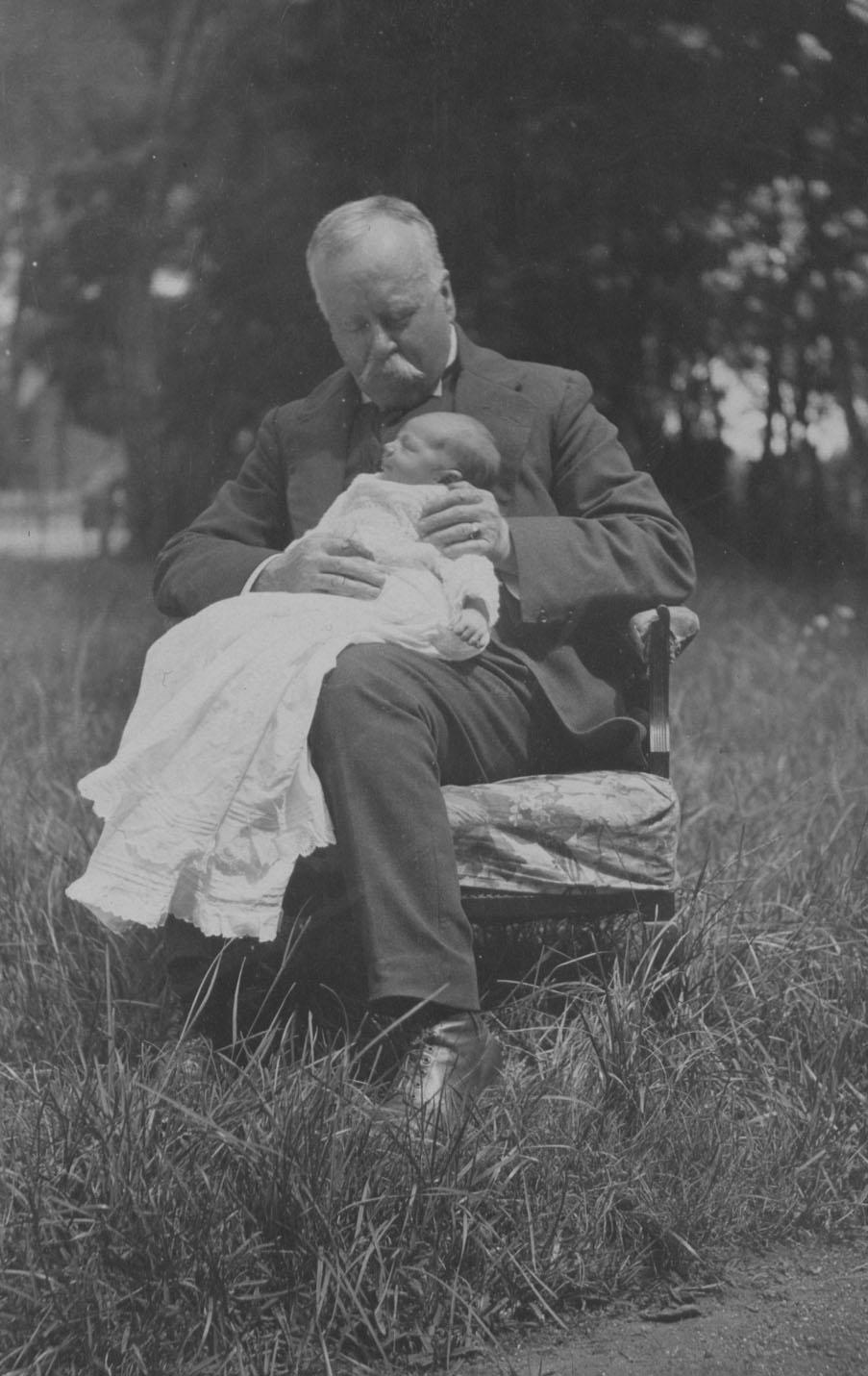
2. Herbert Owen BADNALL, son of The Venerable Hopkins BADNALL and Sarah Elizabeth OWEN-SMITH, was born on 20 November 1854. He was a Magistrate of George. He was educated at The Diocesan College, CapeTown. He married Lydia CAWOOD in February 1888 in Kimberley, Cape of Good Hope. He died on 5 November 1938 in Rondebosch, Cape Province. He was buried in November 1938.
Lydia CAWOOD and Herbert Owen BADNALL had the following children:
| +11 |
3. Blanche Elizabeth BADNALL (also known as [unnamed person]), daughter of The Venerable Hopkins BADNALL and Sarah Elizabeth OWEN-SMITH, was born on 28 February 1856 in Goldsborough, Yorkshire. She was baptised on 6 April 1856 in St. Mary's P.C., Goldsborough, Yorkshire. She died on 23 September 1872 in Kensington, England..
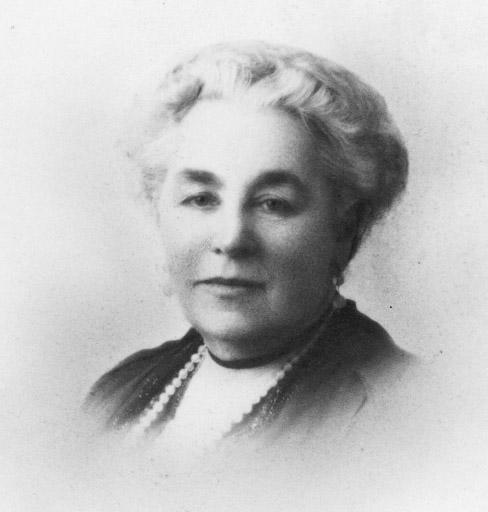
4. Florence May BADNALL, daughter of The Venerable Hopkins BADNALL and Sarah Elizabeth OWEN-SMITH, was born on 8 February 1858 in Cawthorne, Yorks. She married Maurice Fitzgerald WILSON on 2 August 1884. She died on 31 January 1941. She was buried in February 1941.
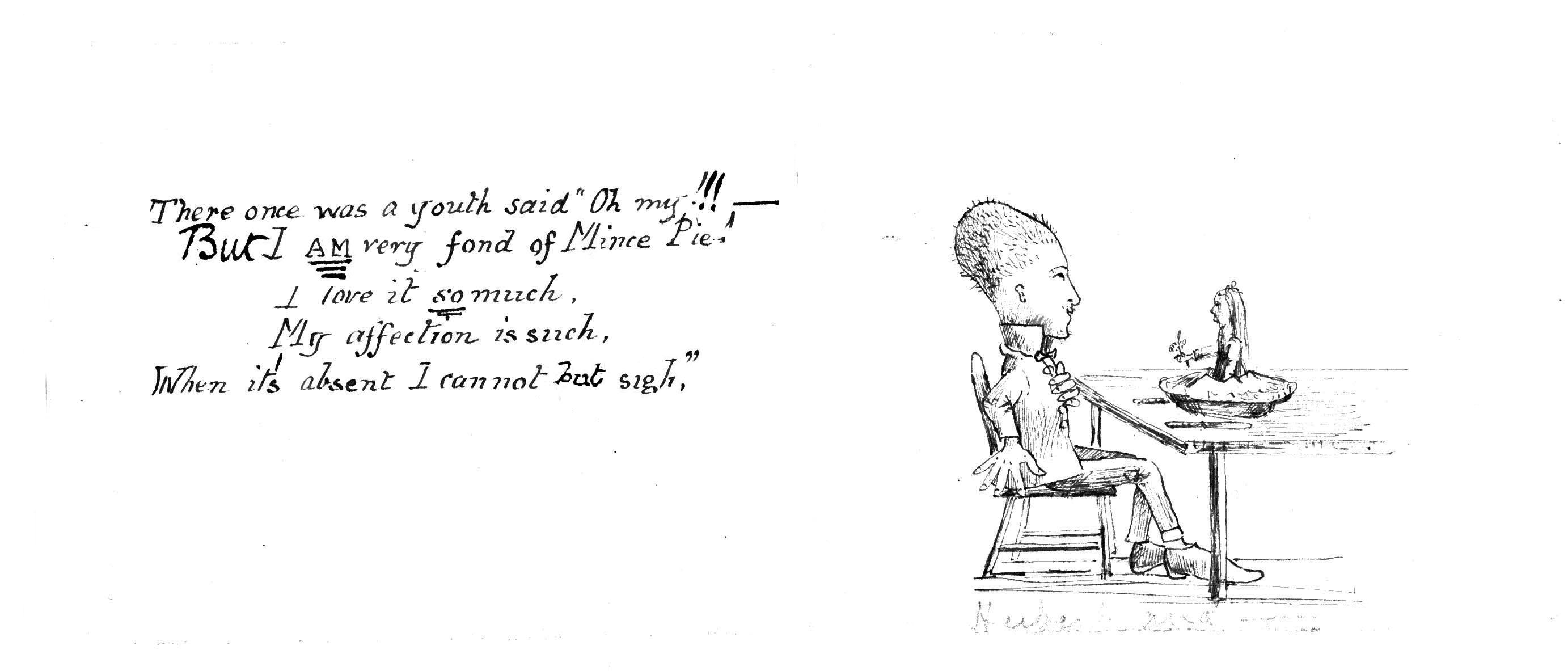
Florence May was the third of nine children of Hopkins Badnall, and was brought up in South Africa where her father was Archdeacon of the Cape. She met her future husband whilst he was a very junior engineer serving his apprenticeship in Port Elizabeth. She was thought of affectionately by her two sons, but was reckoned to be physically rather lazy. In her youth she had a talent for drawing, and a booklet of cartoons of her family members still survives, entitled "The Book of Truth and Nonsense (Combined)" which clearly shows a great sense of humour.
Maurice Fitzgerald WILSON, son of Richard Bassett WILSON (1806-1867) and Anne FITZGERALD ( -1877), was born on 4 February 1858 in London. He was a Civil Engineer. He was confirmed on 20 October 1874. He died on 23 December 1945. He was buried in December 1945. He and Florence May BADNALL had the following children:
| +12 | |
| +13 |
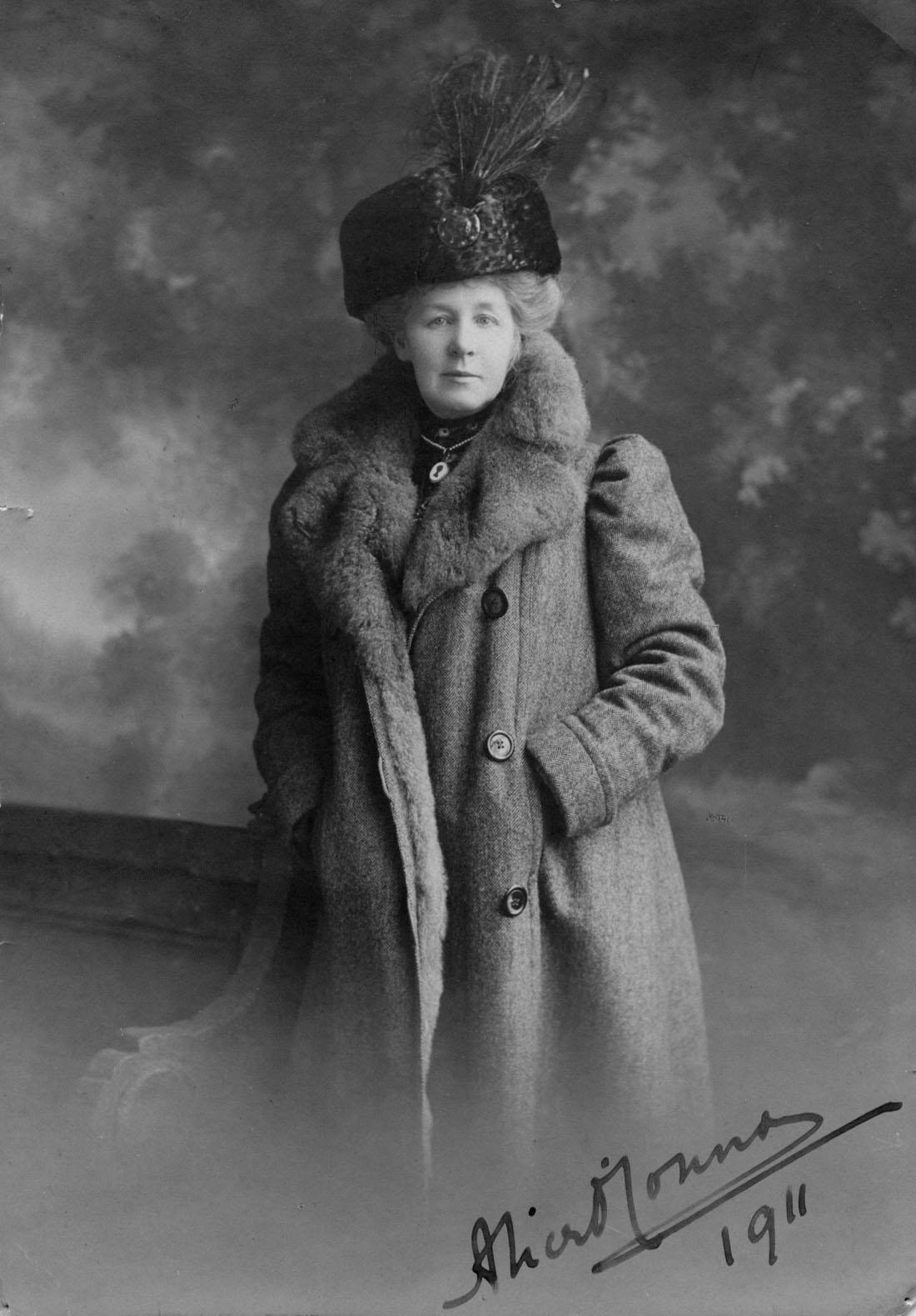
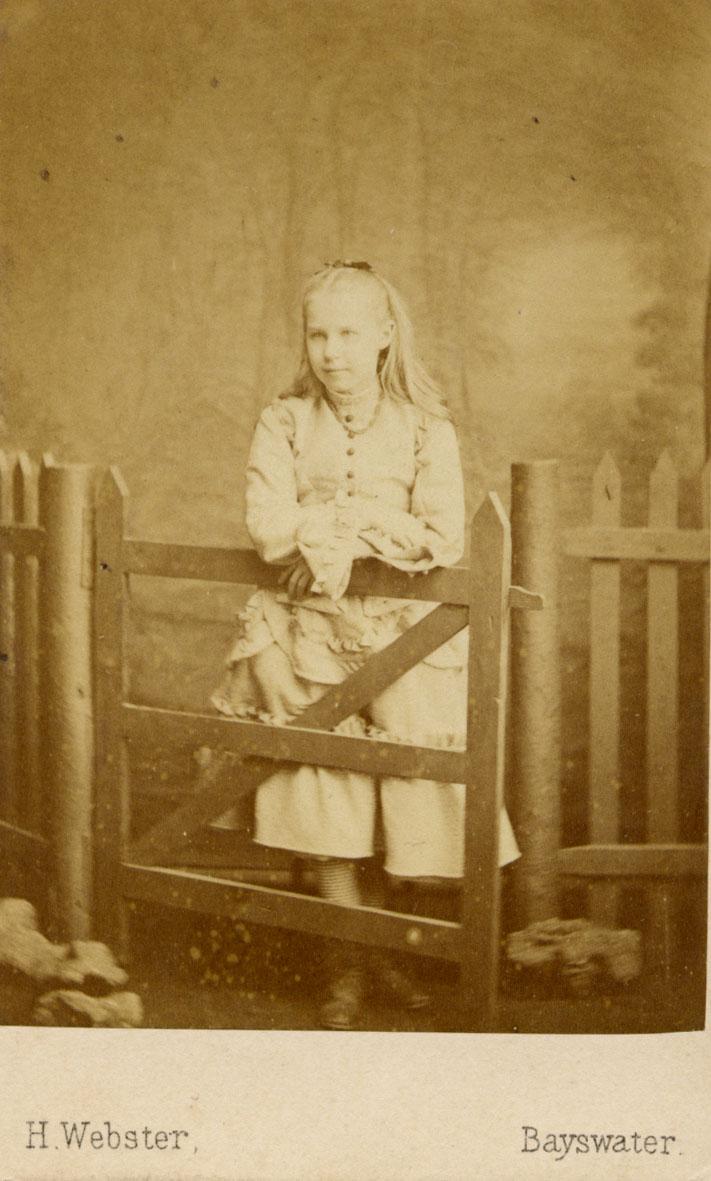
5. Alice BADNALL, daughter of The Venerable Hopkins BADNALL and Sarah Elizabeth OWEN-SMITH, was born in March 1860 in South Africa. She was born on 12 March 1860. She married Arthur Patrick O'CONNOR "10/1890". She married him in October 1890. She died on 25 October 1939. She was buried in October 1939. She married Unk O'CONNOR.
For some reason, Alice is not listed as being with the family at the 1871 census, despite all the other siblings being there who had been born by then.
Arthur Patrick O'CONNOR was the son of Charles O'CONNOR ( - ). He and Alice BADNALL had the following children:
| +14 | |
| +15 |
Unk O'CONNOR and Alice BADNALL had the following children:
| +16 | |
| +17 |
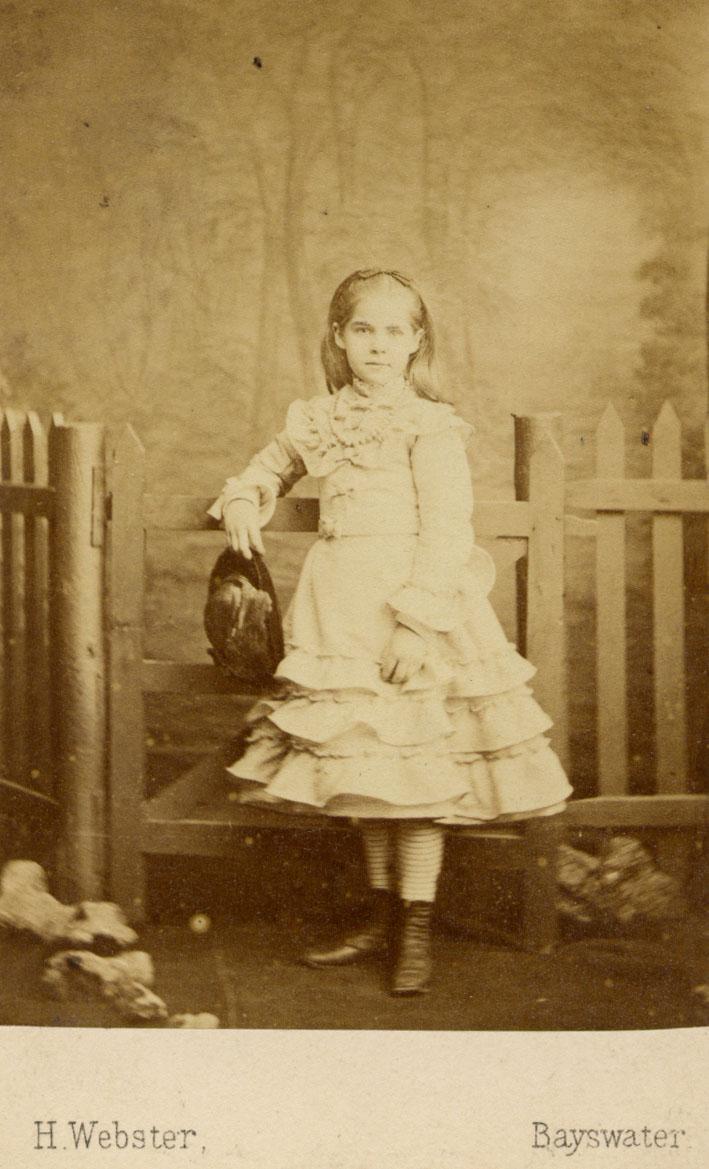
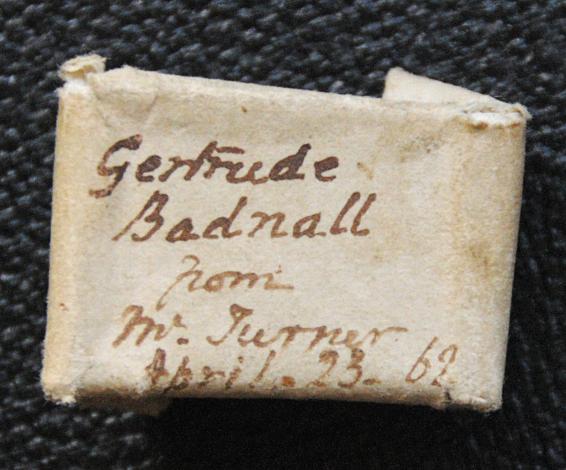
6. Gertrude BADNALL, daughter of The Venerable Hopkins BADNALL and Sarah Elizabeth OWEN-SMITH, was born on 23 April 1862 in Cawthorne. She died on 30 August 1950.
There exists a large set of correspondence, much of it to and from Gertrude Badnall when she was a student in Dresden in the 1880s. One example is here, the whole collection being with Alan Bednall, and a copy held by Philip Wilson.
7. Reginald Beaumont BADNALL, son of The Venerable Hopkins BADNALL and Sarah Elizabeth OWEN-SMITH, was born in August 1864 in Cape of Good Hope, George. He was educated at The Diocesan College. He married Matilda BROWNING on 15 June 1892 in East London, Cape of Good Hope. He died on 13 August 1939 in Molteno, Cape Province, South Africa.
Matilda BROWNING and Reginald Beaumont BADNALL had the following children:
| +18 | |
| +19 | |
| +20 | |
| +21 |
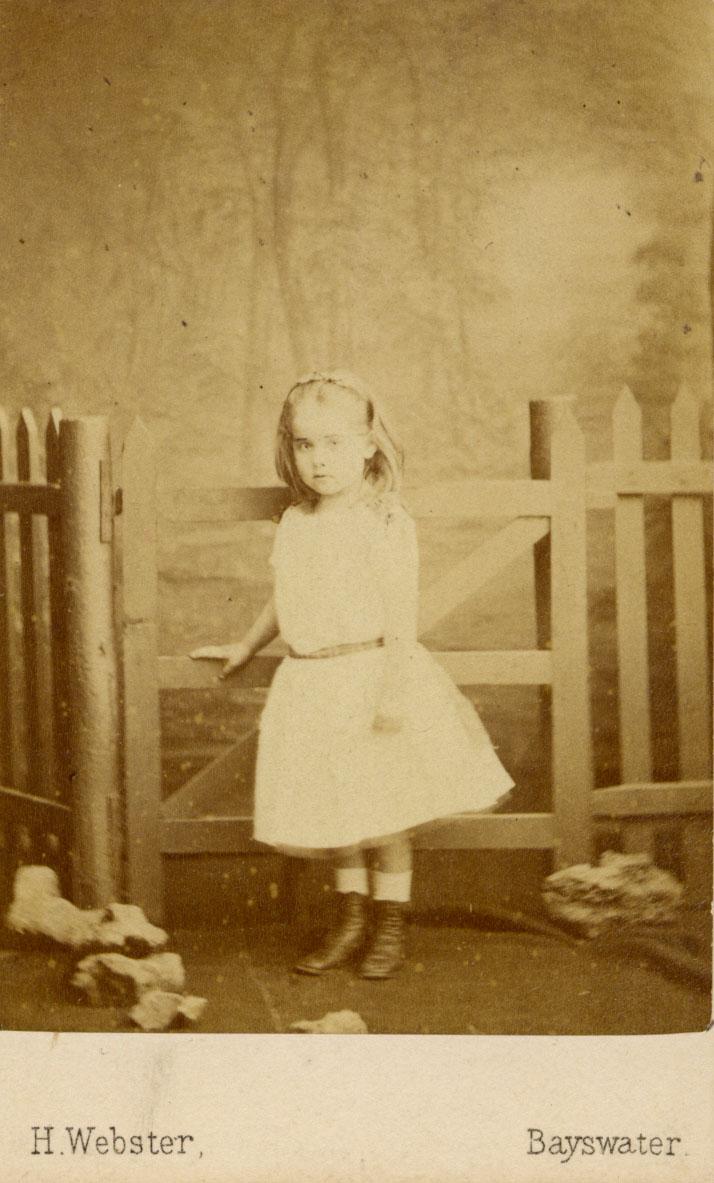
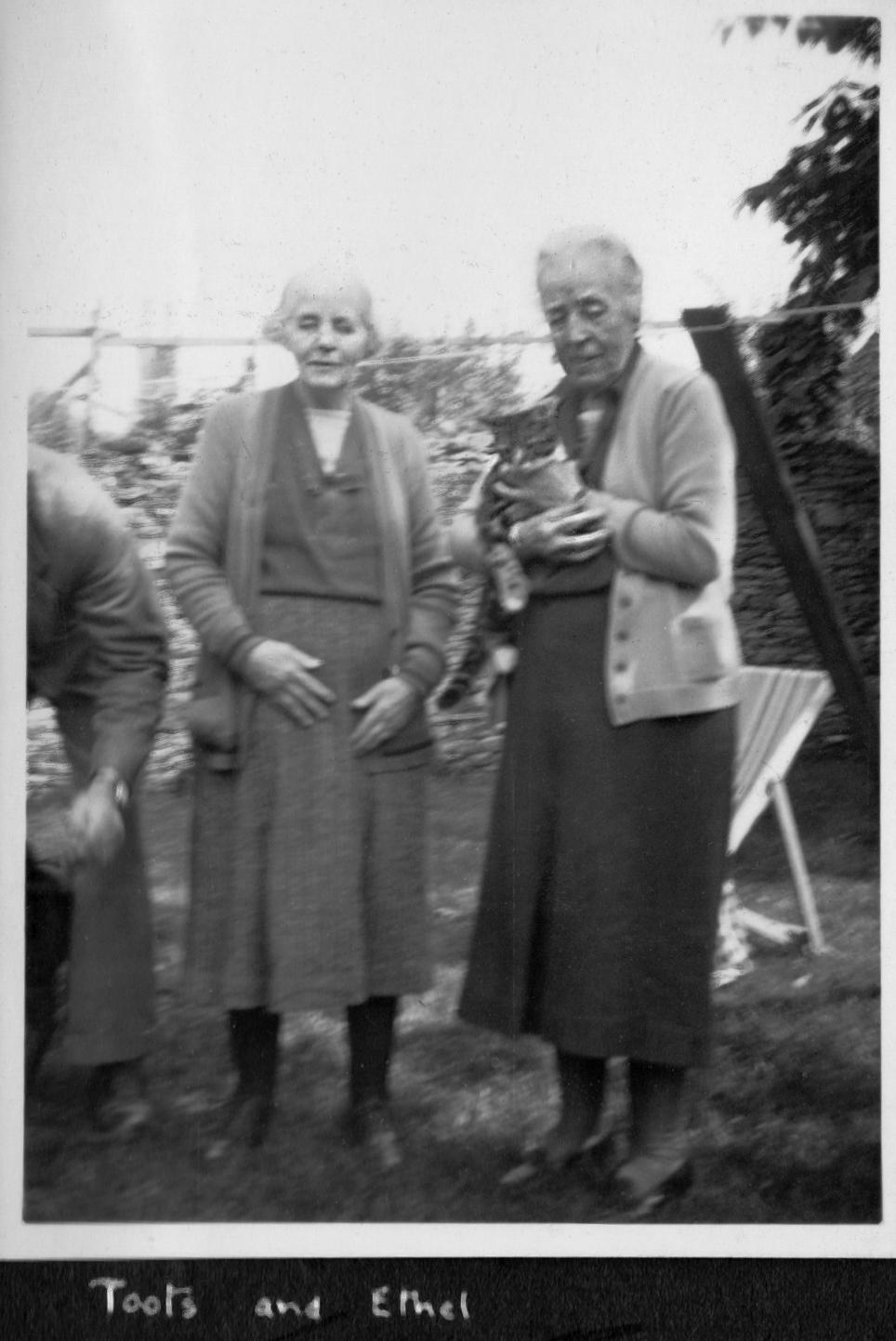
8. Ethel Mary BADNALL, daughter of The Venerable Hopkins BADNALL and Sarah Elizabeth OWEN-SMITH, was born circa 1868. She died on 31 January 1940 in Worthing, Sussex. She was buried in February 1940.
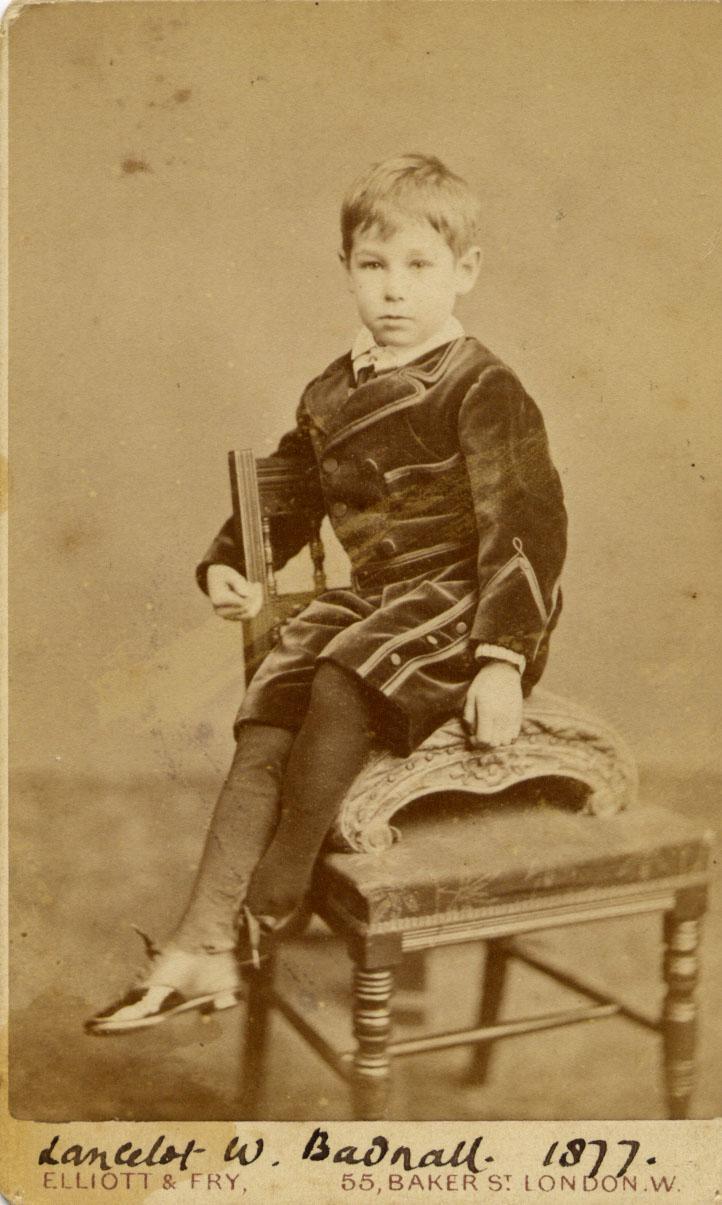
9. Lancelot Wykeham BADNALL, son of The Venerable Hopkins BADNALL and Sarah Elizabeth OWEN-SMITH, was born on 4 November 1871. He was educated at The Diocesan College. He married Constance Lilian ADDINGTON on 5 November 1898. He died on 24 March 1953 in 89 Camden Hill Court, Camden Hill, London W8.
Constance Lilian ADDINGTON, daughter of David ADDINGTON ( - ), died in 1963 in 7 Knaresboro' Place, Kensington, London. She and Lancelot Wykeham BADNALL had the following children:
| +22 | |
| +23 | |
| +24 |
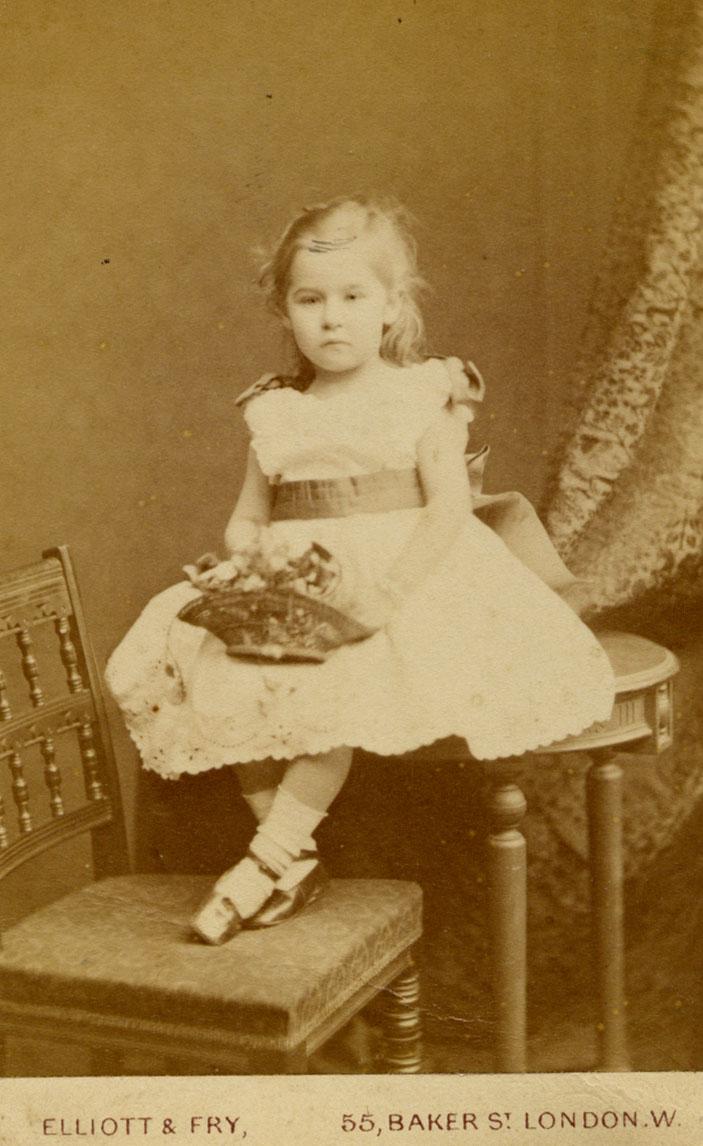
10. Evelyn Elizabeth BADNALL, daughter of The Venerable Hopkins BADNALL and Sarah Elizabeth OWEN-SMITH, was born on 24 December 1873. She married Frank Leonard NORTHCOTT on 8 June 1898. She married unk BROWNE on 21 April 1913. She died on 29 June 1944.
Frank Leonard NORTHCOTT, son of William NORTHCOTT ( - ) and Elizabeth UNK ( - ), was born in Rochester House, Ealing. He and Evelyn Elizabeth BADNALL had the following children:
| +25 | |
| +26 |
Third Generation
11. Blanche Fiennes BADNALL, daughter of Herbert Owen BADNALL and Lydia CAWOOD, was born in February 1889 in Beaconsfield, Cape of Good Hope. She married William B.A. RITCHIE.
William B.A. RITCHIE and Blanche Fiennes BADNALL had the following children:
| 27 | |
| 28 |
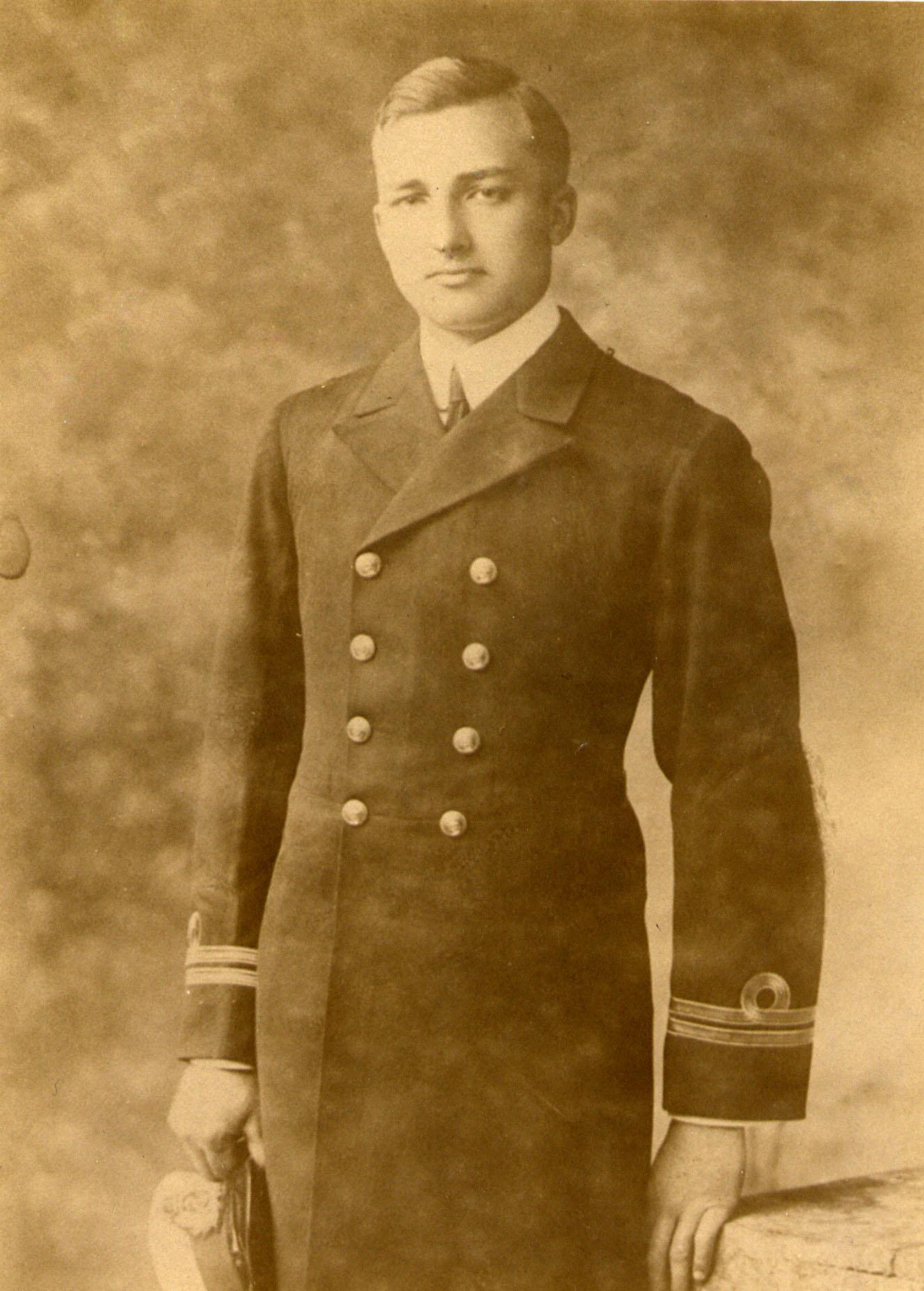
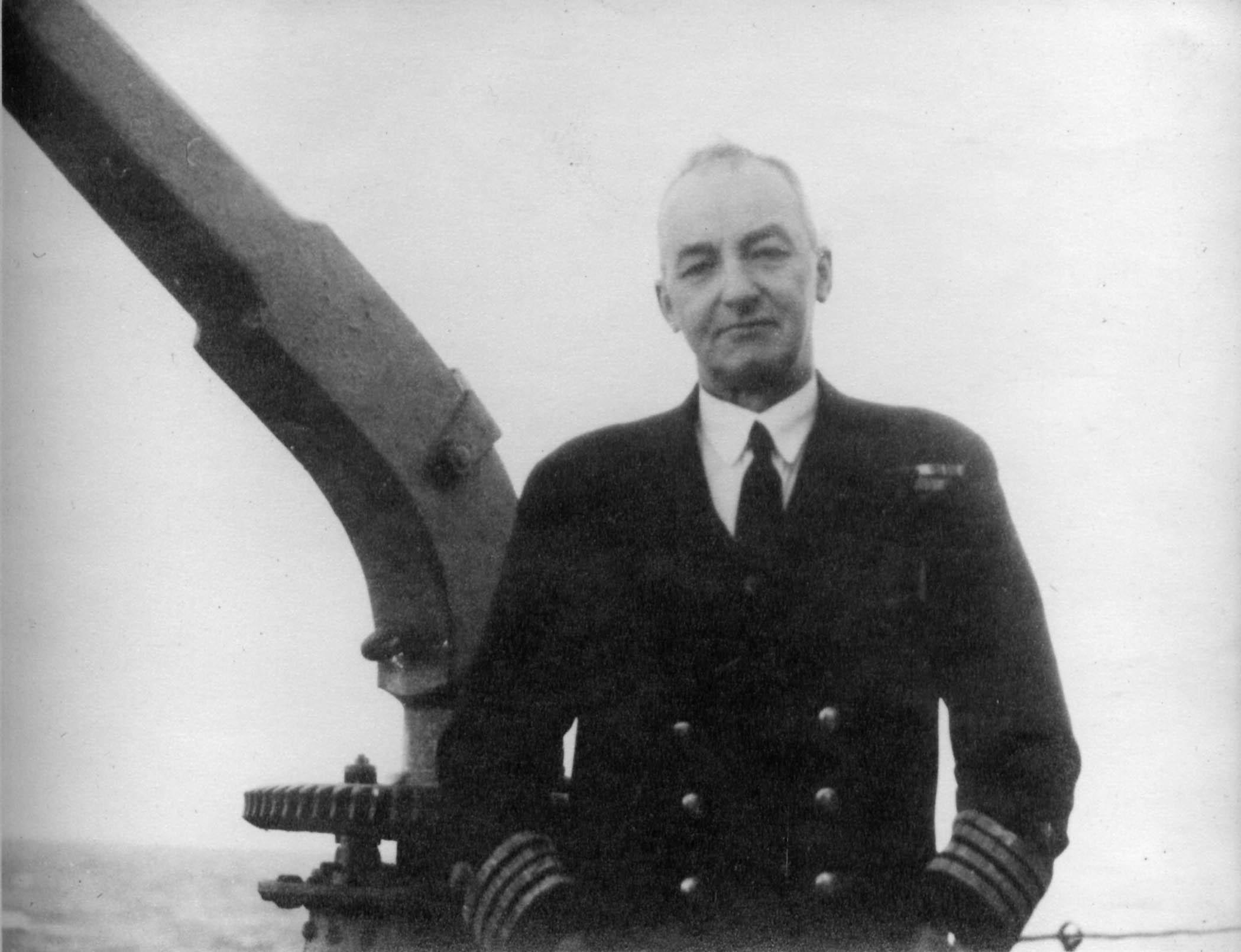
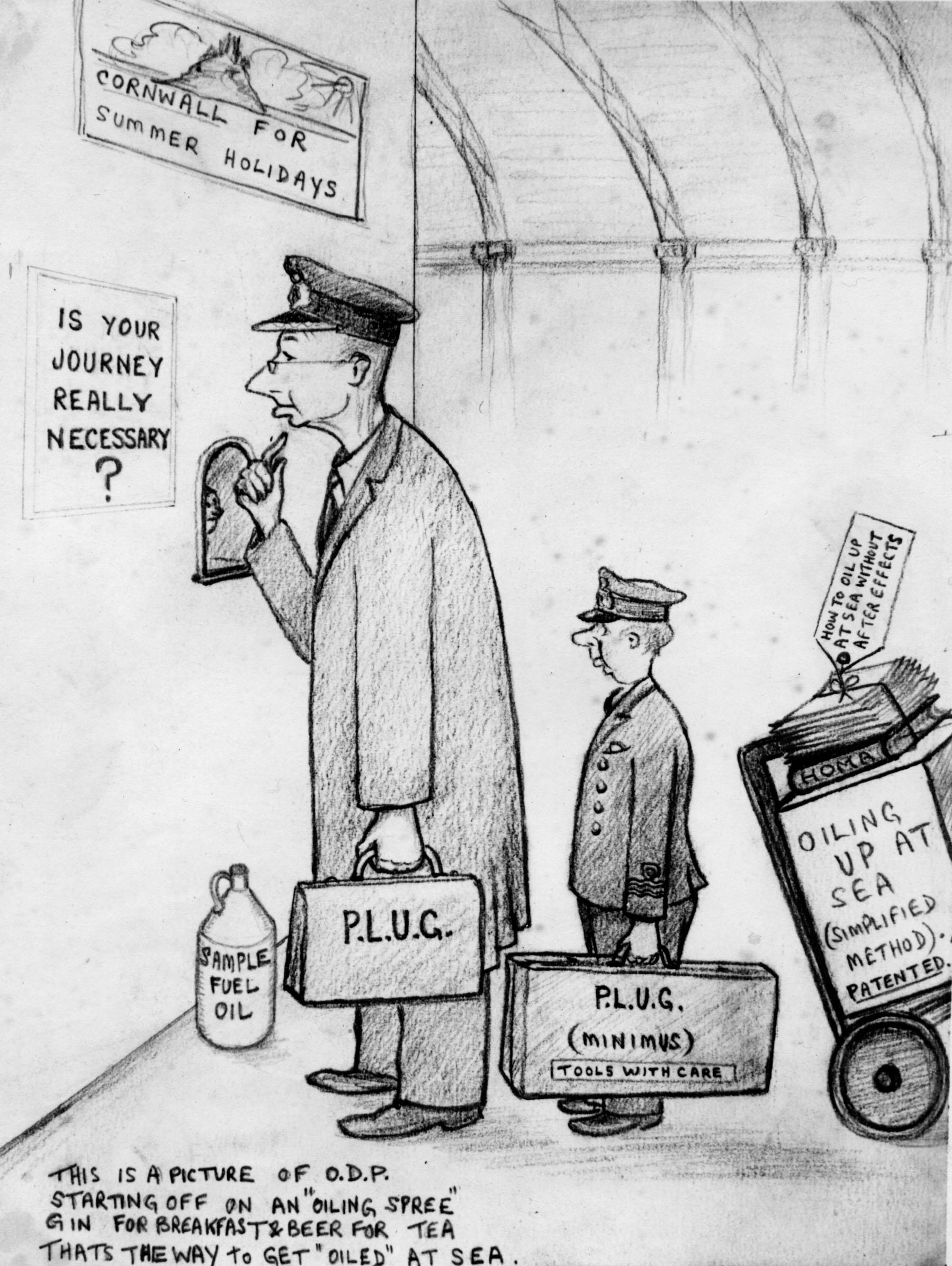
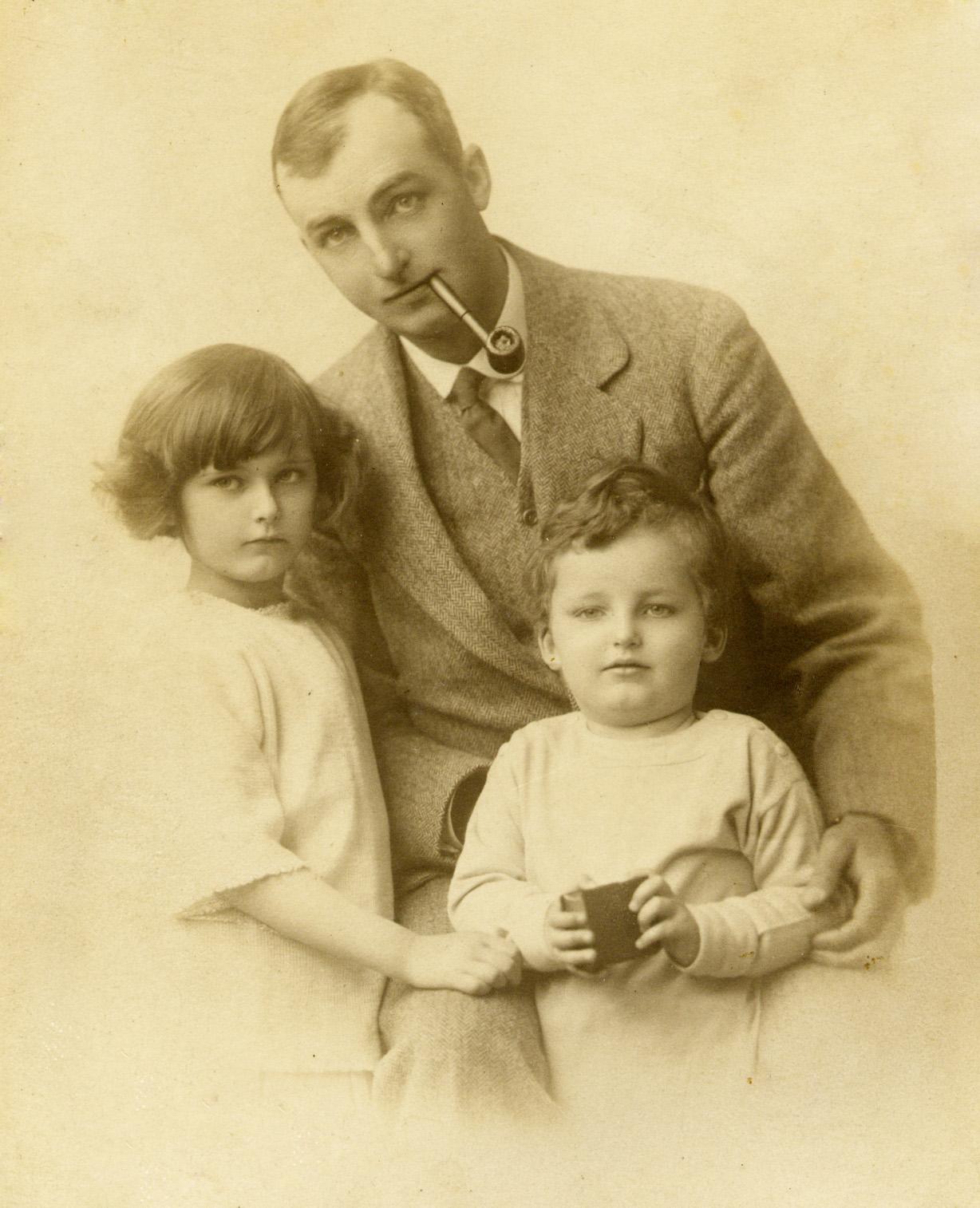


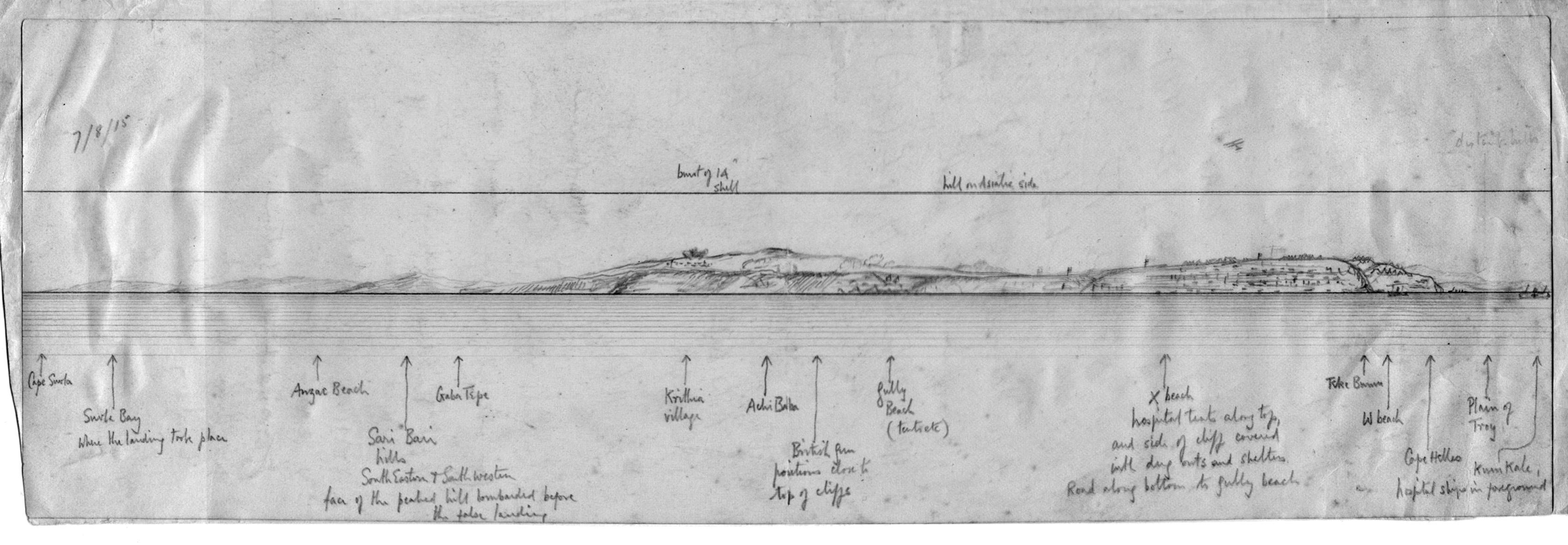
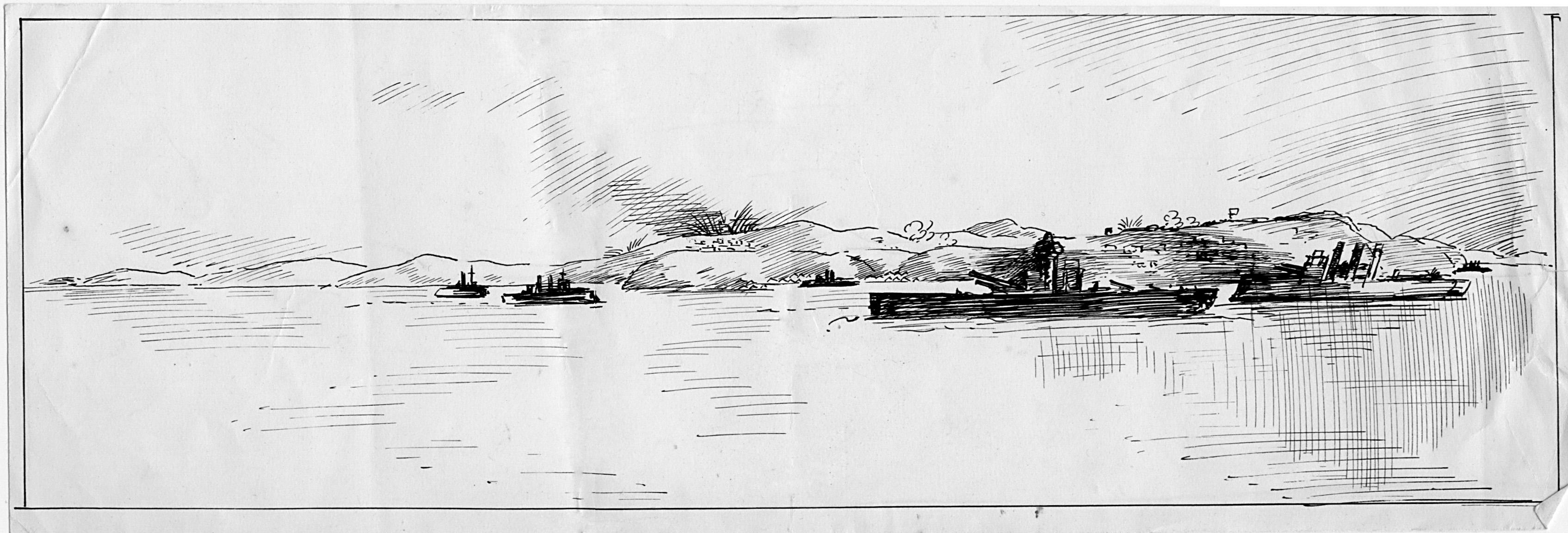
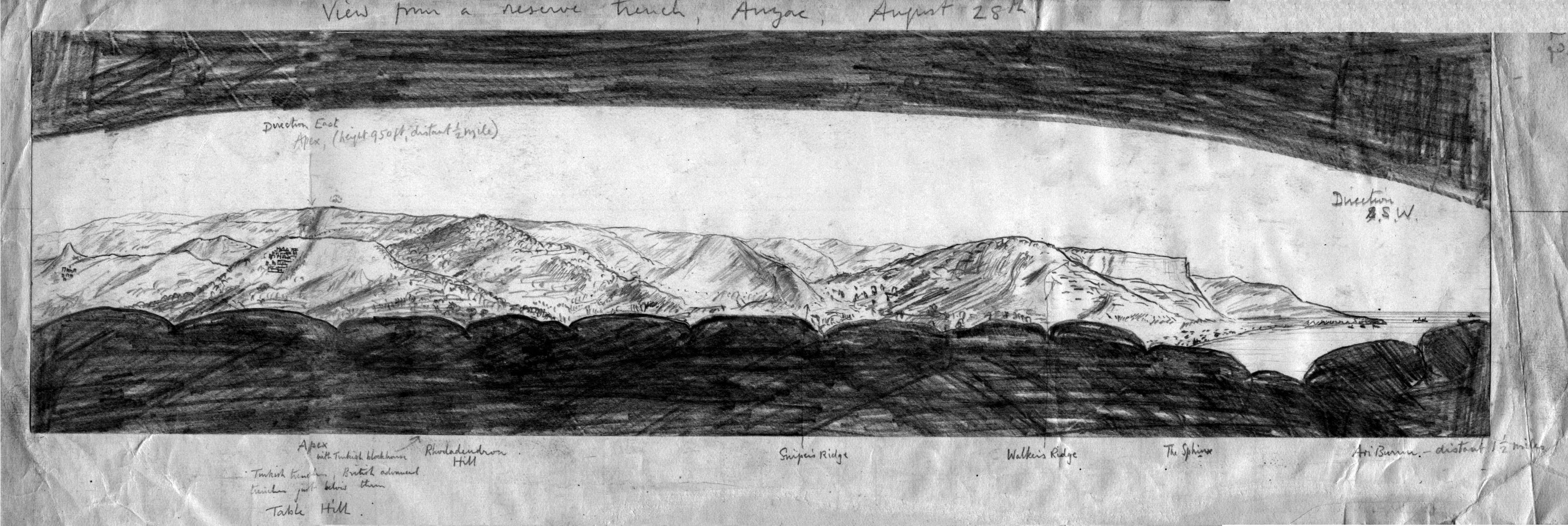
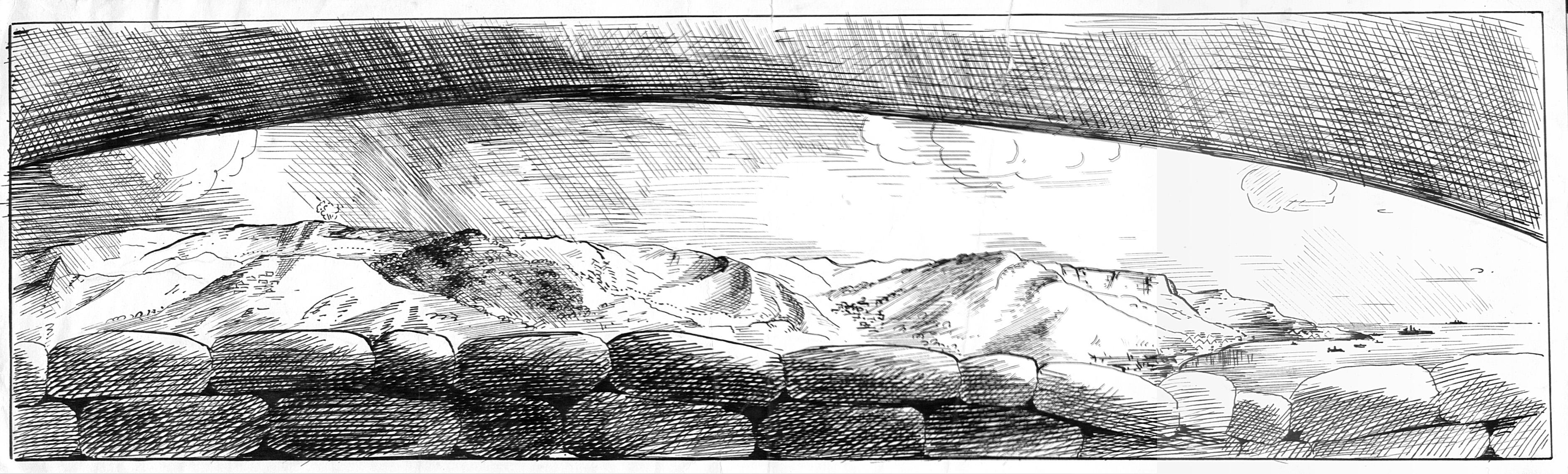
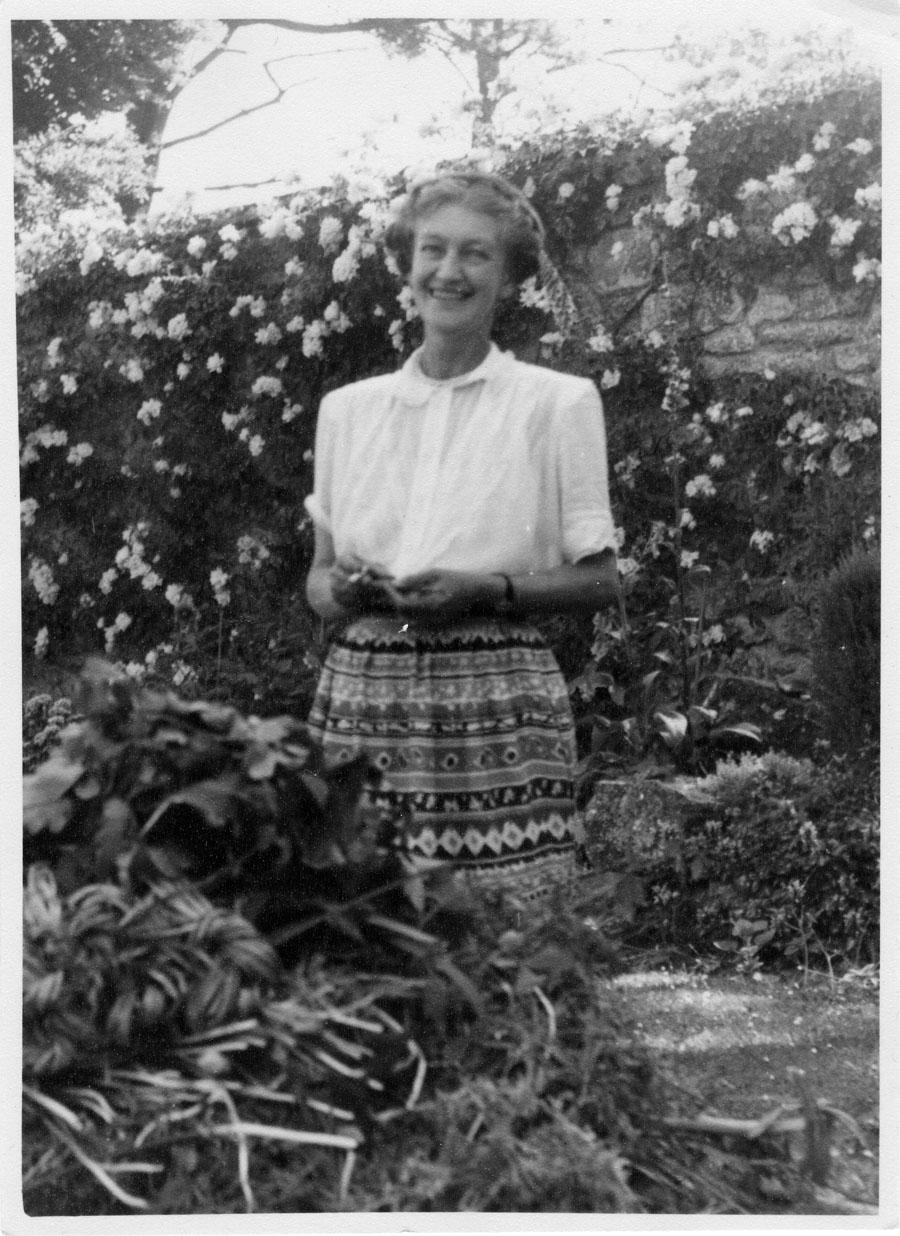
12. Captain Maurice Fiennes Fitzgerald WILSON DSO, RN (known as 'Fiennes', and also as [unnamed person]), son of Maurice Fitzgerald WILSON and Florence May BADNALL, was born on 22 June 1886 in 2 Talbot Villas, Old Dover Road, Gravesend, Kent. He was a Naval Officer. He married Catherine Gladys MURRAY on 4 August 1914 in St Judes, Portsea, Portsmouth, England. He died on 16 February 1975 in Watlington, Oxon. He was buried in Putney Vale Cemetery.
Fiennes, as he was known, had a career as a Naval Officer. His specialism was navigation. He was awarded the DSO for bravery in action during WW1, as well as the equally prestigious Dutch Order of Orange Nassau. (Listed in London Gazette of 25 November, 1947). Fiennes wrote a detailed diary of his WW1 experience - something officers were expressly forbidden to do. Some of that diary still exists, in particular his time aboard HMS Drake in 1914.
He tried, unsuccessfully (but only just) to get onto Scott's Antarctic Expedition, and correspondence about his efforts to be included still exist.
There are many more multimedia records for this entry, which can be via through Flickr.com
At the age of 14, Fiennes was at a school in Greenwich, at 50 Chroun(?) Hill. There appeared to be but 10 pupils (13-15 years of age) and a headmaster and his wife. Interestingly, in the 1891 census, the family is at 27 Sloane Gardens, Chelsea, London. The two boys are there, aged 4 and 2, 5 servants including a "nurse" and "nursemaid", but no sign of either parent!
MFFW was awarded the DSO during the Second Battle of Heligoland Bight in 1917.
This was a naval engagement in World War I. On 17 November 1917, German minesweepers clearing a path through the British minefield in the Heligoland Bight near the coast of Germany were intercepted by two British cruisers, HMS Calypso and HMS Caledon, performing counter-minesweeping duties. The German ships fled south toward the protection of the battleships SMS Kaiser and SMS Kaiserin, commanded by Rear Admiral Ludwig von Reuter. The two cruisers engaged the German battleships, while their own screening force of the battlecruisers HMS Tiger, HMS Renown, HMS Repulse, HMS Courageous, and HMS Glorious of the First Battlecruiser Squadron, commanded by Admiral Sir Charles Napier, were coming up to assist.
All personnel on the bridge of HMS Calypso, including her captain, were killed by a 12-inch shell. HMS Repulse, Captain William Boyle, briefly engaged the German battleships, but the Germans made it back to the safety of their own minefields with the loss of only a torpedo boat.
You will find an account of the encounter in the Gazettes (www.gazettes-online.co.uk). I believe in the 24 June 19 gazette.
"British forces were Glorious, Courageous and eight light cruisers with four battlecruisers in support attemping to attack German minesweeping forces and whatever patrol forces they encountered. They hit upon four German light cruiser under Kontreadmiral von Reuter, which laid smoke and fell back toward two supporting German battleships. Glorious and Courageous fired an awful lot of shells and scored few hits. The worst damaged German ship was the light cruiser Königsberg, which took a 15-inch shell from Repulse."
From the Old Wykehamist
" Register: Wilson, Maurice Fiennes Fitzgerald (D, 1899³ - 1900³), born 22 June 1886, son of Maurice Fitzgerald Wilson, Bagenholt, Dover. Midshipman HMS Drake; Sub-Lieutenant.1906; Lieutenant-Commander HMS Calypso 1918; DSO.
His House annals record that Fiennes was in MP2 when he arrived at the school (being the ‘Middle Part’ of the school, this would demonstrate to me that he was particularly bright – at least he would have been in my day in the mid-60s!) and in MP3 when he left. The annals also state ‘left to cram for R.N, 5th into Britannia 1901’. [Junior Part lies below and Senior Part above (unsurprisingly!), with VIth Book at the peak of the academic streaming.]
Fiennes was only here for a year – in Kenny’s (aka Fearons or ‘D’)".
Fiennes was educated at Winchester College and made a successful career in the Navy, where he was known as one of its most talented navigators. He was awarded the DSO for courage during WW 1, during action on HMS Calypso where the Captain was killed and he was seriously injured, yet remained in charge to bring the ship to safety. Fiennes was also almost chosen to be part of Scott's fated Antartctic expedition, but was in the end left out due to politics: there was controversy about the expedition which centred around the issue of whether the expedition should at heart be a civil or naval venture. After WW 1 Fiennes worked for Admiral Kelly in the fledgling League of Nations. During WW 2 he returned to the Navy and was involved in convoy work , for which, by order of the Dutch monarch, he became a Commander of the Order of Orange Nassau. After WW 2 Fiennes involved himself in a number of occupations, including keeping chickens. He was interested in genealogy, book-binding and had a passion for driving an old Bentley car; this latter had a tragic consequence in his old age when he ran over and killed a young woman (who was known to him) in the village where he lived: he was driving in the dark and had not seen her. Fiennes was known for his quiet courage and great sense of humour.
Catherine Gladys MURRAY (known as 'Gladys'), daughter of Colonel Pulteney Henry MURRAY (1849-1912) and Mary Leaycraft INGHAM (1848-1890), was born on 18 January 1886 in Oswestry (registered). She was born on 18 January 1886 in Oswestry. She died on 12 April 1958. She and Maurice Fiennes Fitzgerald WILSON had the following children:
| 29 | Pamela Fiennes WILSON (1918-2018). Pamela was born on 17 March 1918. She died on 24 April 2018. She was buried on 8 May 2018 in St. Peter's, Hinckley. |
| 30 | Peter Fiennes WILSON (1920-1995). Peter was born on 21 December 1920 in 2 Dartmouth Place, Blackheath. He was born on 21 December 1920 in 2 Dartmouth Pl., Blackheath. He was a Consultant Civil Engineer. He married Iris Margaret MARTIN on 21 May 1949 in Ilminster Church. He died on 31 July 1995 in Warwick Park, Tunbridge Wells. He died in 1996 in Warwick Park, Tunbridge Wells. |
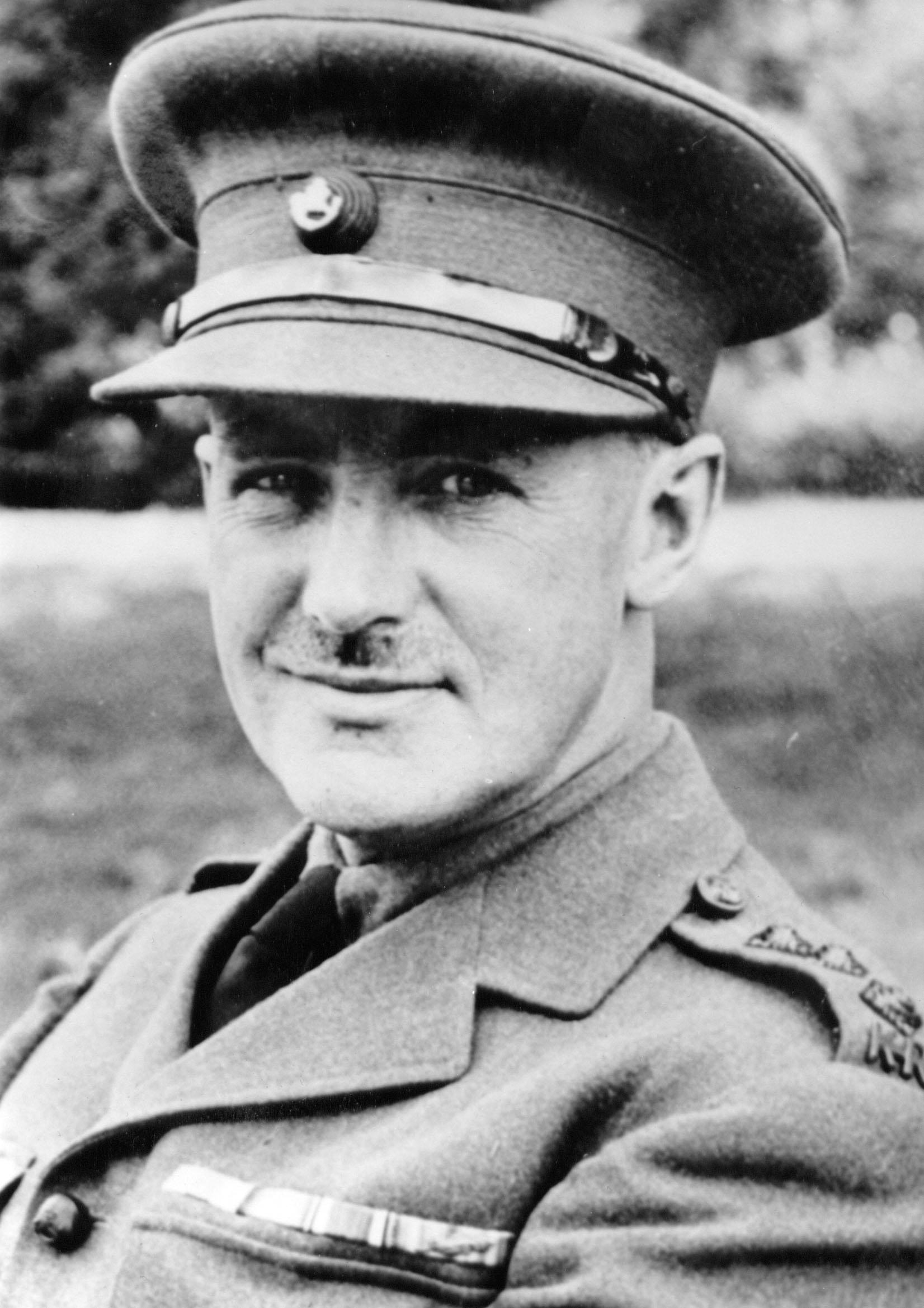
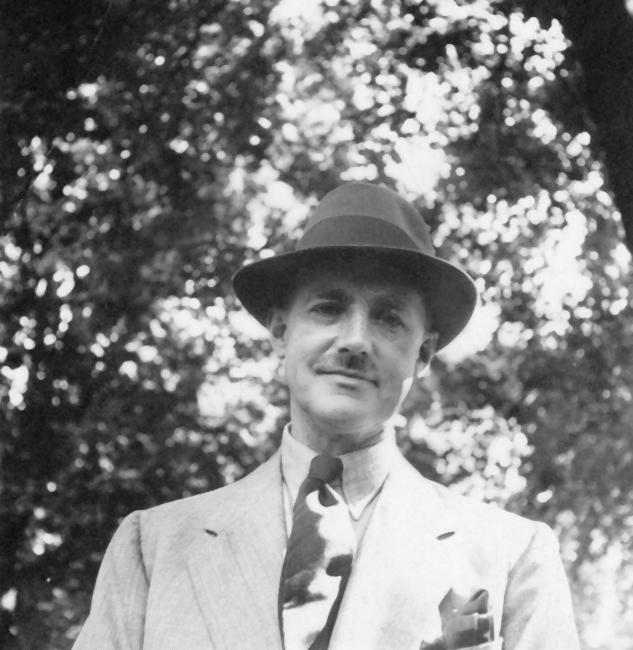
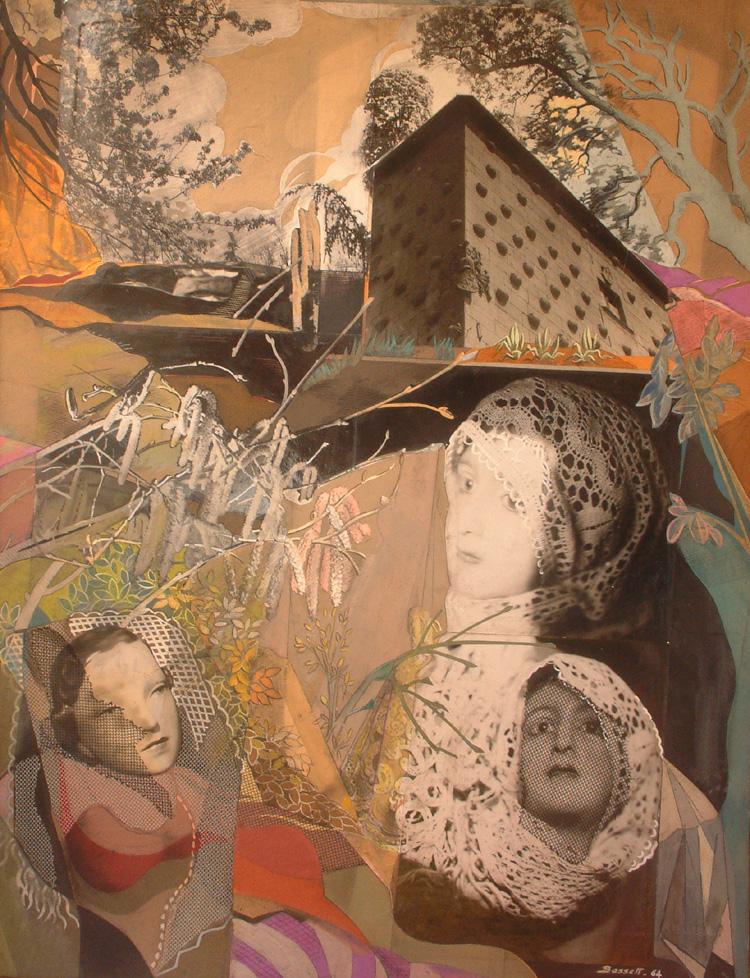
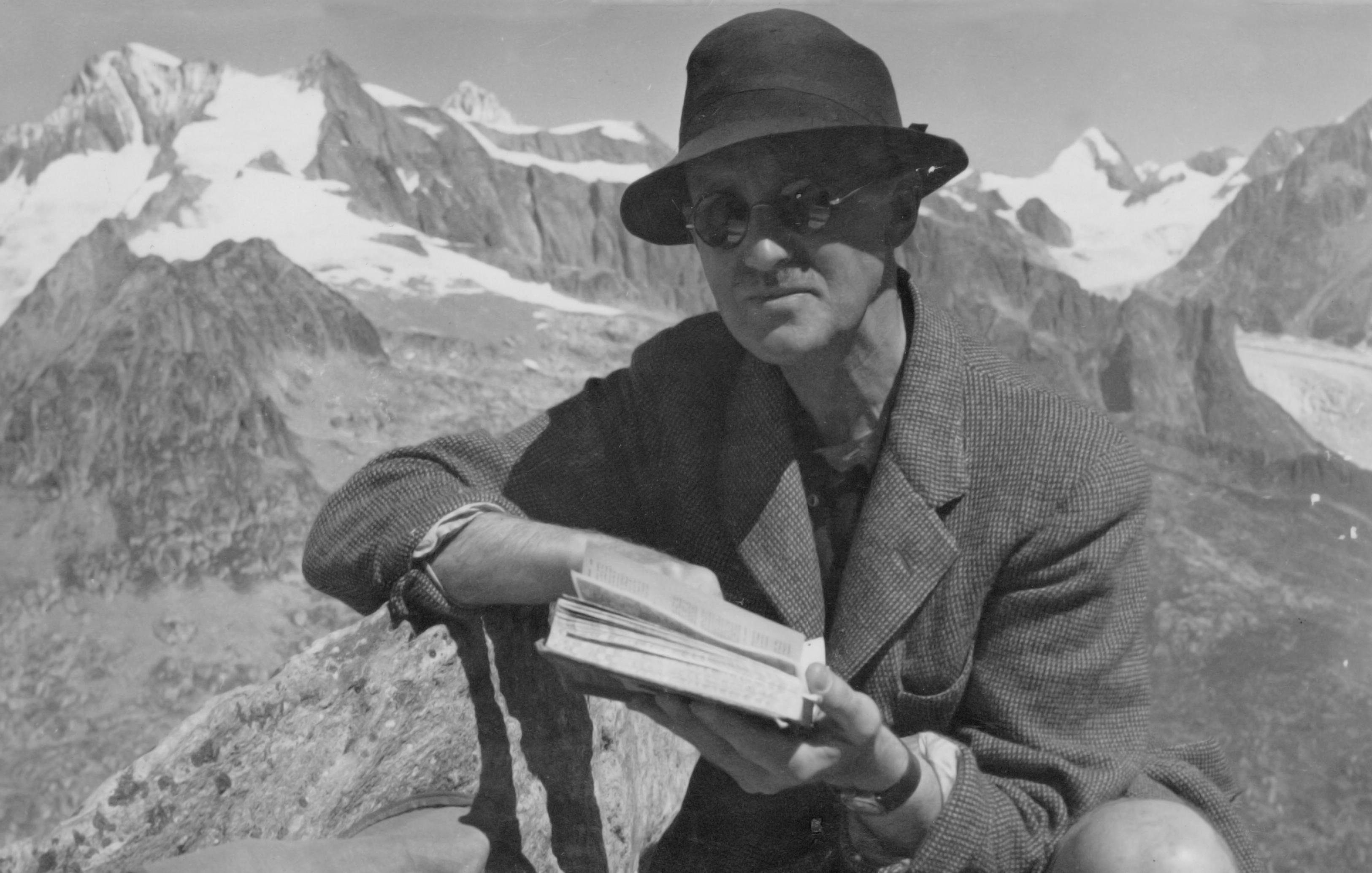
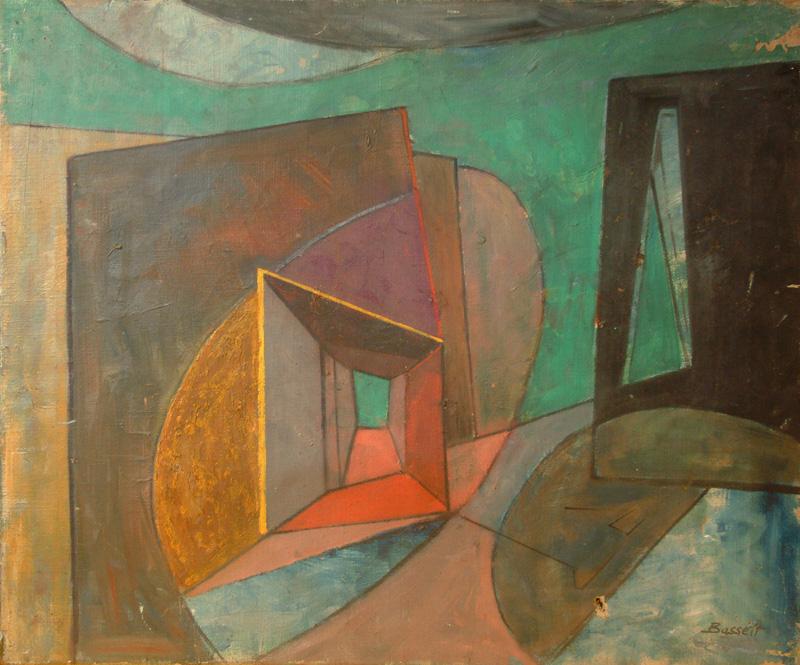
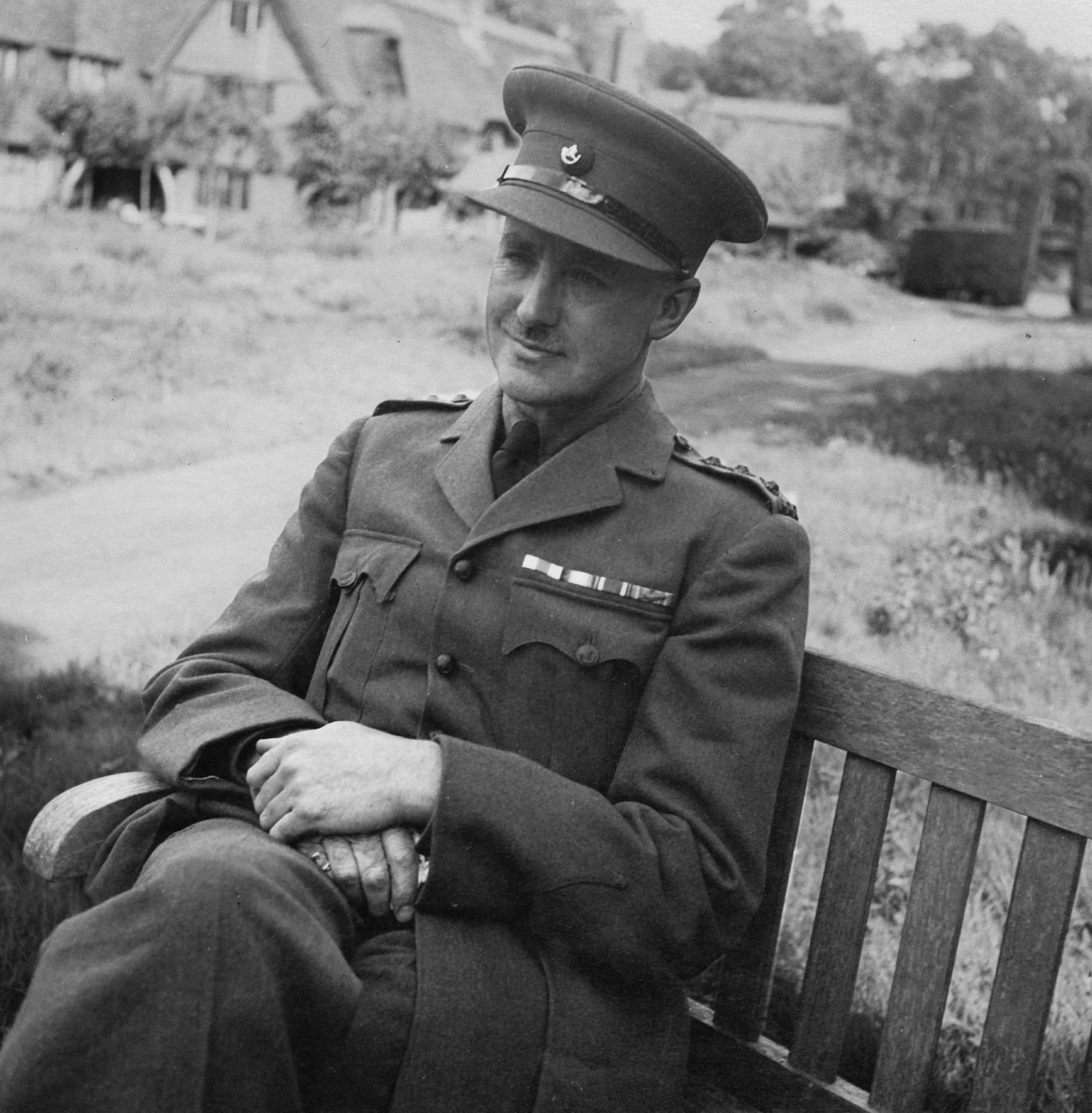
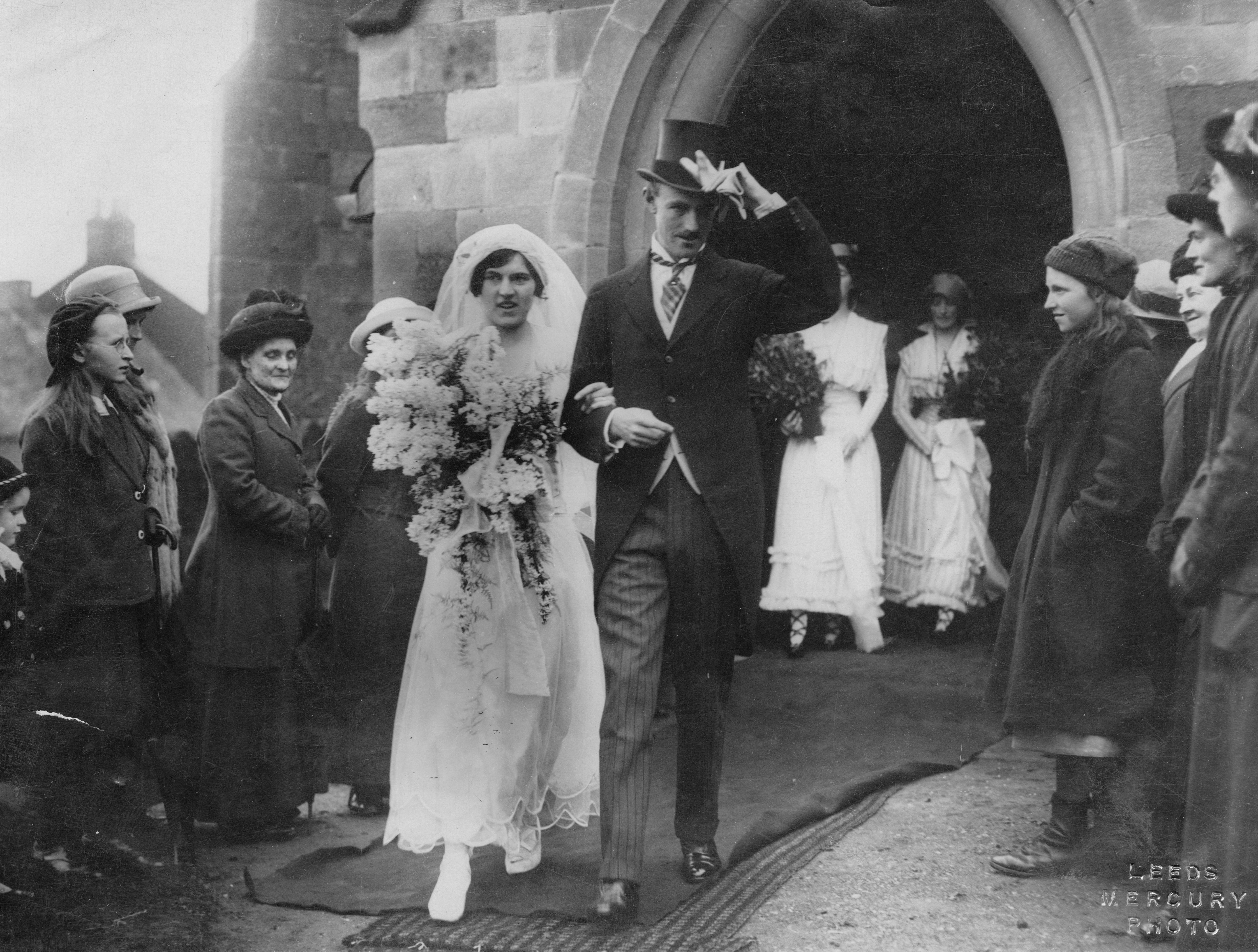
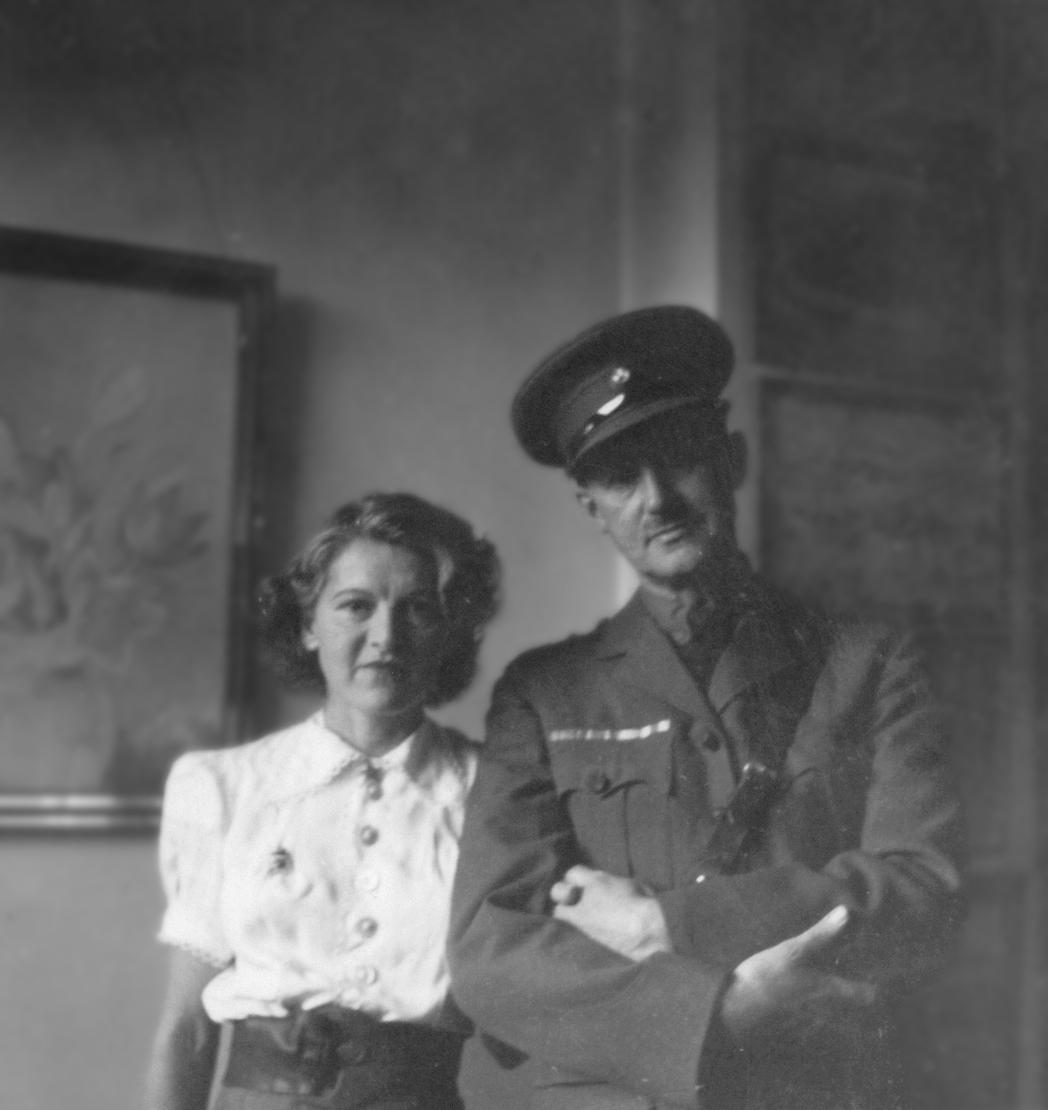
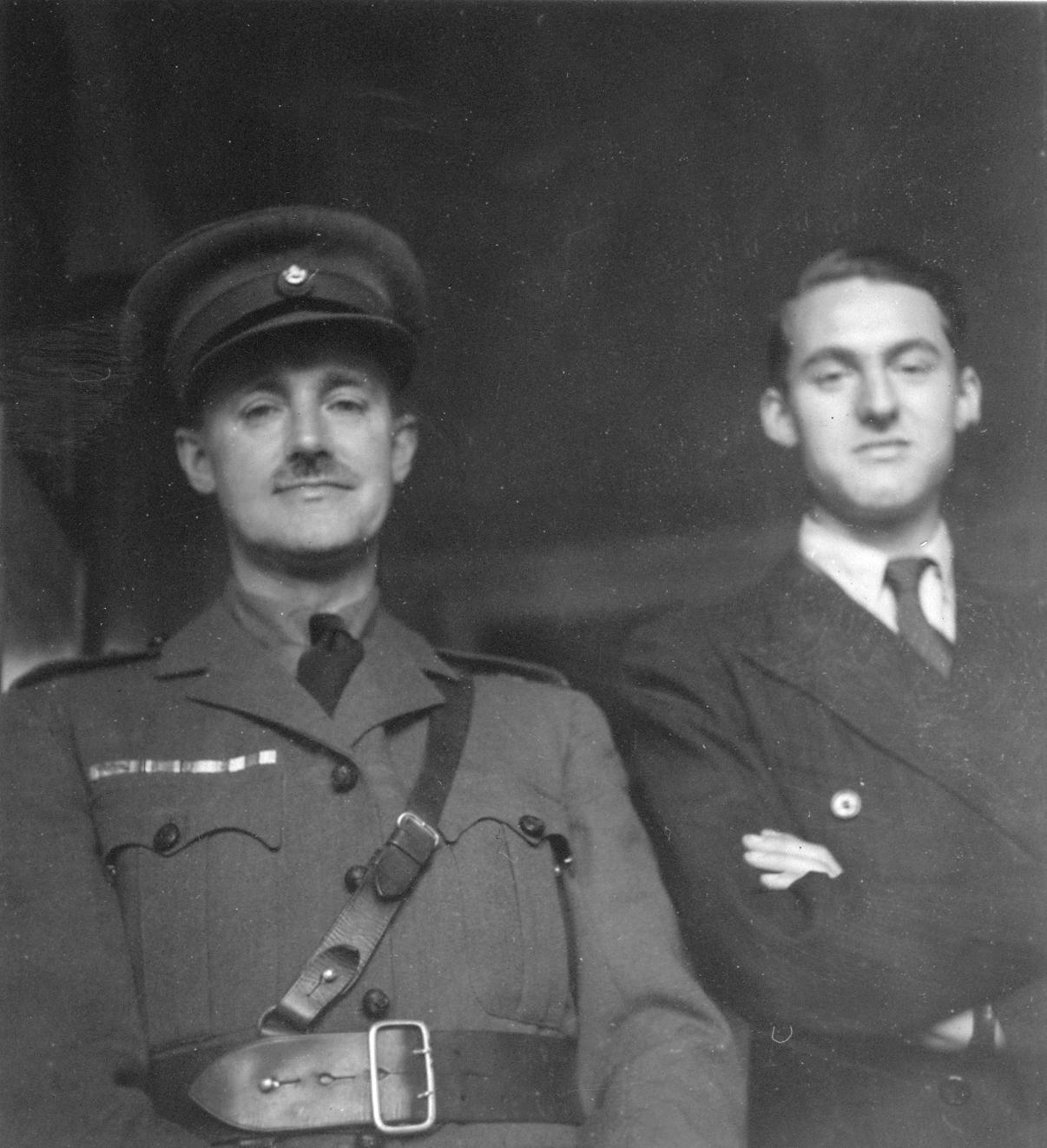
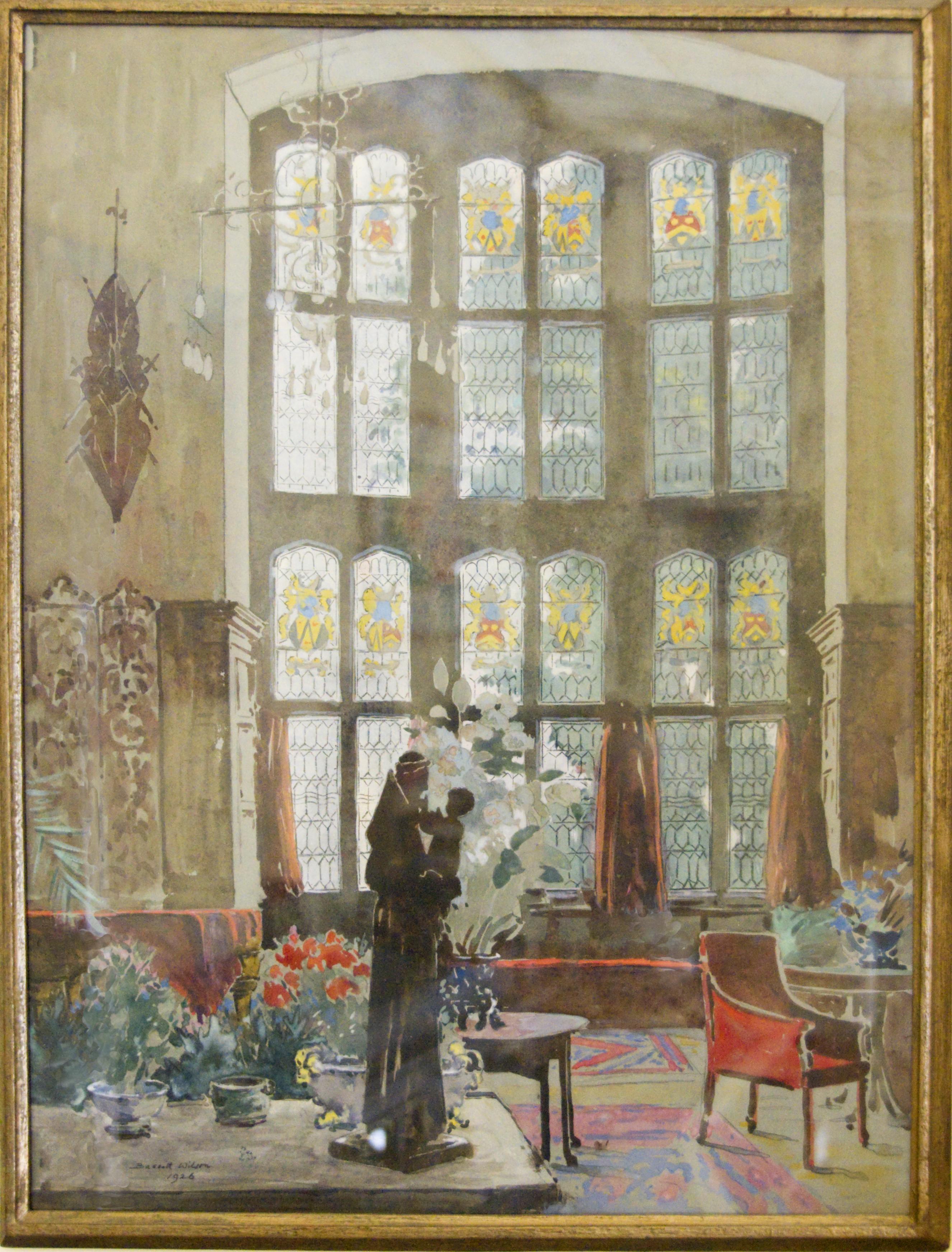
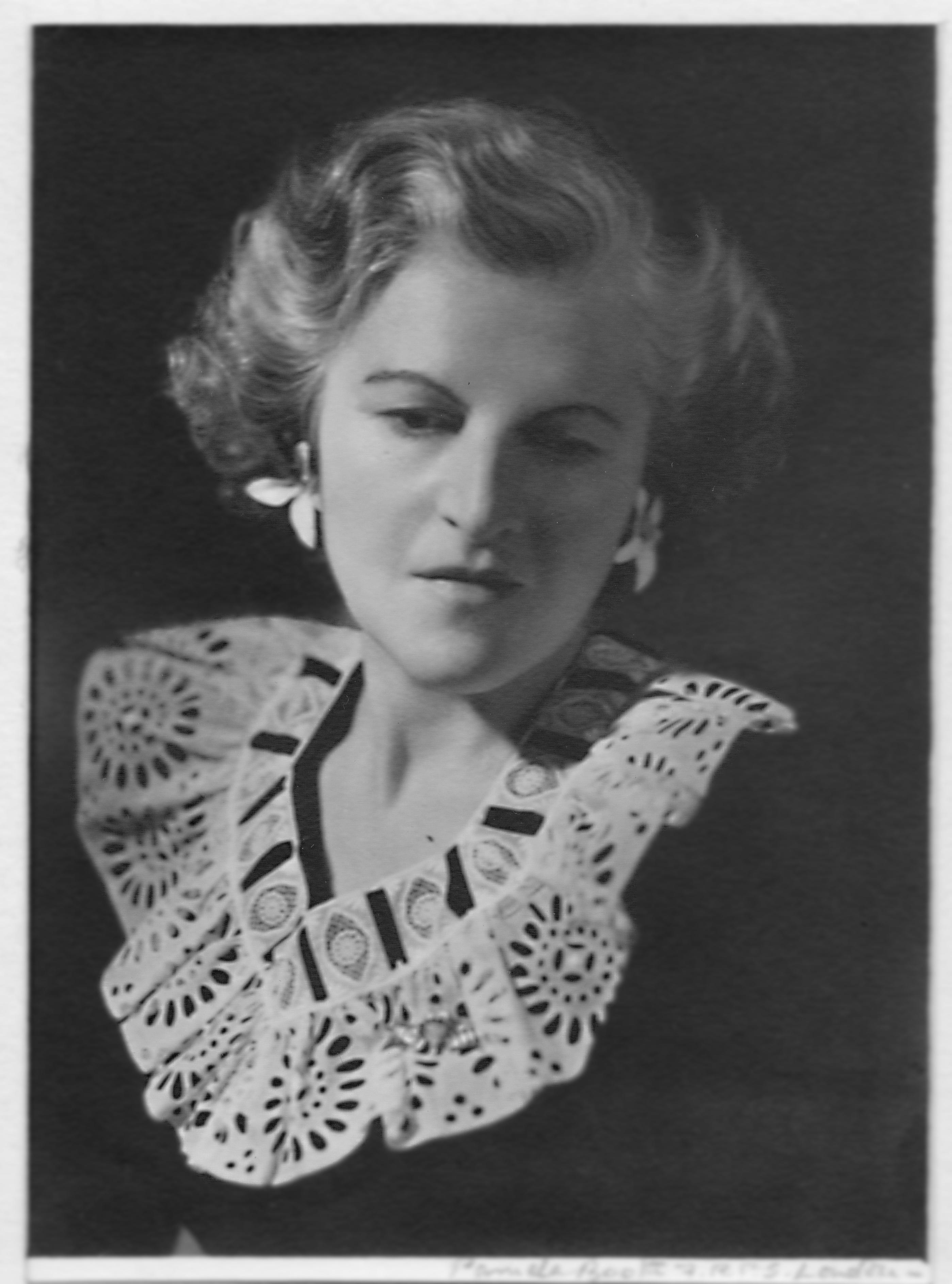
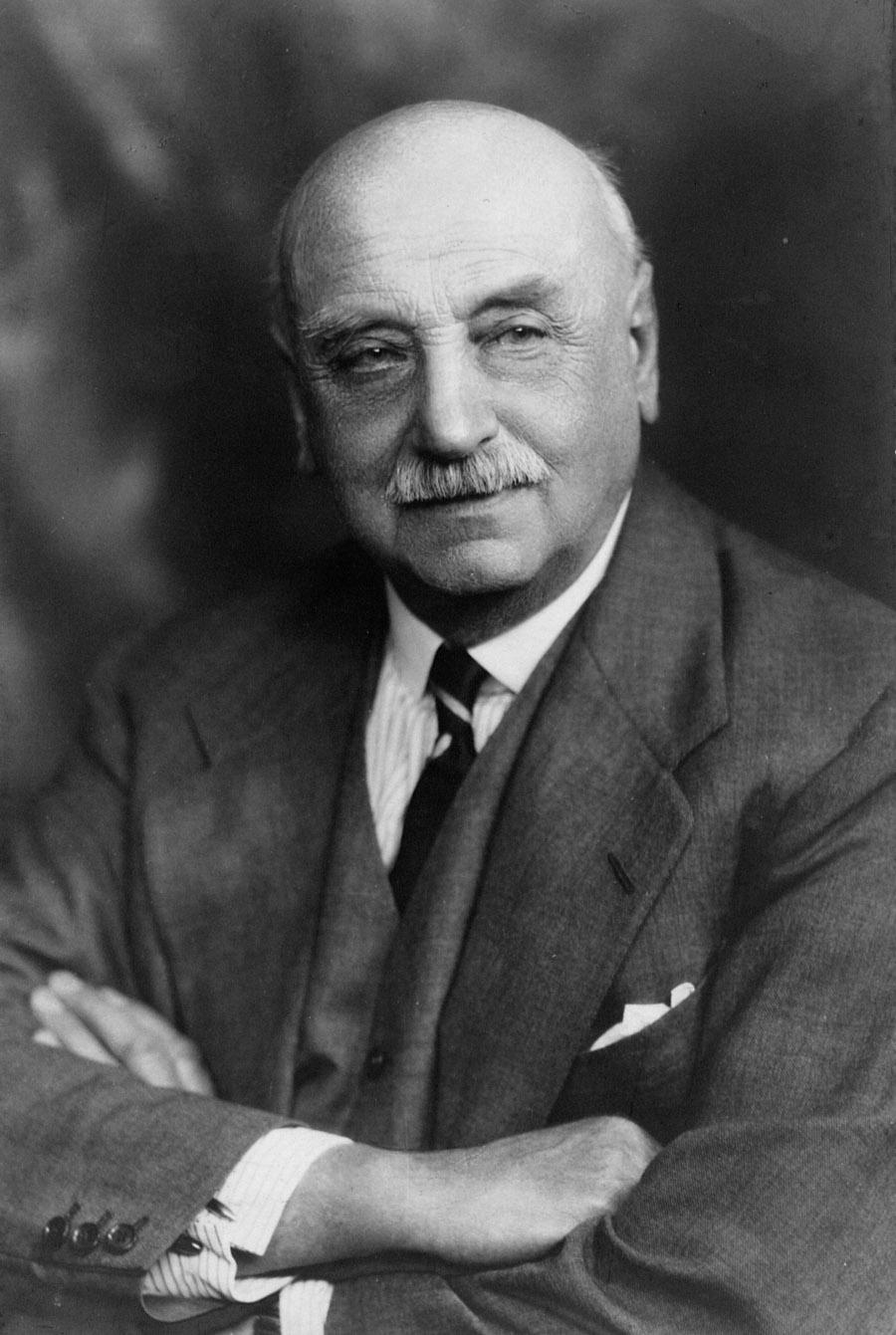
13. Bassett Fitzgerald WILSON, son of Maurice Fitzgerald WILSON and Florence May BADNALL, was born on 1 September 1888 in St. Ives, Cornwall. He was a Soldier, artist. He married Muriel Gertrude SAMUELSON on 24 April 1915. He was buried circa 1941. He died circa May 1972.
Rugby School entry: Wilson, Bassett Fitzgerald, only son of Maurice Fitzgerald Wilson, Esq., Castle Avenue, Dover, aged 14, September 1. Stallard
Bassett studied at Trinity College, Cambridge where he read Law. Took up painting after being injured in the First World War. In 1917 held an exhibition of Western Front work at Walker's Galleries. During the 1920's with his wife Muriel Wilson established his reputation as a painter. Exhibited together in an exhibition in 1921 at Walker's Galleries, then in 1925 in a group show with John Cosmo Clark and Roland Vivian Pitchforth at Goupil Gallery. Bassett held a one man show in 1927 at the Fine Art Society in Bond Street. Were drawn into the modern movement in the 1930's after they moved to Paris and made friends with artists such as Andre Lhote, in whose studio they both worked from time to time. In 1930 showed at Knoedler's in New York and Chicago. Exhibited with his wife at Reid and Lefevre Gallery in London; Darlington Municipal Art Gallery - Bassett's watercolour was purchased by the town's permanent collection, at Salon des Tuileries and Galerie Gerbo in Paris (where Bassett's Stacked Chairs was selected for particular mention in Sud) and with Rhyma Grop at Helsingfors in Finland ( the two Wilsons and Lhote were invited to represent the best and most modern in European art) in 1934. In 1935-37 showed in a number of exhibitions in Paris. Bassett joined the British Expeditionary Force in his old rank of Captain for the duration of the Second World War. In 1946 Bassett held a large retrospective at Galerie du Bac, Paris from which National Museum of Modern Art, Paris purchased one work from his Chairs series - the Chairs of Luxembourg Gardens. Patrick Seale held a show of Wilson's work in 1981.
Early in May 1972, in the national obituary columns, appeared the name of Brigadier Bassett F. G. Wilson OBE. MC. Croix de Guerre, who had just died in London, aged 83. The paragraph following told of his service with the King's Royal Rifle Corps and the 4th American Corps in World War 1; of his service on Montgomery's staff and as Provost Marshal of the 21st Army Group in World War II; of his subsequent chairmanship of the RMP Association. Then, as an after-thought "artist who held exhibitions of paintings under name, Bassett."
When the Brigadier's widow, Muriel, died in October 1977, her obituary made no mention at all of the fact that she too, had been an artist. Yet in the 1930's Bassett and Muriel, to give them the names by which they chiefly signed their work at that time, had been accounted among the foremost of European painters.
Both were virtually self-taught. Bassett, after school at Rugby where he was an almost exact contemporary of Rupert Brooke, though not in the same house, went up to Trinity College, Cambridge, where he read Law. After graduation he had a short period as a very junior diplomat, then joined a flourishing law practice in London, before becoming a soldier in 1914 at the outbreak of War.
Severely wounded in France, he was advised by the M.O. to take up sketching in convalescence, as a way of improving the impaired co-ordination between eye and hand. He found he had a natural aptitude for drawing and painting, which he put to such good use when he returned to active service that he was able, in 1917, to mount an exhibition of Drawings and Watercolours of the Western Front at Walker's Galleries in Bond Street. As a serving officer he could not exhibit under his own name; and therefore chose the nom de pinceau Basfi du Bleu (significantly French, one may think, in the light of his later artistic development).
Muriel, one of the three children of Sir Francis Samuelson, 3rd Baronet, and his Canadian wife, Fanny Isabel Merritt Wright, had the usual upbringing of a girl or her time and place in Society. She too was found to have an aptitude for painting, chiefly watercolour landscapes and flower pieces. Her first recorded exhibition was a joint one with Bassett, again at Walker's Galleries, in 1921. No press cuttings survive, but it would seem to have been a success, since each had at least one watercolour reproduced in art magazines "Muriel's Violets in Bowl in "Drawing and Design¡", Bassett's Red Roofs and Poppies in "Colour".
In the 1920's both consolidated their position as good traditional English painters, with submissions to a group show at the Goupil Gallery in 1925 (where their fellow exhibitors included future R.A.'s Cosmo Clark and Vivian Pitchforth); Bassett in 1927 with a one-man show at the Fine Art Society in Bond Street of Watercolours of Italy, Spain and London which earned him the good opinion of the critics ("An amateur artist of exceptional talent, he can give points to many fulltime professional painters"); Muriel in 1929 by inclusion in Lord Duveen's British Artists' Exhibition at the Walker Gallery, Liverpool, and with a major show at Alex. Reid and Lefevre in London, which elicited high praise in the Sunday Times from the critic and historian of the Modern Movement, RH Wilenski, and from which a flower piece was bought by the Contemporary Art Society and presented to Leicester City Art Gallery, where it remains in the permanent collection.
This then was their situation at the end of the decade. Muriel, a Society painter of professional standard, was gaining renown for her decorative flower pieces. Bassett, a successful lawyer, was a Sunday and holiday painter, specialising in landscape watercolours and drawings. They lived in a fine small Town house in Knightsbridge, carrying on an easy and agreeable existence with their only son, Paul. Yet encouraged by good reviews "the praises of such as Wilenski, PG Konody of the Observer, Rom Landau of the Frankfurter Zeitung, the connoisseur/collector Dr. GC Williamson" and most of all by an overwhelming and passionate love of painting, they relinquished all these seeming advantages, sent Paul to boarding-school, and removed to Paris.
Their arrival at 23, rue Campagne-Première in Montparnasse marks their transition from above-average amateurs to superb professionals of the then unequalled Ecole de Paris. Not, of course that the change took place overnight. But the new environment resulted in an immediate lifting and liberation of the spirit. I know from my own experience, twenty years later, of the difference between London and Paris for a practitioner of the arts.
A guest at a dinner party in London, introduced as a writer, a musician, a painter, invariably faces the question, often enunciated, always implied "Yes, but what do you really do for a living?". In Paris "the Muse must be protected". This was said to the present writer not by some great patron of the arts, but by the keeper of a now defunct flea-bitten rooming house in the rue Monsieur-le-Prince as he transferred me, at no extra charge, from a noisy uncomfortable room on the street to the best his establishment could offer, an inner courtyard room with a window overlooking the minute garden.
Even more so was the Muse respected and protected in the Paris of the 1930's. And quickly the Wilsons made friends with their fellows in the Quarter "with André Lhote, in whose studio both worked from time to time; with the author Henri Heraut; with the photographer Marrc Vaux; and with Man Ray, under whose guidance Muriel became an expert creative photographer.
Naturally in such an environment, and able all day and every day to draw and paint uninterruptedly, their work flourished. In Spring 1930 they crossed to the USA for exhibitions at Knoedler's in New York and Chicago, in the catalogue foreword to which RH Wilensky advises collectors "buy them now, and be accounted men of foresight when the Wilson become more famous in a few years time."
In 1934 began the long sequence of exhibitions which were to give body to that prediction. In January at the Reid and Lefevre Gallery in London; in March at the Darlington Municipal Art Gallery, where their "modern" work caused uproar, and from which a Bassett watercolour of the Dordogne in the old style was bought for the town's permanent collection where it is still to be seen. In May both exhibited in the Salon des Tuileries in Paris, where Bassett was compared favourably with Jacques Villon by the French critic of the Gazette des Beaux Arts; in June at the Galerie Gerbo in Paris, where Bassett's Stacked Chairs, of which there is a later version in the present exhibition, was selected for particular mention in Sud; in July in a group show of English and American artists in Paris at L'Association Florence Blumenthal; in November with the Rhyma Group at Helsingfors in Finland.
The two Wilsons and Lhote were invited to represent the best and most modern in European art by a large group of Finnish artists. Matti Waren, secretary of the group, wrote after the show: "We are sure that your beautiful pictures, which you have so kindly sent to us to make our exhibition a great event in our art life, will have a stimulating effect on our painting ... The work of a pioneer is not a grateful one, if you consider the economical result, but its significance cannot be overestimated."
In the following year an even more important invitation was extended to Bassett and Muriel. A committee of French artists organised the first Salon du Temps Présent, the avowed aim of which was "to wage war on the revival of academicism". The Wilsons were the only English artists invited to submit work for consideration by the all-French artist jury. Both had work selected by that jury for exhibition alongside Dufy, Friesz, Miro, Bores, Kisling, Delaunay and Matisse. Their acceptance as full members of the School of Paris was complete.
In the following two years (1936/7) they were again both selected for the 2nd and 3rd Salons du Temps Présent (the latter being mounted in Durand-Ruel¡'s famous gallery). They showed also at the Paris Salons d'Art Mural and des Indépendants; at the Office of Spanish Tourism, and at the Galerie Katia Granoff. It was at this time that Bassett began the systematic use of collage, initially as a means of working out his compositions, but developing it into a full-blown medium as shown in Salzburg and Passage Interdit, collages in the present exhibition, and much later (in the 1960's) often incorporating some of Muriel's photographic prints of the 1930's.
Muriel for her part, joined on each of his school holidays by Paul, became enraptured by the celebrated Paris circuses, where she made photographs which she used as aide-memoires for the creation of such paintings as the masterly Cirque d'Hiver I and II in the present show. Each long vacation too, Paul himself, showing some aptitude for drawing and painting, joined his parents in a journey to some hitherto unexplored part of Europe - Italy, the Adriatic Coast, Yugoslavia, Turkey, Austria, Czechoslovakia, and once, Russia (the chief outcome of which was Bassett's massive Allegorical Ikon, not in the present show).
The 1939 war put an end to all this activity. Bassett, though two days beyond his 51st birthday, and unlike some of his Paris-based compatriots who took the first boat-train out of France to America, and were not seen again on this side of the Atlantic until 1946, joined the British Expeditionary Force in his old rank of Captain. Muriel at first organized refugee reception in France, and after Dunkirk, worked with the Motor Transport Corps in England. Paul joined the army, in the fullness of time becoming a Commando Captain.
World War II brought much misery to many, and to the Wilsons perhaps more than their share. Almost all their paintings of 1938 and 1939, conserved in their Paris studio, were looted or destroyed in the Occupation. In the last days of the war in Europe Paul Bassett-Wilson MC, leading No.3 Troop of the 9th Commando, was killed in Italy.
For a decade and more the grieving Muriel painted not at all. Late in 1946 Bassett accepted an invitation to mount a large retrospective at the Left Bank Galerie du Back, from which the Musée national d'art moderne in Paris bought one of his Chair series "the Chairs" in the Luxembourg Gardens. Again, Wilenski wrote the catalogue introduction, and concluded of Bassett what might with equal reason apply to Muriel "If Bassett's English Muse, afraid of seeming dry and Puritan and stay-at-home, occasionally dons gold and scarlet, emerald and russet skirts, peacock bodices, mantillas and high combs to challenge her adventurous sisters of the Ecole de Paris, we must not reproach her for conduct unbecoming an English lady, but rather applaud her enterprise and courage."
Max Wykes-Joyce
Member international Association of Art Critics
London Art Critic, International Herald Tribune
There are many more multimedia records for this entry, which can be via through Flickr.com.
Muriel Gertrude SAMUELSON, daughter of Francis Arthur Edward SAMUELSON Bart. (1861-1946) and Fanny Isabel WRIGHT ( - ), was an Artist. She died in October 1977. She and Bassett Fitzgerald WILSON had the following children:
| 31 | Paul Francis BASSETT-WILSON (c. 1921-1945). Paul was born circa 1921. He/she died on 2 April 1945. He/she was buried in Ravenna War Cemetery IB 12. |
14. Arthur Cathal O'CONNOR, son of Arthur Patrick O'CONNOR and Alice BADNALL, was born on 28 September 1891 in Dublin. He was a Soldier. He died in 1916.
Arthur served with the 1st Battalion of the Norfolk Regiment.
15. Margery Beaumont O'CONNOR, daughter of Arthur Patrick O'CONNOR and Alice BADNALL, was born on 6 September 1894 in Kasauli, India.
16. Cathel O' CONNOR was the son of Unk O'CONNOR and Alice BADNALL.
17. Margery O' CONNOR, daughter of Unk O'CONNOR and Alice BADNALL, married ?? GROVER.
?? GROVER and Margery O' CONNOR had the following children:
| 32 | |
| 33 |
18. Ethel Beaumont BADNALL (also known as Ethel BADNALL), daughter of Reginald Beaumont BADNALL and Matilda BROWNING, was born in March 1893 in Richmond, Cape Colony. She married unk HANCOCK.
19. Gilbert Fiennes BADNALL, son of Reginald Beaumont BADNALL and Matilda BROWNING, was born in March 1895. He was a Manufacturer's representative and exporter in 1952. He married Aileen STEER.
Aileen STEER, daughter of Joseph John STEER ( - ) and Grace STRANKS ( - ), was born in 1909. She died in 2004. She and Gilbert Fiennes BADNALL had the following children:
| 34 | Beecher Fiennes "Mick" BADNALL (1926-2003). Beecher was born in 1926. He married Elizabeth Anne BROWN in 1953. He died on 26 July 2003. |
| 35 | Kathleen BADNALL (1929?-1999) (known as 'Kay'). Kay was born in 1929 (estimated). She died in 1999. |
| 36 | Richard BADNALL (1931?- ). Richard was born in 1931 (estimated). |
20. Rex B BADNALL, son of Reginald Beaumont BADNALL and Matilda BROWNING, was born in October 1898. He was a Solicitor, Notary and Sworn Appraiser. He died in October 1898.
Letter from Rex Badnall to his brother-in-law Maurice Fitzgerald Wilson, dated 24/11/1915:
My dear Maurice,
Thank you very much for your kind letter about Gilbert and which it was a great pleasure to recieve. I never doubted but that kindness would be shown to the boy by you all; but the extra warmth of that kindness has been, I confess, almost overwhelming. It has comforted us all immensely and helped to blunt our sense of loss and we of course realise we are only one of many thousands of families who are in the same position.
We have all along sympathised deeply with you and Florrie in your endless anxiety about your two boys - the nerve tension at times must be great.
Years roll by very quickly and it is hard to realise that those two little lads whom I last saw at Southampton in '93 should now be fighting the battles of their country.
May they both come back safe and sound is the best wish that I can offer to you and Florrie.
Yours affectly,
Rex Badnall.
21. Lancelot Ralph BADNALL, son of Reginald Beaumont BADNALL and Matilda BROWNING, was born in January 1902.
22. Irene Beaumont BADNALL, daughter of Lancelot Wykeham BADNALL and Constance Lilian ADDINGTON, was born on 29 August 1899 in Port Elizabeth, Cape of Good Hope. She was born circa 1899. She was christened circa 1899. She was baptised circa 1899. She died circa 1984. She was buried circa 1984. She married George David MARR.
George David MARR and Irene Beaumont BADNALL had the following children:
| 37 | John Keith Wykeham MARR (1930-aft1999) (known as 'Keith'). Keith was born in 1930. He died after 1999. |
| 38 |
23. Kathleen BADNALL, daughter of Lancelot Wykeham BADNALL and Constance Lilian ADDINGTON, was born in June 1903 in 49 Dryburgh Road, Putney, London.
24. Naomi Helen Constance BADNALL, daughter of Lancelot Wykeham BADNALL and Constance Lilian ADDINGTON, died circa 1996. She was buried circa 1996. She married Sir John LAWES.
Naomi Helen Constance BADNALL had the following children:
| 39 |
Sir John LAWES and Naomi Helen Constance BADNALL had the following children:
| 40 |
25. Honor Evelyn Austin LEONARD, daughter of Frank Leonard NORTHCOTT and Evelyn Elizabeth BADNALL, was born on 7 August 1902 in Storrington, Sussex. She married Jack OSBORNE.
26. Ralph William Frank LEONARD, son of Frank Leonard NORTHCOTT and Evelyn Elizabeth BADNALL, was born on 1 July 1907 in Norwich.