See also
- John OWEN SMITH's parents: John SMITH ( -1813) and Charlotte BURNETT ( - )
- John OWEN SMITH's siblings: Charlotte Rebecca SMITH (1808-1871) and Sarah SMITH ( - )
John OWEN SMITH (1804-1871)
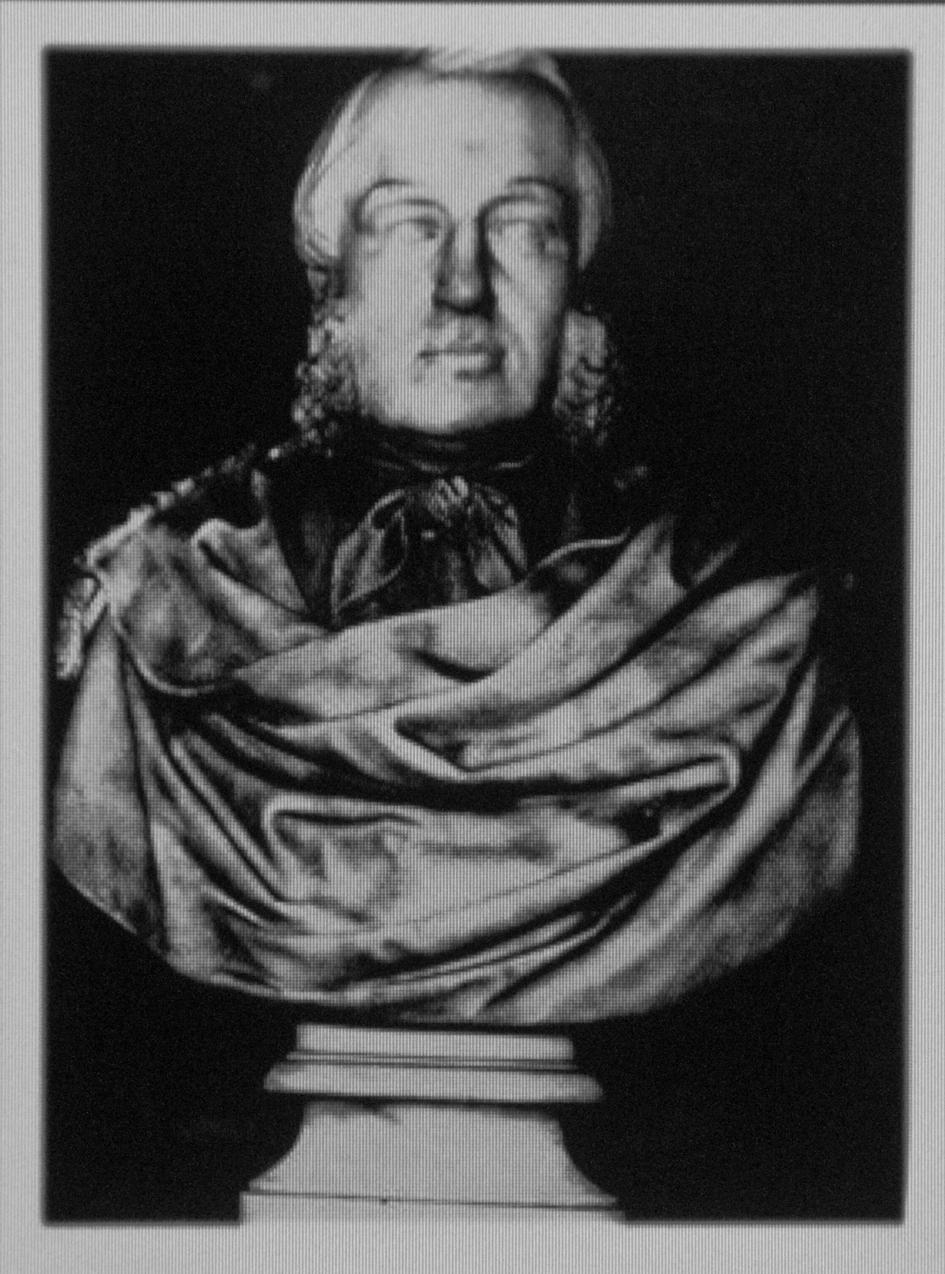
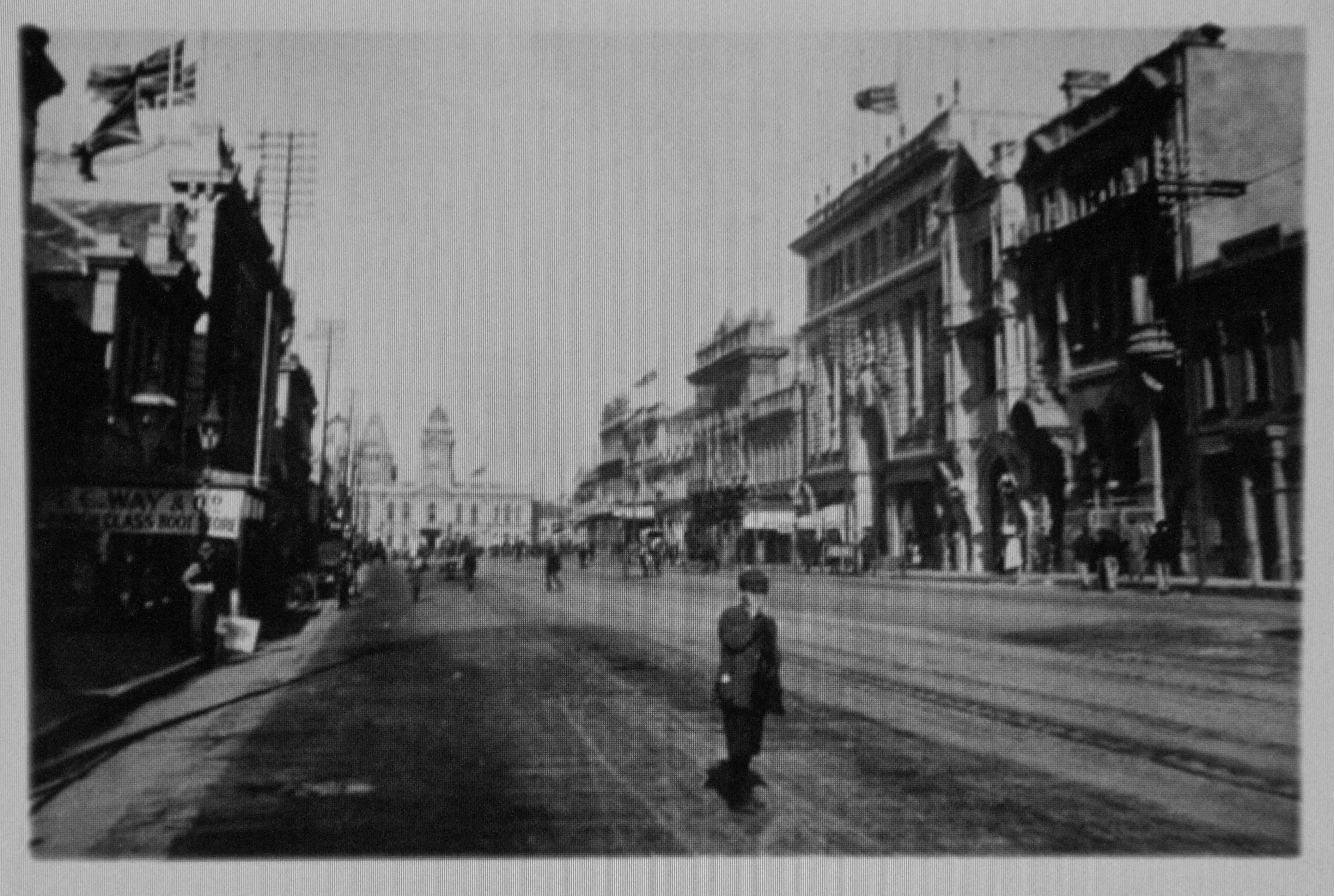
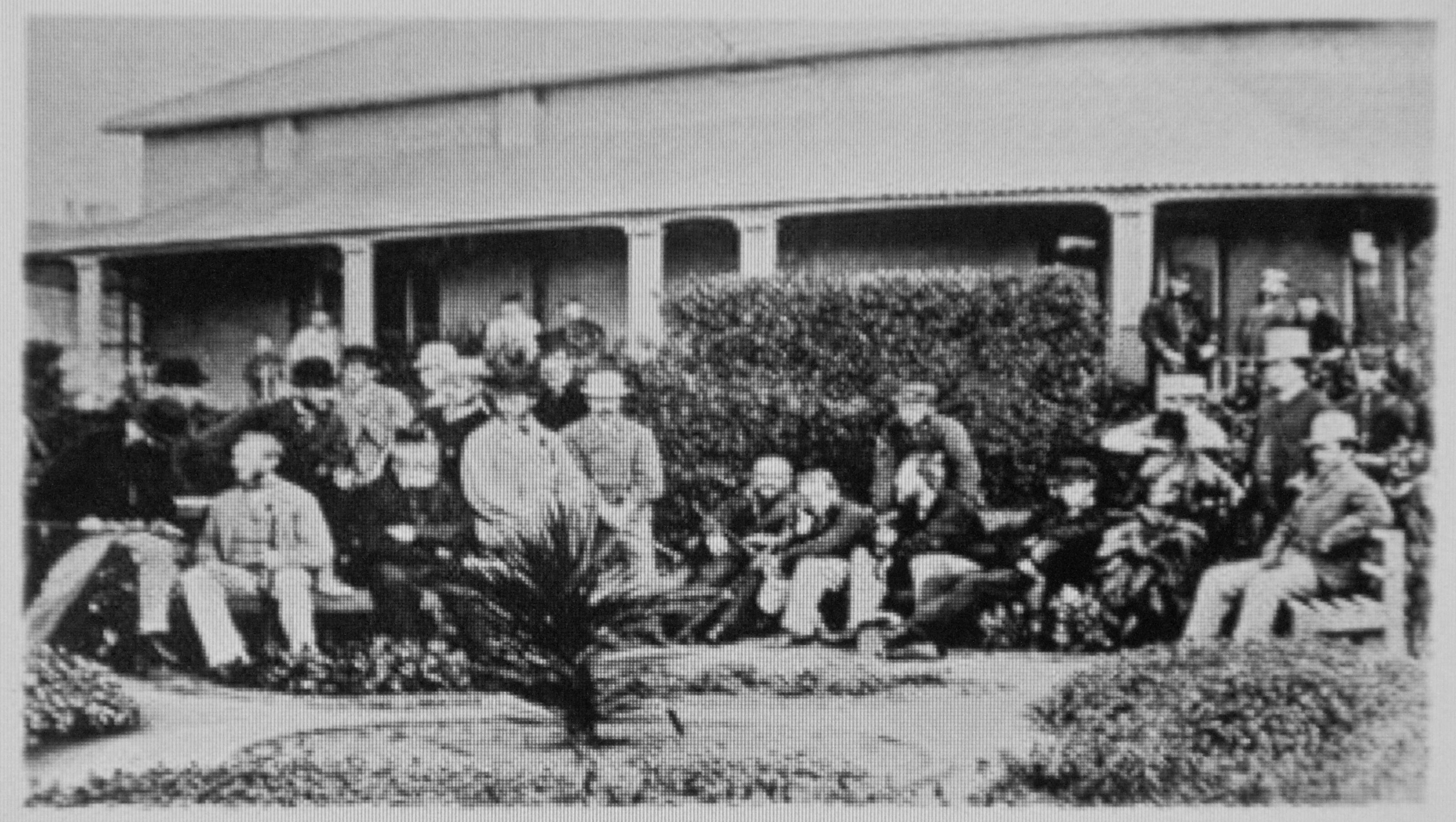
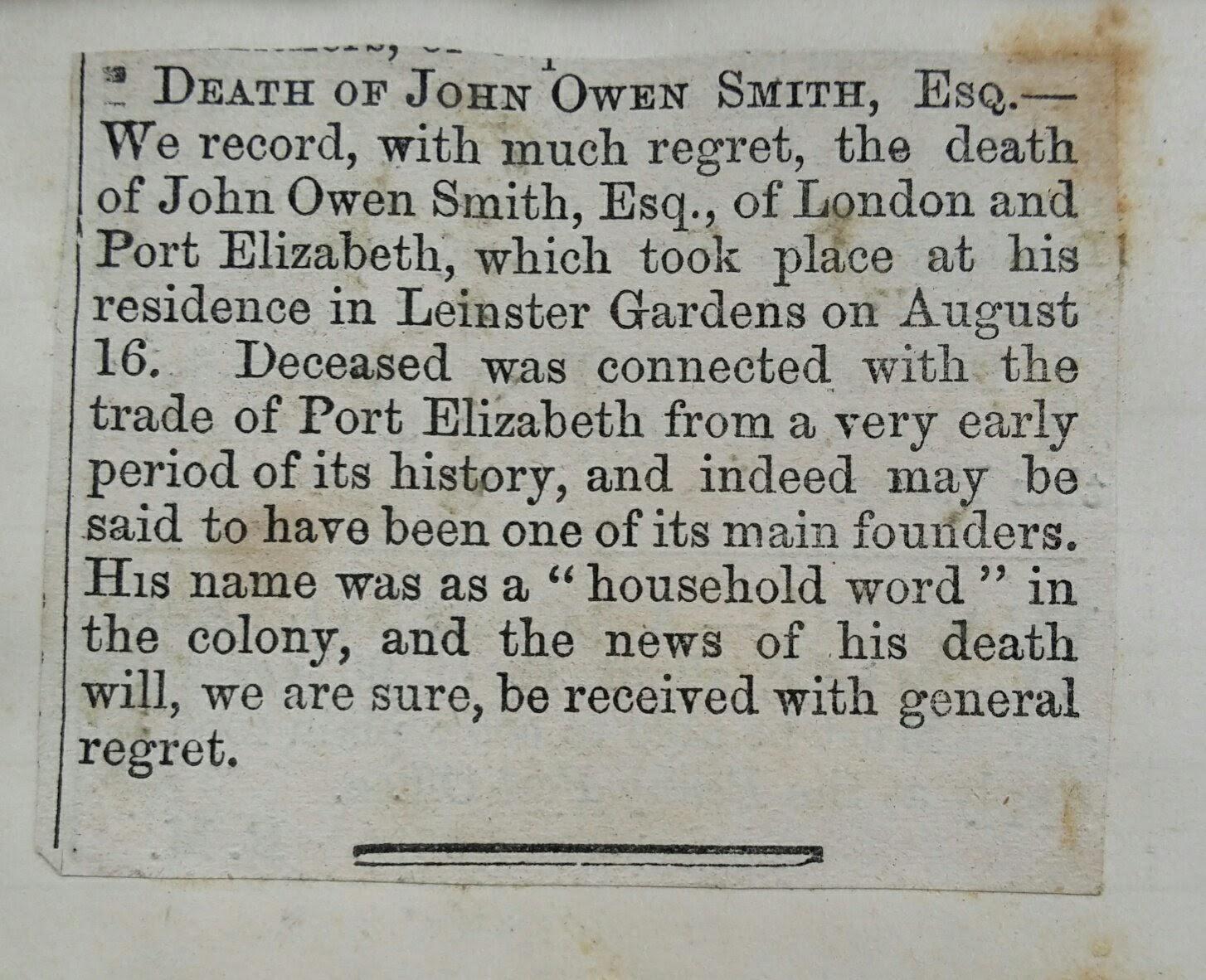
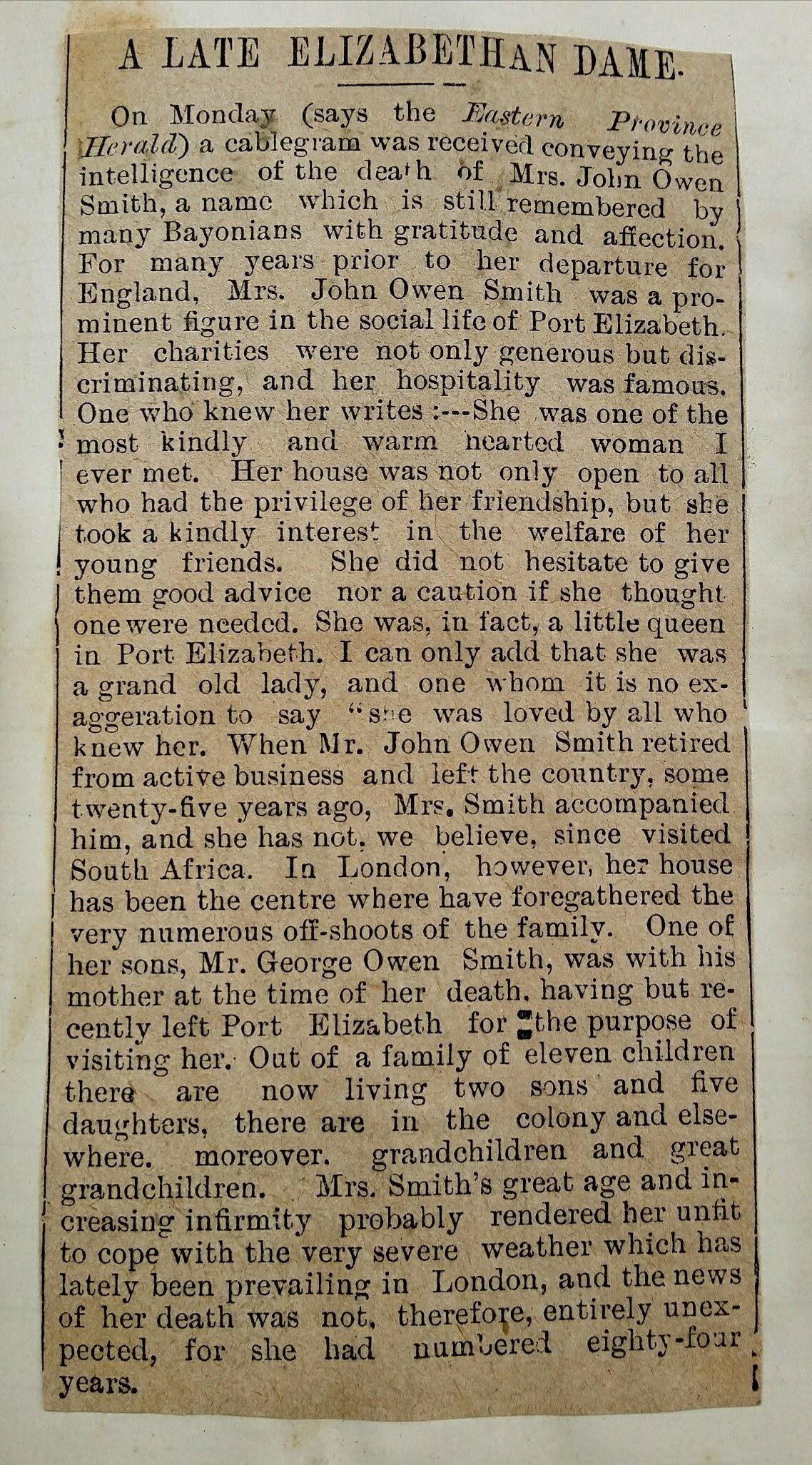
1. John OWEN SMITH, son of John SMITH ( -1813) and Charlotte BURNETT ( - ), was born in 1804 in Scarborough. He was an Owner of a Shipping Company. He married Elizabeth GILBERT on 3 August 1826 in Grahamstown, Albany, Cape Colony. He died on 10 August 1871 in London.
John Owen Smith, born in Scarborough, Yorkshire in 1804, came to the Cape as a youth of 15. At 17 he moved to the frontier and began trading. By the 1830s he was established in Port Elizabeth as a merchant, speculator and auctioneer. Little more is known, besides his owning a shipping company. There are just a couple of snippets of information available: in September 1836 it was recorded that he had erected a flagstaff at Port Elizabeth for the use of the port. In 1847, HMS Thunderbolt, a paddle steamer, ran aground on a reef at Cape Receife. She was badly damaged and in the end "The hull was sold to John Owen Smith who took off everything of value and then blew up the remainder" "Her motley cargo was disposed of by John Owen Smith on 10 Aug 1840. The ship did not fetch a bid so it was decided to beach her near some protruding rocks near the mouth of the Baakens River". An Irishman, John Montgomery, whose daughter married Smith's son, reminisced: "John Owen Smith had a very small store supplied with a scanty stock of merchandise. I think I could have carried the pots, kettles, tin buckets, and all the stock-in-trade that I could see on my back. He was very kind to me, and although our dealings with each other were small, they were extremely satisfactory. His uncle from the Cape anchored in the Bay in a small trading vessel and soon came ashore. He bought all my biltong, and everything else I had to dispose of." In 1894 Richard Shaw designed a memorial window to John Owen Smith in St. Mary's Church, Port Elizabeth.
John Owen Smith played a very important role int he early history of Port Elizabeth and at the time of his death he was described as "almost its founder". He was born in Scarbourgh, Yorkshire and died in Leicester Gardens, London in August 1871. He had arrived at Cape Town on 23rd July, 1819 on the "Sarah" and appoears in the Port Elizabeth cnesus for 1825. He left Port Elizabeth about 36 years later, 11th June 1861, leaving his business in the hands of his son and son-in-law. He married Elizabeth Gilbert in Grahamstown in August 1826, shortly after his arrival in Port Elizabeth. She was the daughter of a building contractor and they established the family business together. Smith was involved in so many spheres of early Port Elizabeth life. He owned shares in the commerical Hall, the site of the Public Library, and the public building in which the library first had a room. As a library endowment suggestion, he gave his shares to the library committee and encouraged others to do the same so that eventually the library owned the site and the original building. His private book collection was given to the library by his son George, who changed his second name to Owen and who ran the business here with Henry Bailey Christian.
Smith began as an auctioneer and was involved in boating until he founded his merchant firm. He had his own gunpowder store and built a private jetty in 1844 to aid the loading and off-loading of goods at his bonding warehouse. He also chartered and had ships built for trading. He had mining interests in the Richtesveld (copper) and one of his ships sailed on the Orange River. He owned a good deal of farm land around Port Elizabeth. He brought out a flour and saw steam mill for his business. He was involved with the P.E. Bank and Branch Savings Bank. He was a Justice of the Peace. He helped finance the establishing of Port Elizabeth's first local newspaper, the Eastern Province Herald.
The carved reredos and the windows above it in St. mary's Church were given by Mrs. Smith in memory of her husband and the son who drowned. The original church was destroyed by fire in 1895, but the Smith gifts were reproduced and are still the main features of the sanctuary.
There are a couple of snippets of information available: in September 1836 it was recorded that he had erected a flagstaff at Port Elizabeth for the use of the port. In 1847, HMS Thunderbolt, a paddle steamer, ran aground on a reef at Cape Receife. She was badly damaged and in the end "The hull was sold to John Owen SMITH who took off everything of value and then blew up the remainder".
1836 Sir Benjamin D'Urban visits Port Elizabeth. April 13: Port Elizabeth declared free warehousing port. September: John Owen Smith erects flagstaff for use of port.
When the Royal Navy began to consider the use of steam propulsion one of the earliest steam driven ships was the sloop, 'H.M.S. Thunderbolt', a paddle steamer which was also fitted to carry sail. On 3 February 1847, she was returning from a survey of the Buffalo River mouth with the object of establishing a military fort there. As she was rounding Cape Receife she struck a reef which was subsequently named after her. She was badly holed but the captain managed to bring her into the bay and beached her near the mouth of the Baakens. Attempts were made over the following three weeks to salvage her but she suffered further damage when a south-easter sprang up. The hull was sold to John Owen SMITH who took off everything of value and then blew up the remainder. Thomas BAINES in his painting of the bay in 1847 shows the ship beached at the mouth of the Baakens, but PORTER thinks he must have used his imagination as in his journal he records that when he arrived only the engines remained. The commander and first officer of the Thunderbolt were both later cashiered for failing to obey sailing instructions for this part of the coast. Seven years later, on 10 July 1855, another naval vessel, 'H.M.S, Nerbudda' sailed out of the bay and was never heard of again. It has been surmised that the cannon found at Cannon Rocks may have come from her. SOURCE: Looking Back, December 1978.
THE DOM PEDRO JETTY
The story of how the Dom Pedro Jetty got its name is a very interesting one. In 1839 the Queen passed the Slave Suppression Act. This meant that the trading of slaves was forbidden. In the Mozambique Channel, Her Majesty's brig the CURLEW, was hunting down the salve traders who were violating the recently passed act. The commander of the brig. Lieut. ROSS had seized the ship YARUGA when he came upon another suspicious-looking vessel. He sent a party over to question the Arab skipper as to his cargo and destination. The vessel in question was the DOM PEDRO. On board 19 slaves were discovered. She was taken over by the British brig and together with the YARUGA set sail for the South African station.
It was soon discovered that the YARUGA was unseaworthy and she could never have made the voyage. The crew and cargo were transported to the DOM PEDRO. The second officer in charge of the CURLEW, Mr H.C. LEW, was promoted to captain of the DOM PEDRO. The next day, the YARUGA was sent to the bottom of the sea.]]
As they were travelling, the DOM PEDRO lost sight of the CURLEW which was a superior ship. It eventually took 49 days to make it to Algoa Bay. The reason for this was that she struck a severe storm and lost all her masts and sails. She drifted into Algoa Bay on May 20th, 1840. There she lay for three months at anchor awaiting the decision of the Prize Court at Simonstown as to her ultimate fate. News came through that the slaver was not worth repairing for passage to Simonstown. Orders were given that all it carried was to be sold by public auction. Her motley cargo was disposed of by John Owen SMITH on 10 Aug 1840. The ship did not fetch a bid so it was decided to beach her near some protruding rocks near the mouth of the Baakens River. Her timbers must have been strong for she lay there over 40 years. The outline could still be seen when the jetty due to bear her name was being designed in 1898. On the site of the remains the Dom Pedro Jetty was erected.
References to John Owen Smith in "British Residents at the Cape 1795-1819" by Peter Philip published by David Philip, Cape Town
"SMITH, John Owen. 23.7.19 arr. SB [Simons Bay] 'for the Cape' in 'Sarah' ex Bristol (104/25). 20.10.20 PR 3057 [Permission to remain in the Colony 'Colonial Pass'.] securities RJ Johnson / Isaac Lasar (79). He was born in Scarborough, where his father and uncle were shipowners; he died on 10.8.71 in London. He bacame one of the leading merchants of Port Elizabeth.
The ship 'Sarah' was presumably a merchant ship. It is not listed as a naval vessal. Presumably it was the property of JO Smith's father and uncle. Detail in square brackets have been inserted by me.
An Irishman, John Montgomery, who accompanied an Anglo Irish ancestral couple (Folliott/Fullard) of mine to the Cape in 1820, was acquainted with John Owen Smith in Port Elizabeth. Incidently, John Montgomery is the forefather of the Springbok Rugby player, Percy Montgomery. Here is an extract from John Montgomery's colourful reminiscences:
"I arrived in Algoa Bay in due course. Captain Evatt was stll there; and John Owen Smith had a very small store supplied with a scanty stock of merchandise. I think I could have carried the pots, kettles, tin buckets, and all the stock-in-trade that I could see on my back. John Owen Smith was very kind to me, and although our dealings with each other were small, they were extremely satisfactory. His uncle from the Cape anchored in the Bay in a small trading vessel and soon came ashore. He bought all my biltong, and everything else I had to dispose of. Mrs Montgomery and myself spent two days in the Bay, rambling along the beach, picking up shells and gathering seaweed."
"John Owen Smith, born in Yorkshire in 1804, came to the Cape as a youth of 15. At 17 he moved to the frontier and began trading. By the 1830s he was established in Port Elizabeth as a merchant, speculator and auctioneer. Montgoery's youngest daughter, Johanna, married a John Owen Smith - presumably the trader's son." (Giffard pp.10-191)
MARRIAGES
In the Reformed Church August 14 [1826]: Mr. Dirk Jacobus VISSER Js to Miss Maria Johanna BESTER. At Graham's Town August 3:
Mr. John Owen SMITH to Miss Elizabeth GILBERT.
Husband: John Owen SMITH, 21, Protestant, England; Wife: Elizabeth GILBERT, 17, Protestant, England. Date: 8/3/1826
St. Mary's Cemetery, Port Elizabeth
AB/E28 Plot owner: Mrs. Everet Owen SMITH
Sacred to the memory of Everal Hester Owen SMITH, b. 23 Feb 1846, d. 25 Oct 1894.
Thy will be done.
AB/E35&10 Plot Owner DUNELL
John Owen SMITH (Jnr) b. Jan AD 1835 (sic)
Further writing on the other side of the stone is illegible
St. Mary's Burials Book records the burial of John Owen SMITH on 27 Mar 1861 aged 26. He was the 4th s.o. John Owen SMITH and Elizabeth GILBERT. He apparently drowned.
St Mary's Church, designed the East Window, a memorial window to John Owen Smith
Port Elizabeth, Eastern Cape. Designed by SHAW Richard Norman 1895 (destroyed by fire) (Trehaeven 1984) ???
JOHN OWEN SMITH AND GEORGE CATO
William Bell and James Ramsey Caithness had the same ship’s agent, John Owen Smith. And here emerges another familiar name, George Cato, who from 1834 worked as manager for J O Smith. Descended from a Huguenot family who fled to England to escape religious persecution in France in the 17th c, Cato’s father and family had arrived at the Cape in 1826. The sudden death of Cato snr in 1831 (he is said to have been killed by an elephant) meant that George had to become a breadwinner. No doubt this enforced early maturity helped Cato to develop his entrepreneurial skills and other natural abilities which he put to good effect from that time onwards.
Cato became Bell’s lifelong friend, later rising to prominence in Natal as Mayor of Durban in 1850s. During the 1830s Cato was operating for Smith in the salt beef trade and in 1838 sailed the vessel Trek Boer up the east coast carrying goods for trade with the trekkers – Dutch frontier farmers who had left the Cape Colony and established themselves at Port Natal. Although neither Bell nor Cato could foresee future events, they were both to become embroiled in the conflict which would arise at Natal between the trekkers and the British in 1842.
About a ship later bought by JOS:
The Boers allowed the women and children to board the Mazeppa which was anchored in the Bay with its crew. The Mazeppa was an American built ship, used by the Portuguese as a ‘Slaver’. She was captured by the British and sold to Captain Tait and later to trader John Owen Smith who traded between Cape Town, Port Elizabeth, Port Natal and Delagoa Bay. Joseph Cato had managed to hide his person aboard the Mazeppa. From here he and the crew arranged that fresh water be brought aboard, ostensibly to wash clothes. Placing mattresses behind the scuppers for protection from rifle fire, and waiting for a fresh following breeze, the Mazeppa quietly raised anchor and unfurling her sails, briskly slipped across the Bay towards the Channel leading out into the Indian Ocean.
Elizabeth GILBERT, daughter of George GILBERT (1781-1860) and unk UNK ( - ), was born in 1809 (estimated). She died in 1893 (estimated). She and John OWEN SMITH had the following children:
| +2 | |
| +3 | |
| +4 | |
| +5 | |
| +6 | |
| +7 | |
| +8 | |
| +9 | |
| +10 | |
| +11 |
Second Generation
2. James OWEN SMITH, son of John OWEN SMITH and Elizabeth GILBERT, was born in 1828. He was baptised on 4 April 1828.
3. John OWEN SMITH, son of John OWEN SMITH and Elizabeth GILBERT, was born on 11 January 1835. He died of Drowning on 26 March 1861.
John was the 4th son of John Owen Smith snr. and Elizabeth Gilbert. He died by drowning.
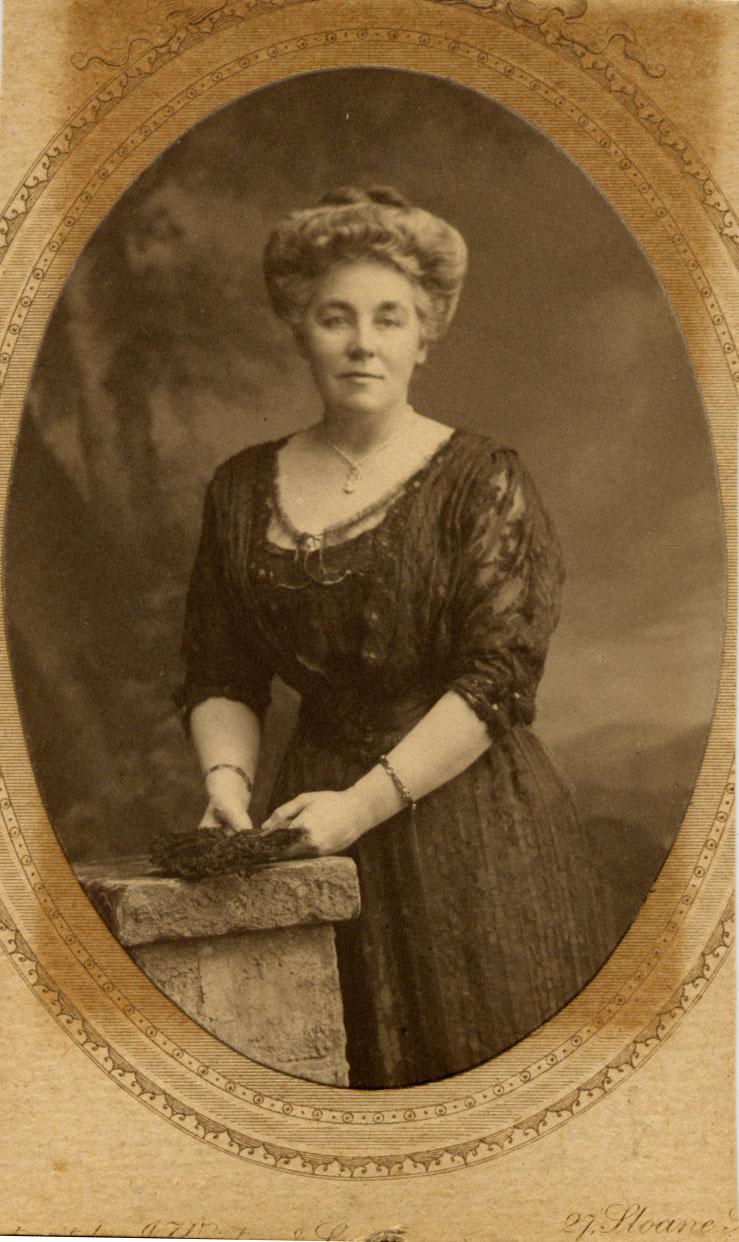
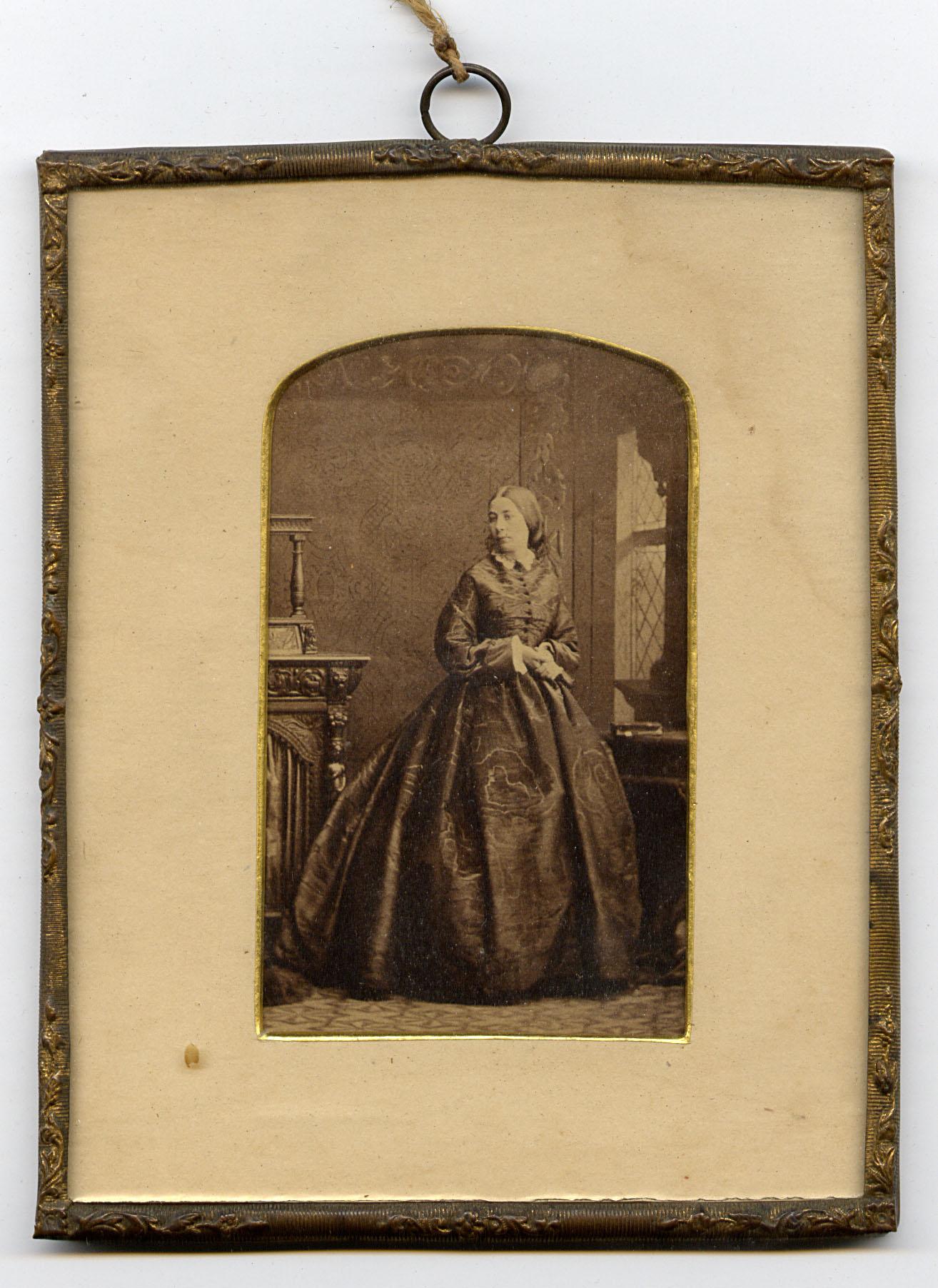
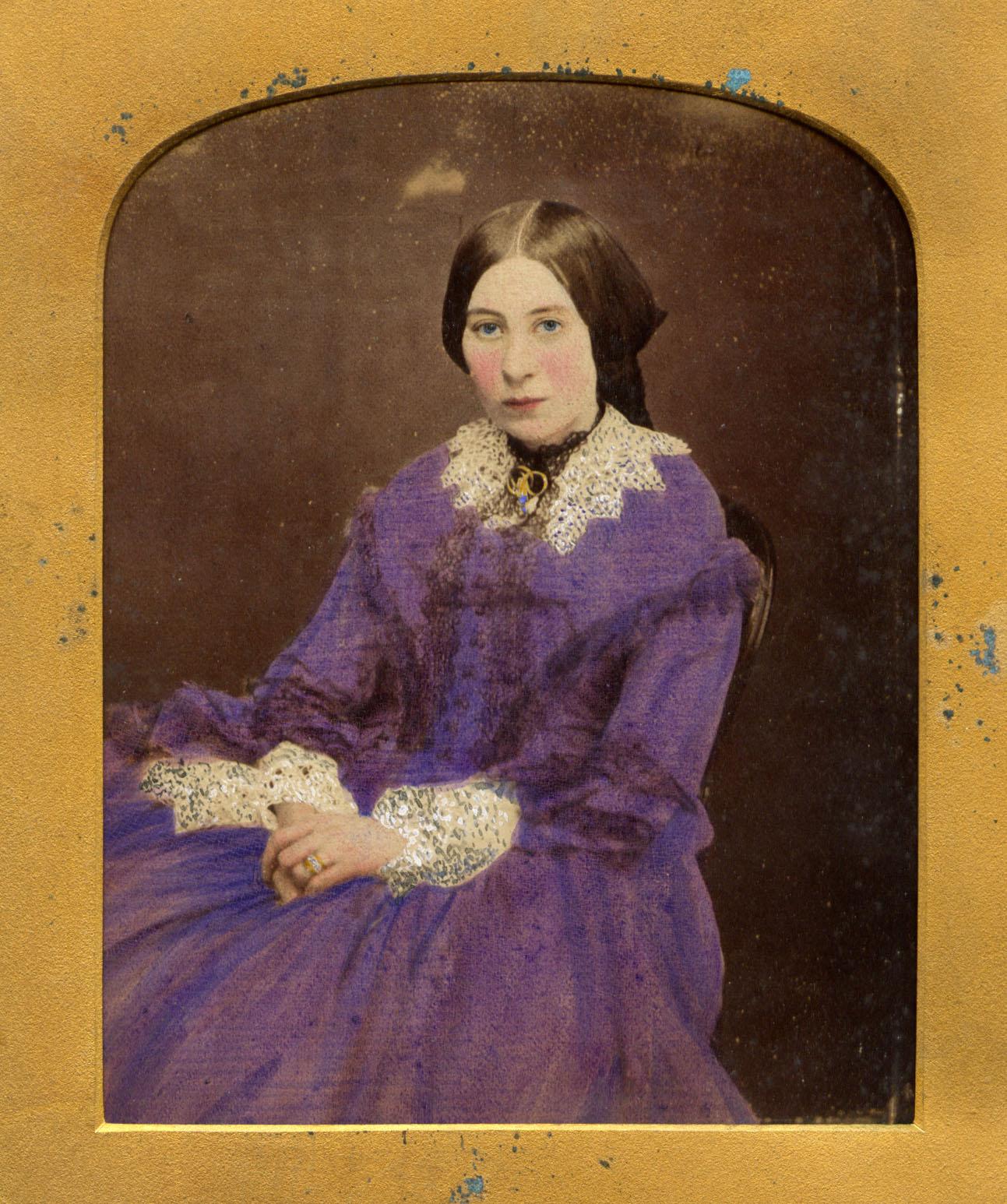
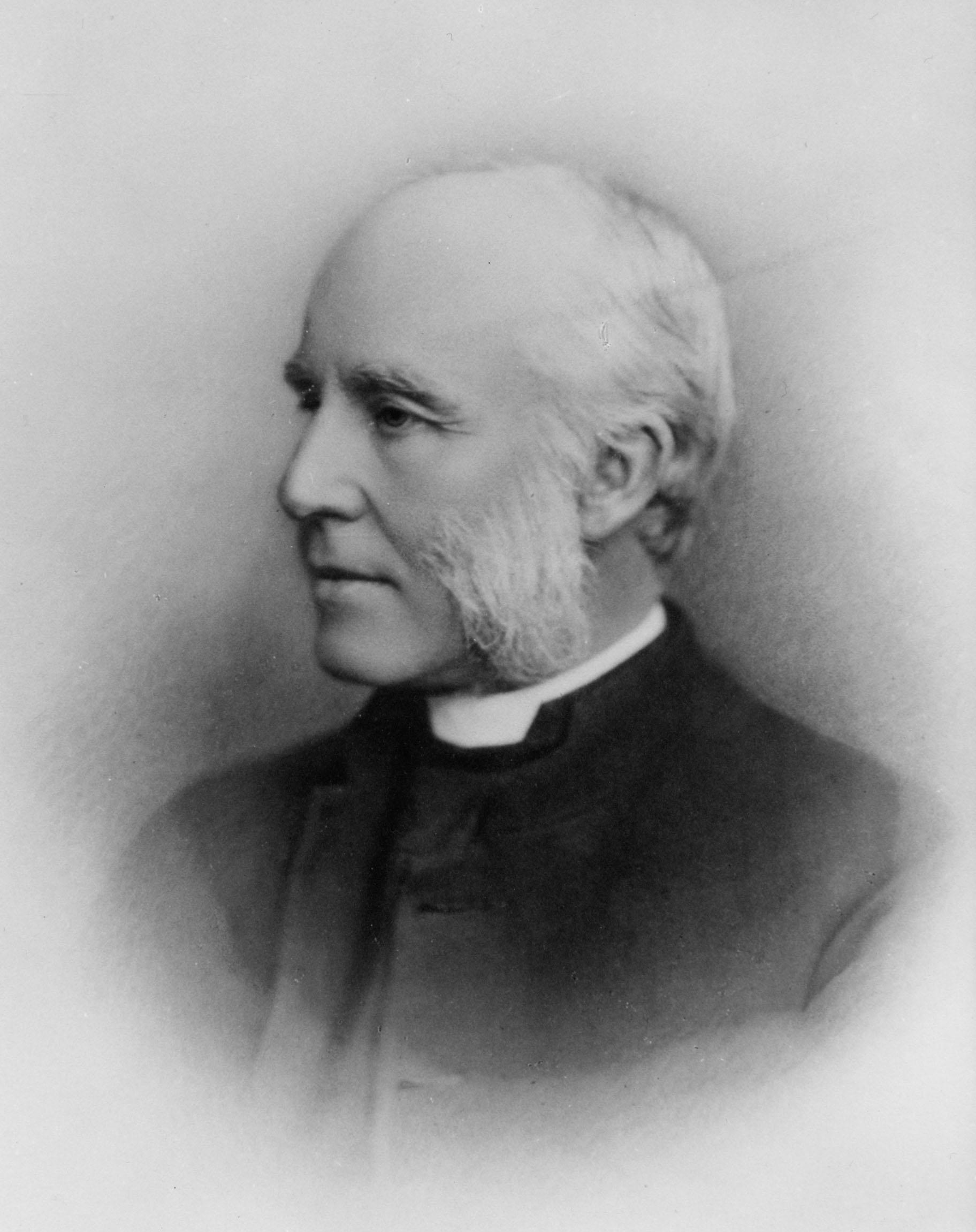
4. Sarah Elizabeth OWEN-SMITH, daughter of John OWEN SMITH and Elizabeth GILBERT, was baptised on 17 November 1833. She was born on 30 December 1839 in Cape of Good Hope, Port Elizabeth. She was born on 30 December 1839 in South Africa. She married Hopkins BADNALL on 27 February 1854 in St. Mary's Cathedral, Port Elizabeth. She died on 7 December 1903 in Kensington, London. She was buried on 12 December 1903 in Badnall Family Vault, Leek, Staffs..
Bishop's Diocesan School for Boys, founded by Hopkins Badnall, has a ladychapel dedicated to Sarah Badnall.
Her date of birth is quite possibly wrong, as there is a baptism recorded earlier than this, which is probably correct, and would make her marriage happen at the age of 15.
The Venerable Hopkins BADNALL, son of Richard Jnr. BADNALL (1797-1839) and Sarah HAND (1799-1886), was born on 12 September 1821 in Leek, Staffordshire. He was christened on 24 September 1822 in St. Edwards Leek, Staffs.. He was an Archdeacon of Cape Town, Vicar General of Capetown. He also founded Bishop's Diocesan School and was vice-chancellor of the University of the Cape of Good Hope. He appeared in the census. He was educated at Durham University, BA, MA1851, DD1870, He was Curate in Stockton-on-Tees in 1845. He accompanied Bishop Gray in 1847 in South Africa. He became Rector of Goldsborough in 1855. He became Rector of Cawthorne in 1857. He became Vicar of Fishlake in 1886. He died on 27 September 1892 in 19 Randolf Rd., Maida Vale, London. He was buried on 1 October 1892 in Family Vault, Leek, Staffs.. He and Sarah Elizabeth OWEN-SMITH had the following children:
| +12 | |
| +13 | |
| +14 | |
| +15 | |
| +16 | |
| +17 | |
| +18 | |
| +19 | |
| +20 |
5. Elizabeth Gilbert OWEN SMITH, daughter of John OWEN SMITH and Elizabeth GILBERT, married Henry James DURRELL on 14 August 1851.
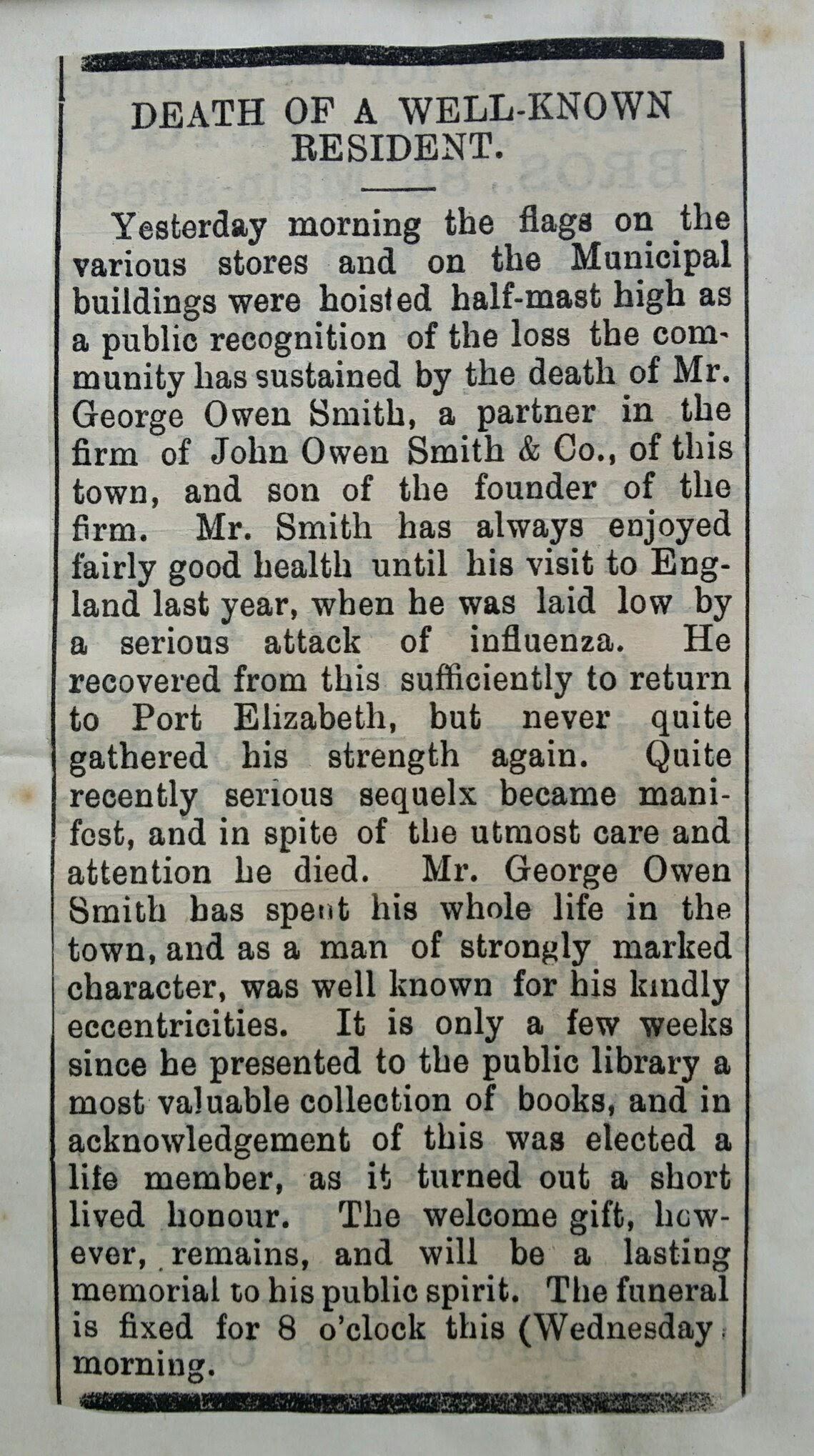
6. George Chalmers OWEN SMITH was the child of John OWEN SMITH and Elizabeth GILBERT.
In 1884 he became "Owen".
7. Jessie OWEN SMITH, daughter of John OWEN SMITH and Elizabeth GILBERT, married Robert SPEEDY on 8 September 1860.
8. Edith OWEN SMITH was the daughter of John OWEN SMITH and Elizabeth GILBERT.
Edith remained unmarried.
9. Henrietta Gilbert OWEN SMITH, daughter of John OWEN SMITH and Elizabeth GILBERT, married M STEPHENSON.
10. Mary Anne OWEN SMITH, daughter of John OWEN SMITH and Elizabeth GILBERT, married Henry Bailey CHRISTIAN on 8 July 1852.
11. Alice OWEN SMITH, daughter of John OWEN SMITH and Elizabeth GILBERT, was born on 1 July 1843. She married George Bellamy CHRISTIAN.
George Bellamy CHRISTIAN and Alice OWEN SMITH had the following children:
| +21 | |
| +22 | |
| +23 |
Third Generation
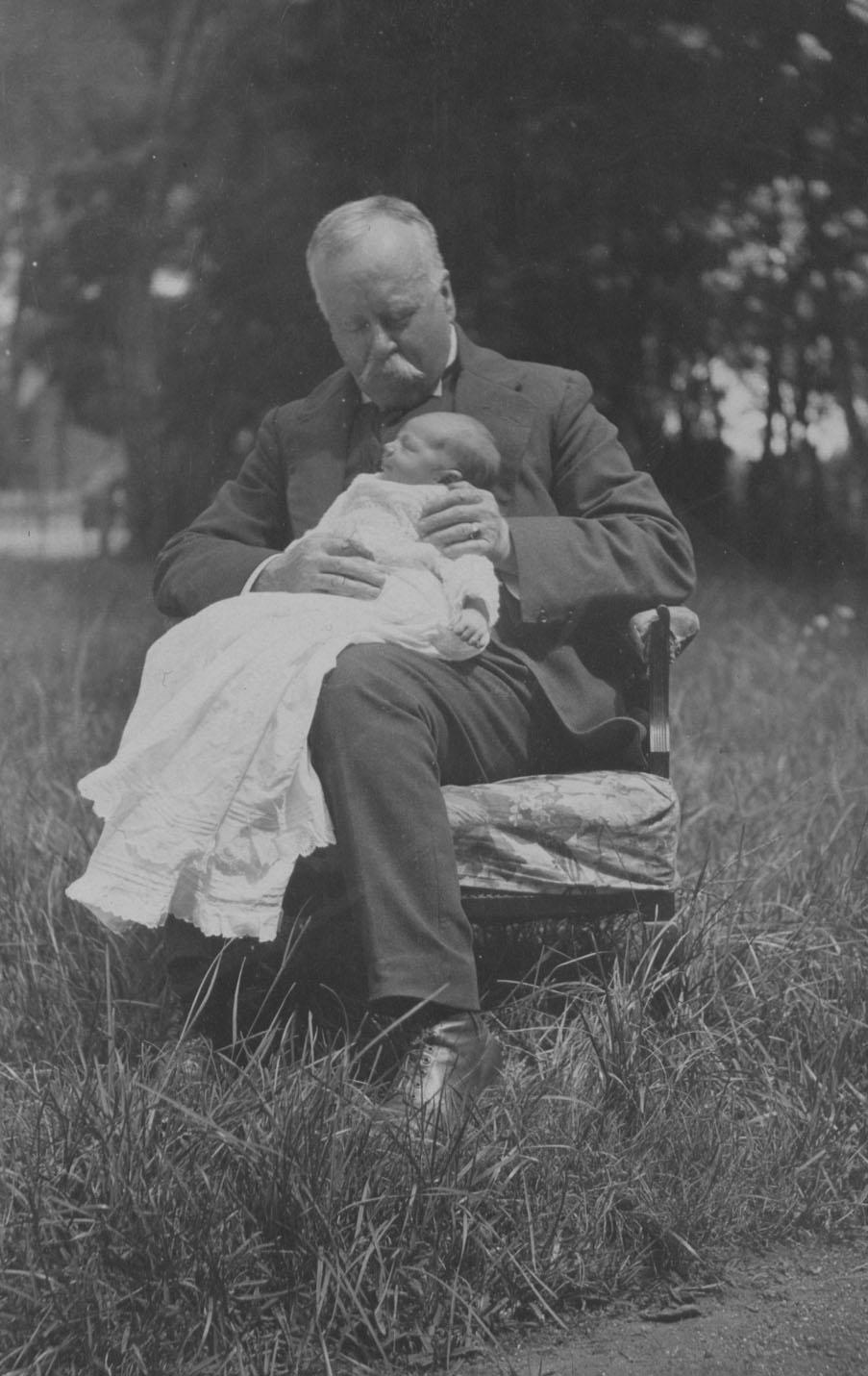
12. Herbert Owen BADNALL, son of The Venerable Hopkins BADNALL and Sarah Elizabeth OWEN-SMITH, was born on 20 November 1854. He was a Magistrate of George. He was educated at The Diocesan College, CapeTown. He married Lydia CAWOOD in February 1888 in Kimberley, Cape of Good Hope. He died on 5 November 1938 in Rondebosch, Cape Province. He was buried in November 1938.
Lydia CAWOOD and Herbert Owen BADNALL had the following children:
| 24 | Blanche Fiennes BADNALL (1889- ). Blanche was born in February 1889 in Beaconsfield, Cape of Good Hope. |
13. Blanche Elizabeth BADNALL (also known as [unnamed person]), daughter of The Venerable Hopkins BADNALL and Sarah Elizabeth OWEN-SMITH, was born on 28 February 1856 in Goldsborough, Yorkshire. She was baptised on 6 April 1856 in St. Mary's P.C., Goldsborough, Yorkshire. She died on 23 September 1872 in Kensington, England..
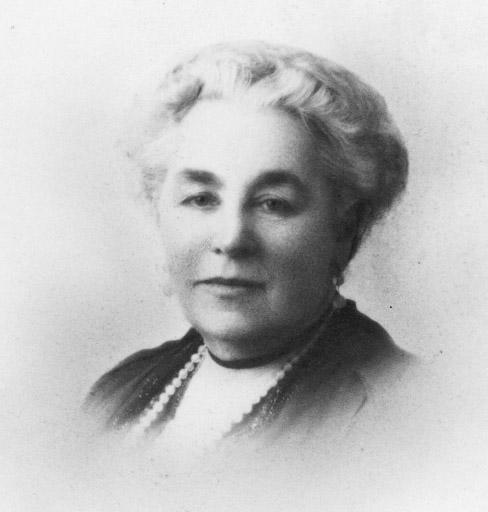
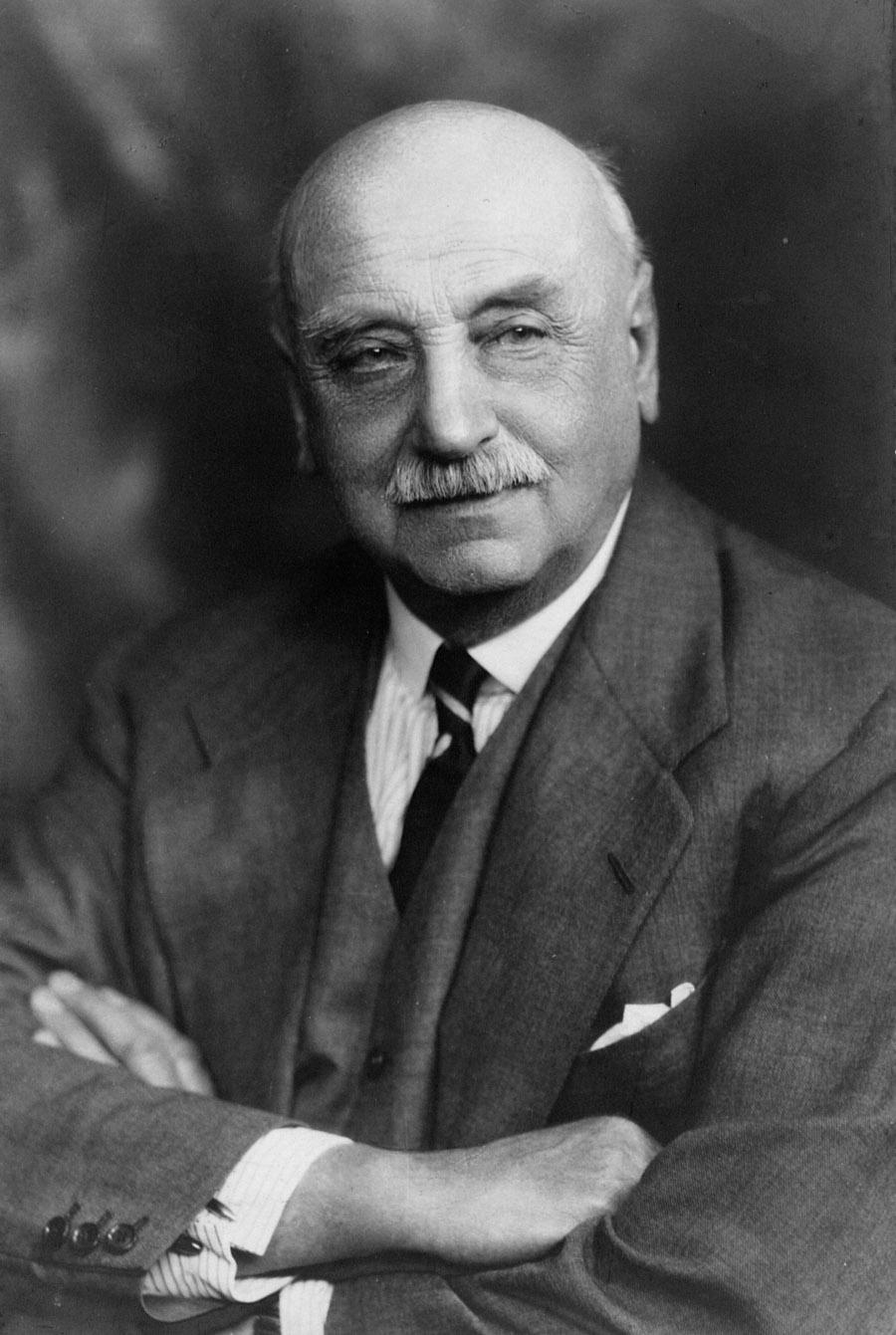
14. Florence May BADNALL, daughter of The Venerable Hopkins BADNALL and Sarah Elizabeth OWEN-SMITH, was born on 8 February 1858 in Cawthorne, Yorks. She married Maurice Fitzgerald WILSON on 2 August 1884. She died on 31 January 1941. She was buried in February 1941.
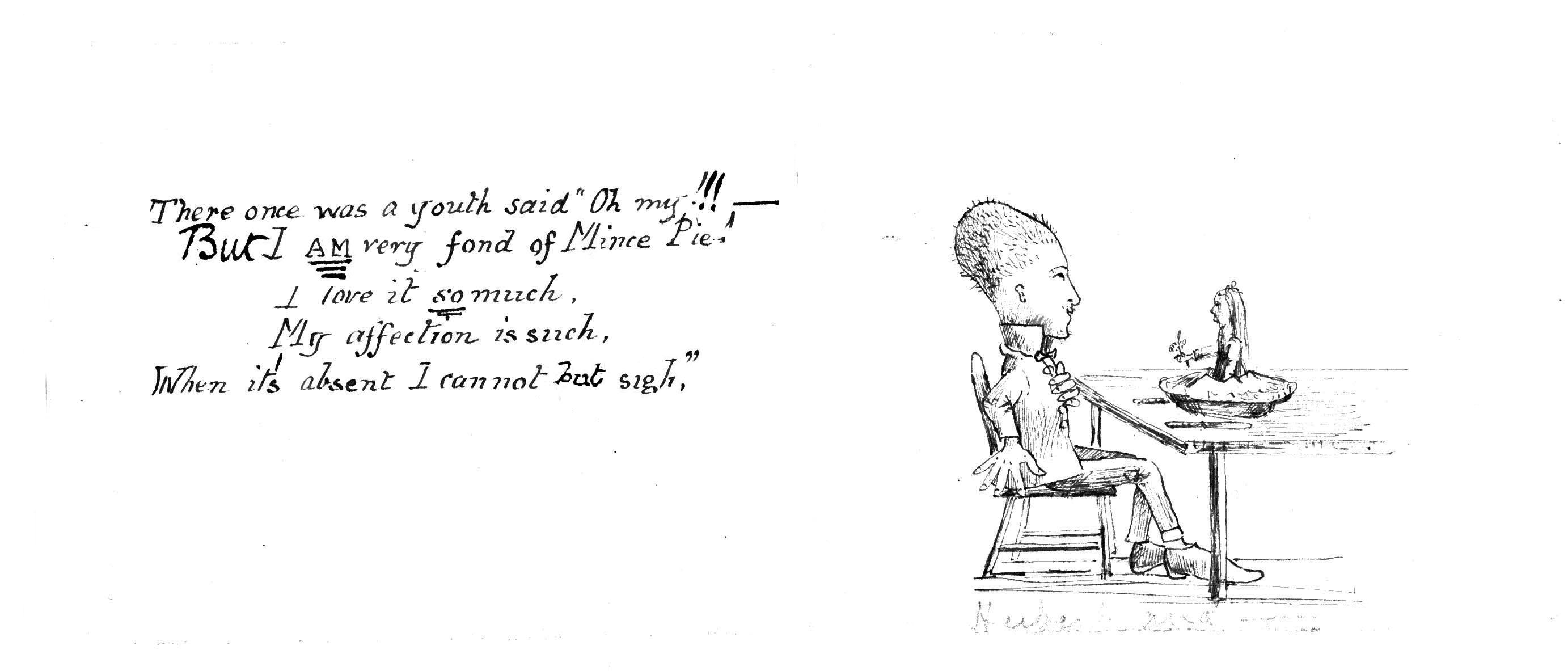
Florence May was the third of nine children of Hopkins Badnall, and was brought up in South Africa where her father was Archdeacon of the Cape. She met her future husband whilst he was a very junior engineer serving his apprenticeship in Port Elizabeth. She was thought of affectionately by her two sons, but was reckoned to be physically rather lazy. In her youth she had a talent for drawing, and a booklet of cartoons of her family members still survives, entitled "The Book of Truth and Nonsense (Combined)" which clearly shows a great sense of humour.
Maurice Fitzgerald WILSON, son of Richard Bassett WILSON (1806-1867) and Anne FITZGERALD ( -1877), was born on 4 February 1858 in London. He was a Civil Engineer. He was confirmed on 20 October 1874. He died on 23 December 1945. He was buried in December 1945. He and Florence May BADNALL had the following children:
| 25 | Maurice Fiennes Fitzgerald WILSON (1886-1975) (known as 'Fiennes'). Fiennes was born on 22 June 1886 in 2 Talbot Villas, Old Dover Road, Gravesend, Kent. He was a Naval Officer. He married Catherine Gladys MURRAY on 4 August 1914 in St Judes, Portsea, Portsmouth, England. He died on 16 February 1975 in Watlington, Oxon. He was buried in Putney Vale Cemetery. |
| 26 | Bassett Fitzgerald WILSON (1888-c. 1972). Bassett was born on 1 September 1888 in St. Ives, Cornwall. He was a Soldier, artist. He married Muriel Gertrude SAMUELSON on 24 April 1915. He was buried circa 1941. He died circa May 1972. |
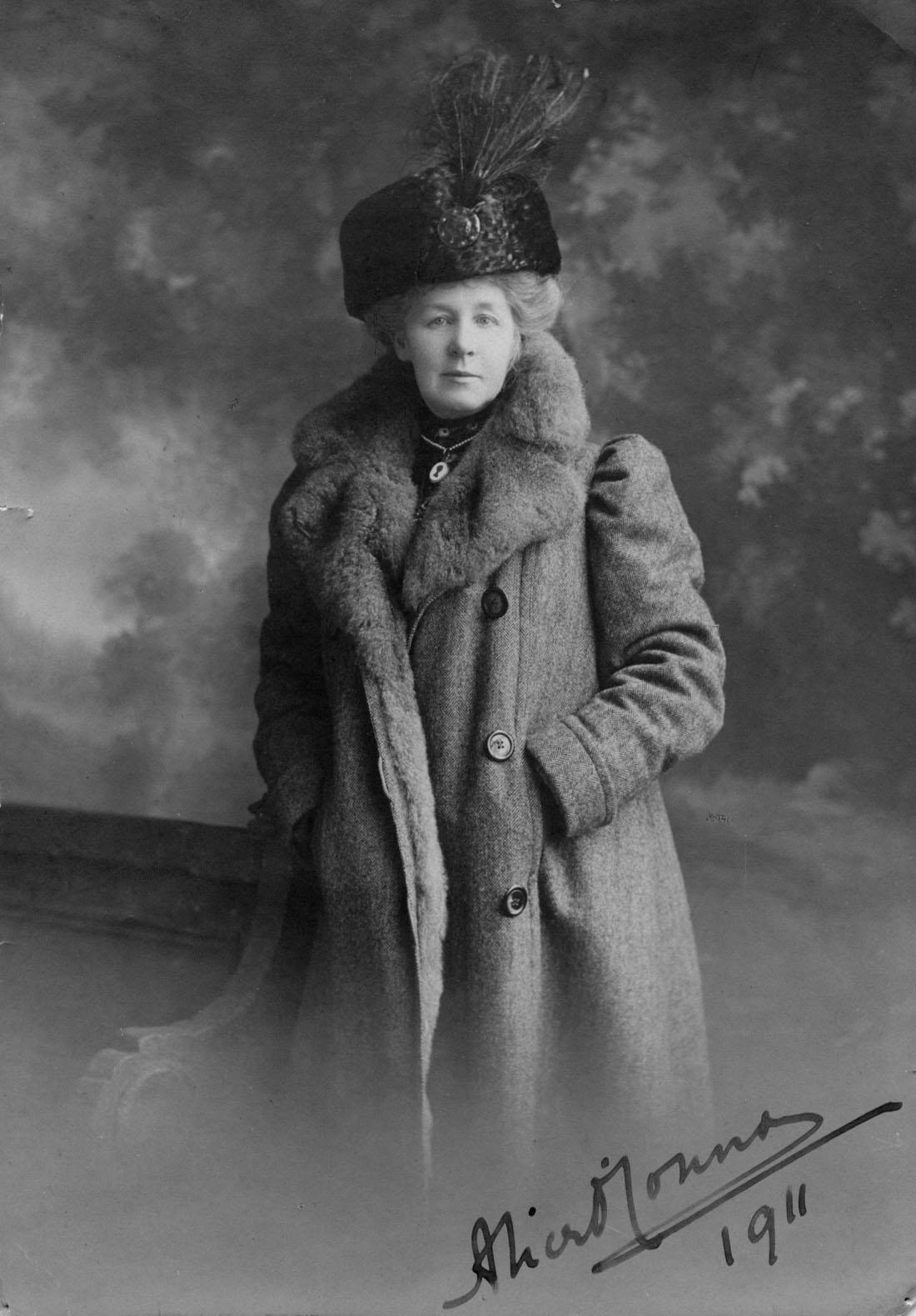
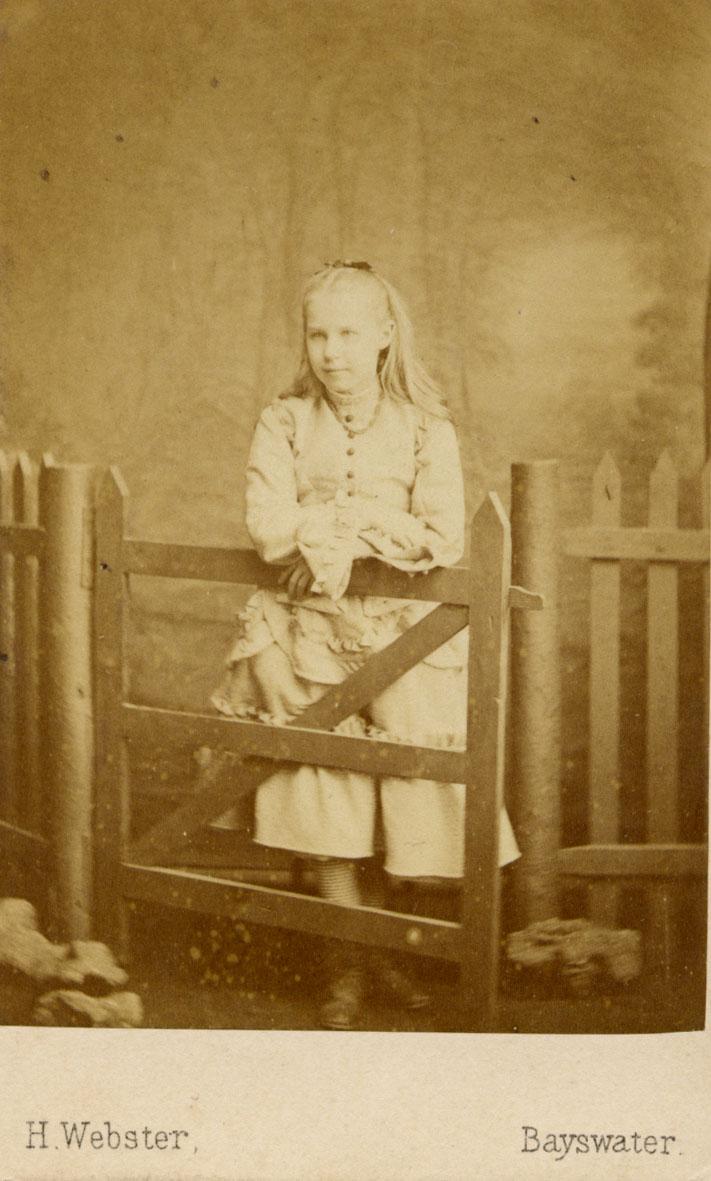
15. Alice BADNALL, daughter of The Venerable Hopkins BADNALL and Sarah Elizabeth OWEN-SMITH, was born in March 1860 in South Africa. She was born on 12 March 1860. She married Arthur Patrick O'CONNOR "10/1890". She married him in October 1890. She died on 25 October 1939. She was buried in October 1939. She married Unk O'CONNOR.
For some reason, Alice is not listed as being with the family at the 1871 census, despite all the other siblings being there who had been born by then.
Arthur Patrick O'CONNOR was the son of Charles O'CONNOR ( - ). He and Alice BADNALL had the following children:
| 27 | Arthur Cathal O'CONNOR (1891-1916). Arthur was born on 28 September 1891 in Dublin. He was a Soldier. He died in 1916. |
| 28 | Margery Beaumont O'CONNOR (1894- ). Margery was born on 6 September 1894 in Kasauli, India. |
Unk O'CONNOR and Alice BADNALL had the following children:
| 29 | |
| 30 |
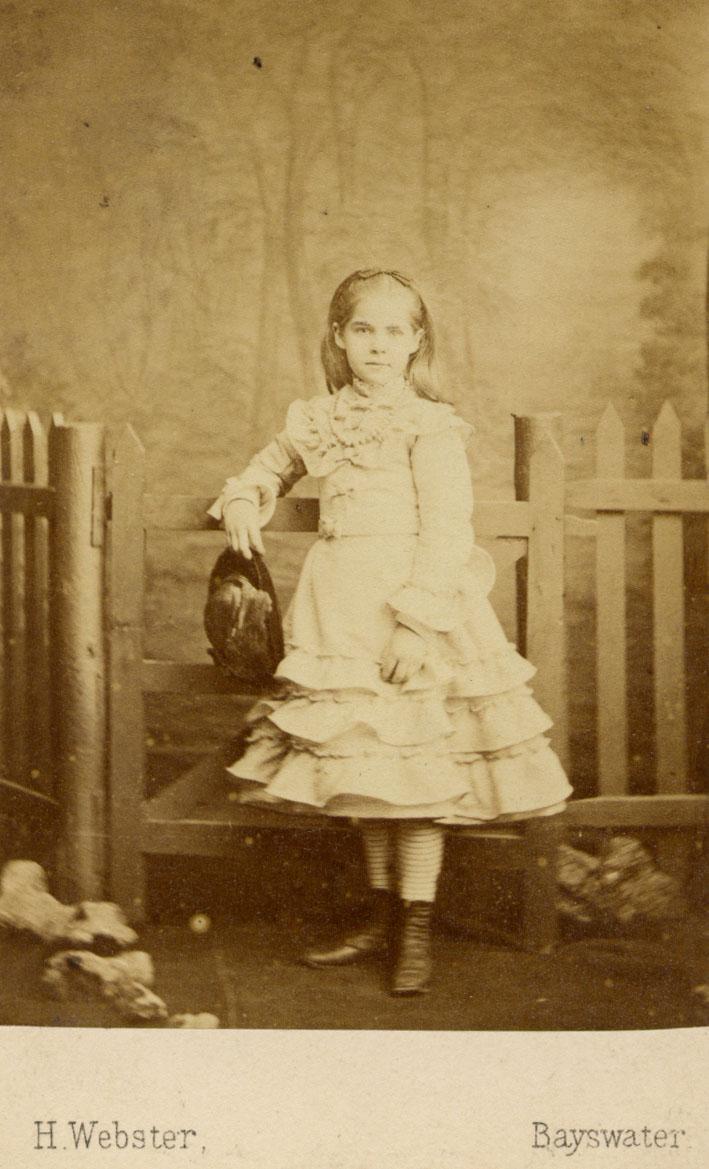
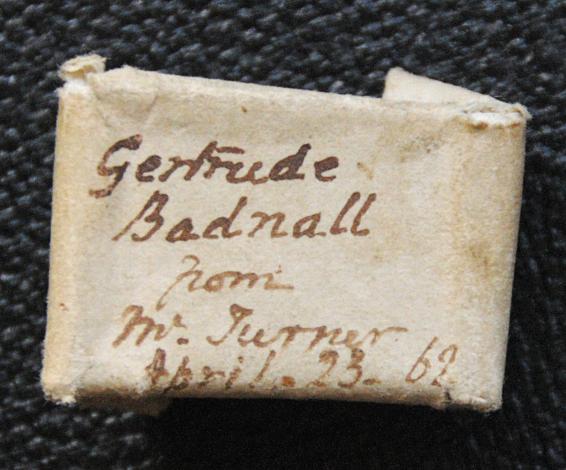
16. Gertrude BADNALL, daughter of The Venerable Hopkins BADNALL and Sarah Elizabeth OWEN-SMITH, was born on 23 April 1862 in Cawthorne. She died on 30 August 1950.
There exists a large set of correspondence, much of it to and from Gertrude Badnall when she was a student in Dresden in the 1880s. One example is here, the whole collection being with Alan Bednall, and a copy held by Philip Wilson.
17. Reginald Beaumont BADNALL, son of The Venerable Hopkins BADNALL and Sarah Elizabeth OWEN-SMITH, was born in August 1864 in Cape of Good Hope, George. He was educated at The Diocesan College. He married Matilda BROWNING on 15 June 1892 in East London, Cape of Good Hope. He died on 13 August 1939 in Molteno, Cape Province, South Africa.
Matilda BROWNING and Reginald Beaumont BADNALL had the following children:
| 31 | Ethel Beaumont BADNALL (1893- ). Ethel was born in March 1893 in Richmond, Cape Colony. |
| 32 | Gilbert Fiennes BADNALL (1895- ). Gilbert was born in March 1895. He was a Manufacturer's representative and exporter in 1952. |
| 33 | Rex B BADNALL (1898-1898). Rex was born in October 1898. He was a Solicitor, Notary and Sworn Appraiser. He died in October 1898. |
| 34 | Lancelot Ralph BADNALL (1902- ). Lancelot was born in January 1902. |
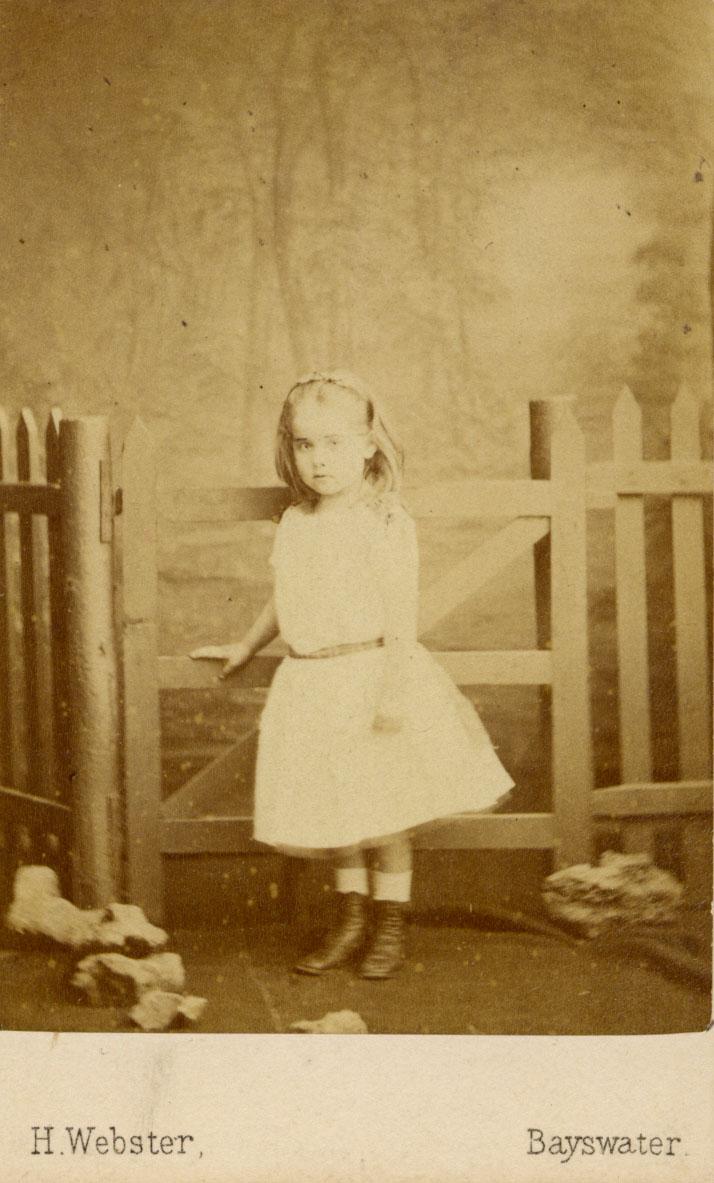
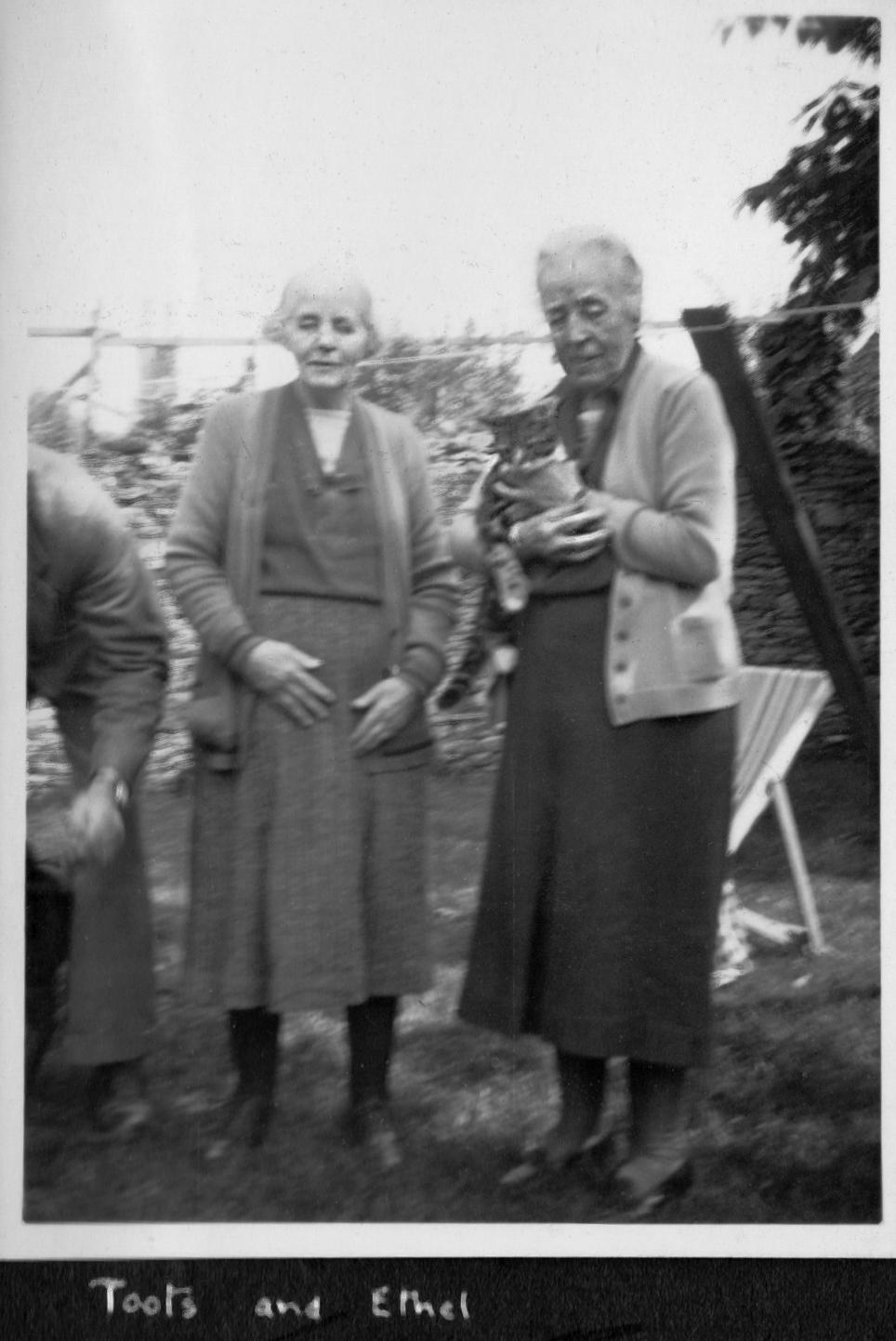
18. Ethel Mary BADNALL, daughter of The Venerable Hopkins BADNALL and Sarah Elizabeth OWEN-SMITH, was born circa 1868. She died on 31 January 1940 in Worthing, Sussex. She was buried in February 1940.
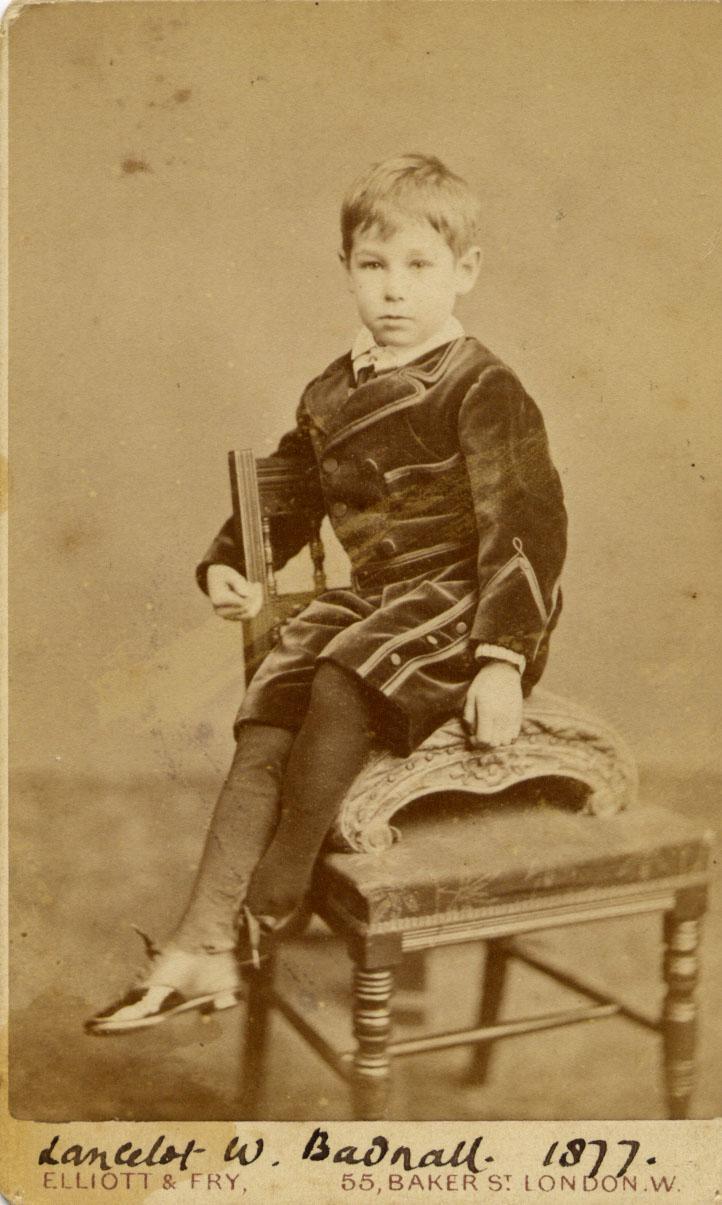
19. Lancelot Wykeham BADNALL, son of The Venerable Hopkins BADNALL and Sarah Elizabeth OWEN-SMITH, was born on 4 November 1871. He was educated at The Diocesan College. He married Constance Lilian ADDINGTON on 5 November 1898. He died on 24 March 1953 in 89 Camden Hill Court, Camden Hill, London W8.
Constance Lilian ADDINGTON, daughter of David ADDINGTON ( - ), died in 1963 in 7 Knaresboro' Place, Kensington, London. She and Lancelot Wykeham BADNALL had the following children:
| 35 | Irene Beaumont BADNALL (1899-c. 1984). Irene was born on 29 August 1899 in Port Elizabeth, Cape of Good Hope. She was born circa 1899. She was christened circa 1899. She was baptised circa 1899. She died circa 1984. She was buried circa 1984. |
| 36 | Kathleen BADNALL (1903- ). Kathleen was born in June 1903 in 49 Dryburgh Road, Putney, London. |
| 37 | Naomi Helen Constance BADNALL ( -c. 1996). Naomi died circa 1996. She was buried circa 1996. |
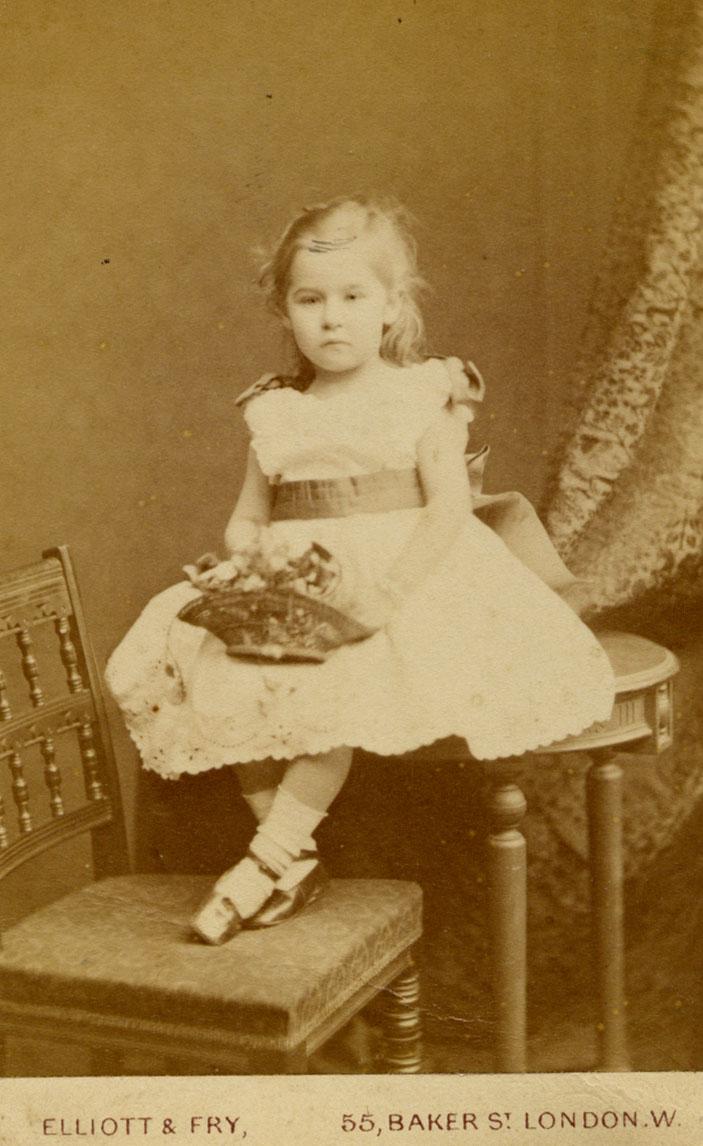
20. Evelyn Elizabeth BADNALL, daughter of The Venerable Hopkins BADNALL and Sarah Elizabeth OWEN-SMITH, was born on 24 December 1873. She married Frank Leonard NORTHCOTT on 8 June 1898. She married unk BROWNE on 21 April 1913. She died on 29 June 1944.
Frank Leonard NORTHCOTT, son of William NORTHCOTT ( - ) and Elizabeth UNK ( - ), was born in Rochester House, Ealing. He and Evelyn Elizabeth BADNALL had the following children:
| 38 | Honor Evelyn Austin LEONARD (1902- ). Honor was born on 7 August 1902 in Storrington, Sussex. |
| 39 | Ralph William Frank LEONARD (1907- ). Ralph was born on 1 July 1907 in Norwich. |
21. Harold Henry Durell CHRISTIAN, son of George Bellamy CHRISTIAN and Alice OWEN SMITH, was born in 1869. He died on 27 July 1946. He married Daisy NICHOLAS.
Daisy NICHOLAS and Harold Henry Durell CHRISTIAN had the following children:
| 40 | Joan CHRISTIAN ( - ). Joan was born in Arcturus, Zimbabwe. |
| 41 | Barbara CHRISTIAN ( -1990). Barbara was born in Arcturus. She died in 1990. |
22. Vyvyan Howard Owen CHRISTIAN, son of George Bellamy CHRISTIAN and Alice OWEN SMITH, was born on 29 April 1872. He died on 27 October 1953.
23. Everard George Curwen CHRISTIAN, son of George Bellamy CHRISTIAN and Alice OWEN SMITH, was born in 1875.