See also
- Patrick MURRAY's parents: Alexander MURRAY (1677-1735) and Elizabeth STIRLING (bef1683-1756)
- Patrick MURRAY's siblings: Elizabeth MURRAY (1701-1748), Alexander MURRAY (1704-1705), George MURRAY (1706-1785), Anne MURRAY (1708-1793), Gideon MURRAY (1710-1776), John MURRAY (1711-1711), Alexander MURRAY (1712-1778), Mary MURRAY (1714-1772), Helen MURRAY (1716-1809), James Patrick 1 MURRAY (1721-1794), Barbara MURRAY ( -1773) and Janet MURRAY (1723- )
Sir Patrick MURRAY 5th Lord Elibank (1703-1778)
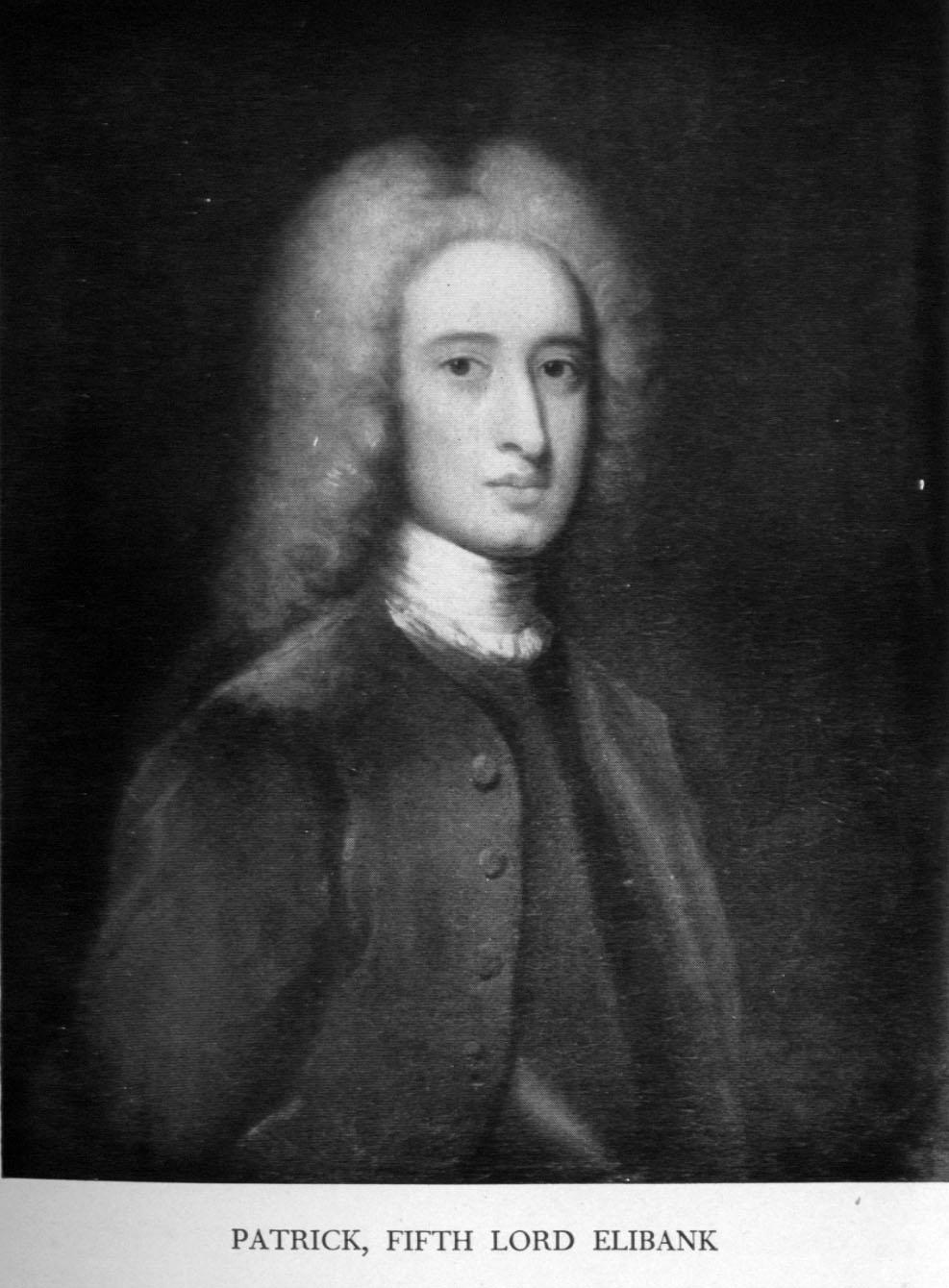
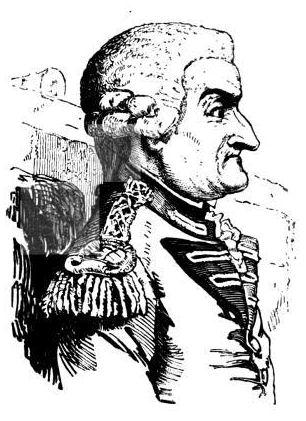
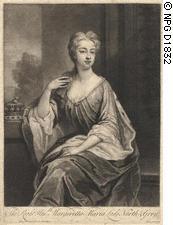
1. Sir Patrick MURRAY 5th Lord Elibank, son of Alexander MURRAY 4th Lord Elibank (1677-1735) and Elizabeth STIRLING (bef1683-1756), was born on 27 February 1703. He had the title '5th Lord Elibank, Earl of Westminster'. He married Margaretta Maria DE JONGE in 1735. He died on 3 August 1778 in Ballencrieff Castle in Haddingtonshire near Edinburgh.. He married Mary MORTLOCK.
Sir Patrick was a wit, raconteur and friend of Dr. Johnson. He succeeded to the title as 5th Lord, and was also Lieutenant-Colonel in Wynyards Marines. He was a sometime member of the Cocoa Tree Club and The Poker Club.
Besides this, he was a Jacobite who had an involvement with the Elibank plot. "There was to be one more serious conspiracy against King George and his government, the Elibank Plot, which was penetrated and exploded in 1753 by the government led by Henry Pelham, heir to Walpole. The debacle cost the life of the last Jacobite martyr, Dr. Archie Cameron, younger brother to Lochiel, but really by 1753 Prince Charles, despite an expedient conversion to Anglicanism, was not politically viable".
A brilliant man of great knowledge Sir Patrick wrote Essays on Paper Money, Banking, etc. (1755) Thoughts on Money, Circulation, and Paper Currency (1758), Inquiry into the Origin and Consequence of the Public Debts (1758/9), Queries Relating to the Proposed Plan for Altering Entails in Scotland (1765), Letter to Lord Hailes on his Remarks on the History of Scotland (1773) and Considerations on the Present State of the Peerage of Scotland (1774). Alexander Carlyle, in his autobiography, described Lord Elibank as one of the most learned and ingenious noblemen of his time, and as having a mind that embraced the greatest variety of topics and produced the most original remarks.
Details of his connection with James Boswell:
Boswell was with him on 26/11-62 at Lord Eglinton's, describing him as a man of great genius, great knowledge, and much whim. Boswell had a conversation with Lord Elibank in the company of Lord Eglinton, James Macdonald and Thomas Sheridan, mentioned in LJ 291162.
Boswell and Johnson also visited the Lord during their 1773 tour of the Hebrides.
Sir Patrick was a wit, raconteur and friend of Dr. Johnson. He succeeded to the title as 5th Lord, and was also Lieutenant-Colonel in Wynyards Marines. He was a sometime member of the Cocoa Tree Club and The Poker Club. Besides this, he was a Jacobite who had an involvement with the Elibank plot. "There was to be one more serious conspiracy against King George and his government, the Elibank Plot, which was penetrated and exploded in 1753 by the government led by Henry Pelham, heir to Walpole. The debacle cost the life of the last Jacobite martyr, Dr. Archie Cameron, younger brother to Lochiel, but really by 1753 Prince Charles, despite an expedient conversion to Anglicanism, was not politically viable". A brilliant man of great knowledge, Sir Patrick wrote "Essays on Paper Money, Banking, etc. "(1755) "Thoughts on Money, Circulation, and Paper Currency" (1758), "Inquiry into the Origin and Consequence of the Public Debts "(1758/9), "Queries Relating to the Proposed Plan for Altering Entails in Scotland"(1765), "Letter to Lord Hailes on his Remarks on the History of Scotland" (1773) and "Considerations on the Present State of the Peerage of Scotland "(1774). Alexander Carlyle, in his autobiography, described Lord Elibank as one of the most learned and ingenious noblemen of his time, and as having a mind that embraced the greatest variety of topics and produced the most original remarks. He was a good friend of most notable men of letters of the time, including Boswell. In 1773 Boswell and Samuel Johnson visited Sir Patrick during a tour of the Hebrides. Lord Eglinton described him as a man of great genius, great knowledge and much whim.
Boswell was with him on 26/11-62 at Lord Eglinton's, describing him as a man of great genius, great knowledge, and much whim. Boswell had a conversation with Lord Elibank in the company of Lord Eglinton, James Macdonald and Thomas Sheridan, mentioned in LJ 291162.
Boswell and Johnson also visited the Lord during their 1773 tour of the Hebrides.
From the letters of Horace Walpole:
"Lord Cromartie was receiver of the rents of the King's second son in
Scotland, which, it was understood, he should not account for; and by
that means had six-hundred a-year from the Government: Lord Elibank, a very prating, impertinent Jacobite, was bound for him in nine thousand pounds, for which the Duke is determined to sue him".
MURRAY, PATRICK, fifth lord Elibank, a nobleman distinguished by erudition and literary taste, was the eldest son of Alexander, the preceding lord, by Elizabeth, daughter of George Stirling, surgeon in Edinburgh. He was born in February, 1703. For reasons with which we are unacquainted, he studied for the Scottish bar, at which he entered in 1723, but in the same year adopted the military profession, and soon rose to a considerable rank in the army. He was, in 1740, a lieutenant-colonel under lord Cathcart, in the expedition to Carthagena, of which he wrote an account, that remains in manuscript in the library of the Board of Trade. He had now succeeded to the family title, and was distinguished for his wit and general ability. His miscellaneous reading was extensive and we have the authority of Dr Johnson, that it was improved by his own observations of the world. He lived for many years at a curious old house, belonging to the family of North, at Catage in Cambridgeshire; and it has been recently ascertained that he kept up a correspondence with the exiled house of Stuart. In the latter part of his life, he appears to have chiefly resided in Edinburgh, mingling with the distinguished literati of the city, who were his contemporaries, and fully qualified by his talents and knowledge, to adorn even that society.
In 1758, he published at Edinburgh, "Thoughts on Money, Circulation, and Paper Currency;" and an "Inquiry into the Origin and Consequence of the Public Debts" appeared afterwards. In 1765, he issued "Queries relating to the proposed Plan for altering Entails in Scotland," and, in 1773, a "Letter to lord Hailes on his Remarks on the History of Scotland." His lordship’s political life was entirely that of an opposition lord, and, among other subjects which attracted his indignant attention, was the servile condition of his native peerage. In the year 1774, he published a work under the title of "Considerations on the Present State of the Peerage of Scotland," which attracted a considerable degree of attention. "Never," says he "was there so humbling a degradation as what the Scots peers of the first rank and pretensions suffer, by the present mode of their admittance to the house of lords. For the truth of this, one needs but to appeal to their own feelings, or to the common estimation of mankind. A Scots peer of the first rank is considered as an instrument singled out, and posted in the house of lords by the appointment of the minister at the time, for the end of supporting his measures, whatever they are or may be; and who, in case of failure, must expect to be turned out at the expiration of his term of seven years. He is supposed to be composed of such pliant materials, that in the event of a change of administration, the next minister makes no doubt of finding him equally obsequious, and ready to renounce his former connexions." When Dr Johnson visited Scotland in 1773, lord Elibank addressed to him a courteous letter, which is to be found in Boswell’s Tour to the Hebrides, where are also the records of various conversations in which both men flourished. The English philosopher declared that he never met his lordship, without going away a " wiser man." Lord Elibank in early life married the dowager lady North and Grey, who was by birth a Dutch-woman, and of illustrious extraction. He died, without issue, August 3, 1778, in the seventy-sixth year of his age.
Dr. Johnson quote: "Johnson characterized three orders of persons, in General Oglethorpe, Lord Elibank, and Burnet, Bishop of Salisbury. Oglethorpe never completed what he had to say; Elibank had nothing conclusive in his talk ; and Burnet took no pains to be right.".
Mary MORTLOCK and Patrick MURRAY had the following children:
| +2 |
Lady Margaretta Maria DE JONGE, daughter of Cornelis DE JONGE VAN ELLEMEET ( - ), had the title 'Lady Elibank'. She died on 6 June 1762. She and Patrick MURRAY had the following children:
| +3 |
Second Generation
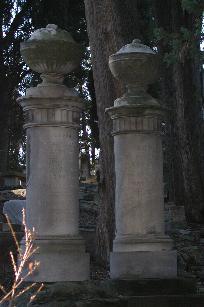
2. Ann MURRAY, daughter of Sir Patrick MURRAY 5th Lord Elibank and Mary MORTLOCK, was born in Guildford, Surrey. She died on 6 May 1843 in Florence.
She was unmarried, and is buried with her sister in the Protestant Cemetery of Florence.
3. Maria Margaret MURRAY, daughter of Sir Patrick MURRAY 5th Lord Elibank and Lady Margaretta Maria DE JONGE, was born in 1765 (calculated). She died on 15 January 1855 in Florence. She married George DON.
Sir George DON GCB GCH was a Governor of Gibraltar.